Incoming and outgoing loans for museums
Loans in and out keeps every loan agreement beside the object it covers. Each file holds the lender or borrower, the insured value, the courier, the display conditions and the return date. Registrars see which loans are open, which pieces are away and which are due back before the date passes.
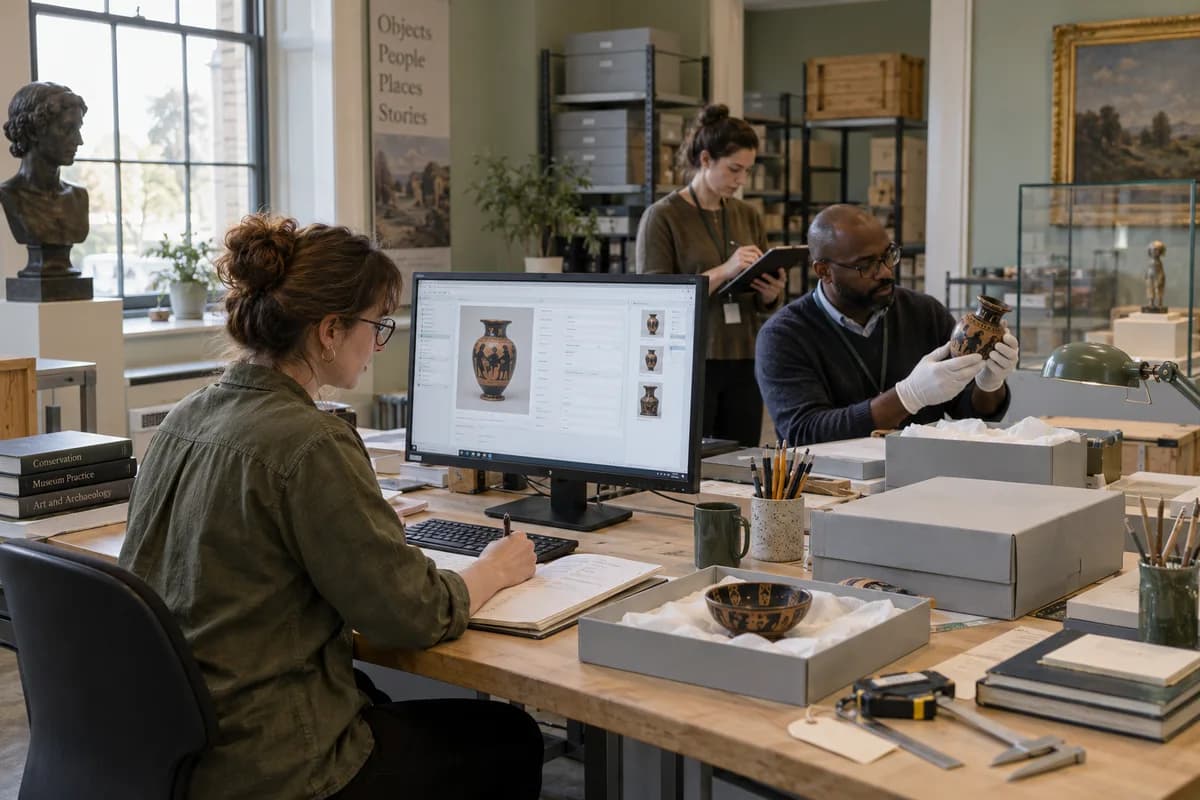
What a museum loan file records
A loan is a promise between two institutions. Every term must be held somewhere safe and readable. One file is created per loan, and each object is linked to it. Papers that once filled a folder sit on the screen.
Loans through a working season
Touring work and borrowed pieces mean loans at every stage at once. That is normal. One is being negotiated, one is on the wall, another is packed for return. The file holds each stage as it happens, so the whole season can be read at a glance.
Who uses loans and what each person sees
Loans touch several desks, and each needs a different slice of the file. Registrars own the paperwork, the curator wants display conditions, and the director wants the totals. Nobody needs to ask for a copy.
Decisions to settle before the first loan
Loans carry money and trust, so the set-up choices are made with the registrar and the museum’s adviser. Four questions settle the set-up. Answer them before the first agreement is entered.
How loans connect with the rest of the product
Any loan file is only useful if it points at real objects and real calendars. It takes object details from the register, sends moves to the location log, and tells exhibition planning what is coming in or going out. The hand-offs keep each team honest.
- Accession register supplies the object record each loan links to
- Locations and movements log the departure and return of each piece
- Condition reports record state on arrival and before return
- Exhibition planning marks borrowed pieces and the date they leave
- Contract reminders warn the registrar before a loan expires
Where loans in and out stops
This file records terms and dates. It does not value an object, arrange insurance or decide whether a loan is wise. Insured sums, indemnity cover and the legal wording of an agreement stay with the registrar, the museum’s insurer and its legal adviser. A single short loan to a local school may need only a signed note. Judge by the risk.
Frequently asked questions
Can one loan cover several objects?
One loan can hold a group of objects. Each one carries its own insured value and display conditions. All of them share the lender, the dates and the courier named on the file. One file covers the lot.
Who is reminded when a loan is due back?
The registrar receives a reminder before the return date. The loan file shows the date, the courier and the object. The reminder is a prompt to act. Booking the courier stays a human task, done by the team.
Can we attach the signed agreement?
The signed agreement is attached to the file as a scan or photograph. Anyone with access opens the terms from the object record. No one searches a cabinet for the paper copy. Attach it once.
What happens when a lender changes the insured value?
The registrar updates the figure on the file and notes the change. Reports on loans then show the new value. The earlier figure can be kept in the note, so the history reads clearly to a later reader.
Does it handle loans between our own sites?
A move between two of your own sites is recorded as a movement rather than a loan. Use a loan file when another institution is party to the agreement and a return date matters. Keep it simple.
How this feature fits the system.
Museum Management Software: the parts that work with this feature, the trades that use it and the ways to put it in place.
Locations and movements
Each object and storage location carries a printed code, so a scan at the shelf or case records the move and the person.
Barcodes and LabelsLoans in and out
Loan agreements are held with lender or borrower, insured value, display conditions and return date, and a reminder goes to the registrar before expiry.
Contract ManagementCondition reports and conservation
Condition checks fall due by object type, and the registrar sees the overdue ones listed by collection area and store.
Service RemindersTell us what you need.
Tell us what your team does today, where work gets stuck and what you want to change.
What happens after you share your requirements
- We review your brief and the systems you already use.
- We clarify the workflow, missing information and the work to consider first.
- The proposed scope sets out the deliverables, responsibilities and dependencies.
- Review the scope and commercial terms before deciding whether to proceed.
Start with your requirements
Describe your current process, the people involved and the change you need. Start with the details you know; we can clarify the rest together.
Share your requirements