Roofing stage bills, retention and final invoices
Stage bills and invoices lets a roofing firm bill each stage from the area measured, then close the job with a final invoice. Approved variations join the bill. Retention held back by the client is tracked, and each receipt is posted against its stage. Dues are read client by client.
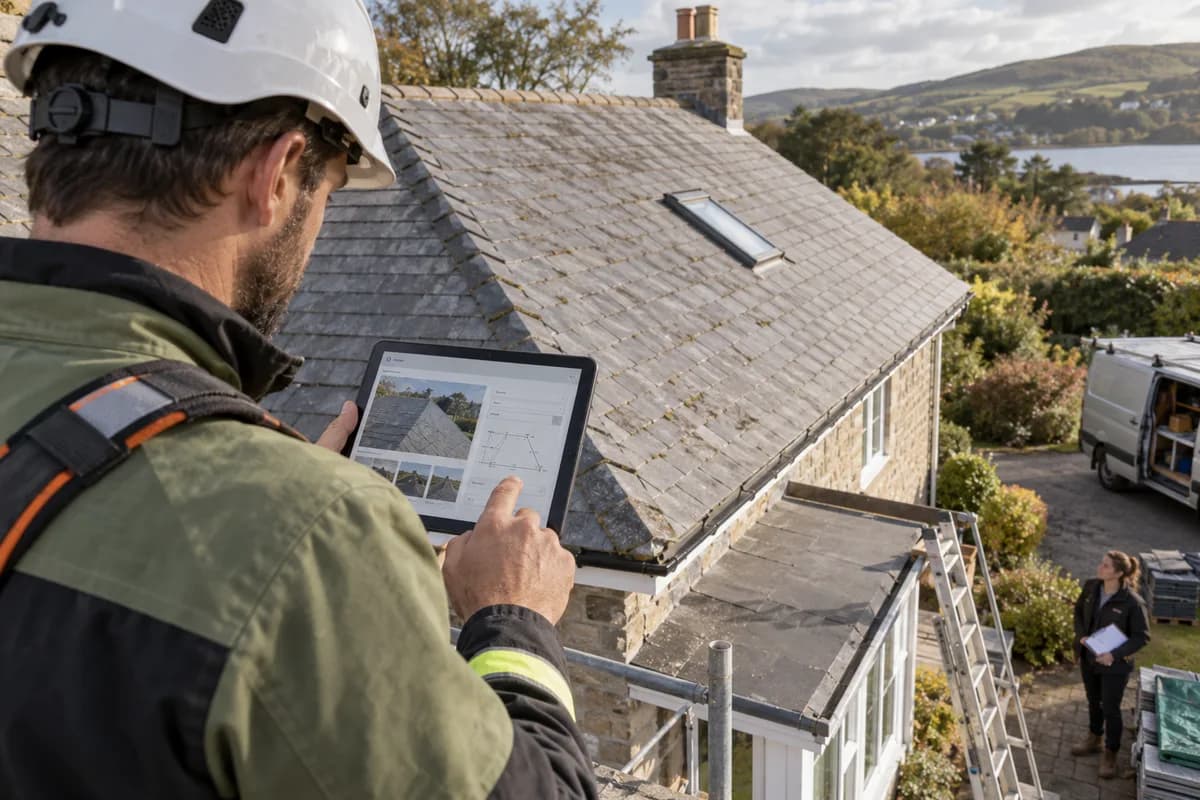
What a stage bill and invoice record
A roofing bill is built from measured work, not from memory. The record ties each amount to a stage, an area and a client’s terms. It follows the money from the first stage bill to the last receipt.
From stage to final invoice, in a working month
Billing in roofing follows the roof, stage by stage. The moments below show how a stage bill is raised when a stage is done and how a client’s payment is posted. They end with the last invoice. Each is a small task.
Who raises, posts and reads the bills
Billing touches the owner’s cash, so each person has a narrow part. The crew lead supplies the measurement, the desk raises and posts, and the owner reads the dues.
Decisions to settle before billing begins
Billing rules differ by contract, so settle them with the owner and the person who posts receipts. Bring two or three real contracts. The terms in them shape every bill the system raises. Start with the awkward ones.
How billing connects to other features
Billing is the end of the chain that began at the survey. It takes measured area and stages from the job, approved extras from variations and quoted lines from the quotation. Its figures go on to whoever keeps your books, by export. Exports are separate from filing.
- Takes stages and area from Roof jobs and stages
- Adds approved items from Variations and approvals
- Starts from quoted lines in Quotations and rate lists
- Uses daily area entered in Crew scheduling and attendance
- Warranty terms in Warranty and maintenance records follow the final invoice
Where stage bills and invoices stop
This feature raises bills and tracks what is owed. It does not decide your payment terms, take a client to court or settle what tax applies to a bill. Those questions stay with the owner and the accountant. Linking to one named accounting package is extra work. A firm that bills only on completion, with a few roofs a month, can use a simple invoice template. Staged contracts and retention change that.
Frequently asked questions
Can stage bills be raised from the area measured?
Each stage bill draws on the area recorded on the job, so the amount follows the roof. Clients can be shown how the figure was reached. Nobody invents a total at the desk. Totals follow the roof.
How is retention held back by the client tracked?
Retention is shown on each bill and totalled on the job. The sum held back is visible to the owner. It does not vanish among the receipts. Release dates are not forgotten after handover, when a job feels finished.
Can we post a part payment against a stage?
A receipt is posted against the stage it settles, and the balance stays visible on that stage. Staff can then see which stages are paid, part paid or open. Nothing is lumped together into one total.
Do approved variations appear on the bill?
Extras approved by the client flow into the next stage bill as separate lines. Declined ones are not billed. This keeps extra work such as rotten timber from falling unrecorded on the contractor. Each line is visible to them.
Can invoices reach our accountant’s software?
Invoices, receipts and balances can be exported for whoever keeps your books. Linking to one named accounting package is extra work, priced after the first workshop. Tax layout follows your country. The layout is fixed during the build.
How this feature fits the system.
Roofing Contractor Management Software: the parts that work with this feature, the trades that use it and the ways to put it in place.
Enquiries and inspections
Each enquiry is logged with its source and address, the inspection is booked, and measurements and photographs stay on the client record.
Lead ManagementQuotations and rate lists
Quotations are priced item by item from the firm’s covering, material and labour rates, and every revision is kept beside the open quotes.
Estimate/Quotation ManagementRoof jobs and stages
Each roof runs as a job with stages, crew, material and schedule, from preparation through to final inspection and handover.
Work Order ManagementTell us what you need.
Tell us what your team does today, where work gets stuck and what you want to change.
What happens after you share your requirements
- We review your brief and the systems you already use.
- We clarify the workflow, missing information and the work to consider first.
- The proposed scope sets out the deliverables, responsibilities and dependencies.
- Review the scope and commercial terms before deciding whether to proceed.
Start with your requirements
Describe your current process, the people involved and the change you need. Start with the details you know; we can clarify the rest together.
Share your requirements