Roofing enquiry log and roof inspection records
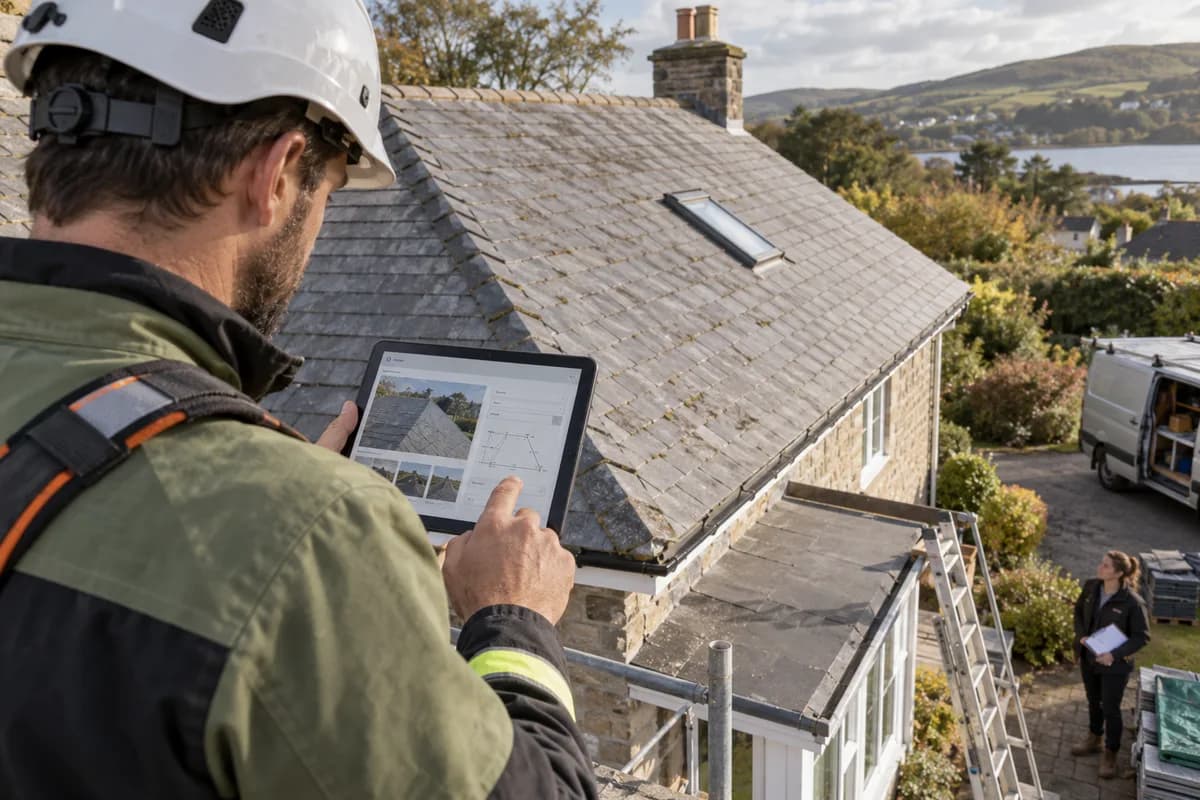
Enquiries and inspections logs each call, web form or message under the client and the site address. The survey is booked from it. The estimator then files pitch, measured area and photographs of ridge, valleys and flashings, and the office sees every enquiry still waiting for a visit.
What a roofing enquiry record holds
Every roofing enquiry opens a record that follows the roof through survey, quotation and job. It holds who asked, where the roof stands and what work was requested. Survey findings join the same client file later, beside the photographs. Nobody searches twice.
Enquiries and roof surveys through a working week
A roofing office takes enquiries between site calls, weather checks and merchant deliveries. The moments below show how the log and the survey diary are used by the people who answer and the people who climb. Some belong to the desk. Others belong to the ladder.
What each role sees in roofing enquiries
Enquiries and inspections reads differently at the desk, on the ladder and in the owner’s office. Each role opens the same record but sees a different part of it. The views are kept apart by role.
Decisions to settle before enquiries go live
A few choices made at the first workshop decide how clean the enquiry list stays. The office, the estimator and the owner should agree on them before anyone types a real call into the log. They are quick to settle.
How enquiries hand over to the wider system
An enquiry is the first record in the life of a roof, so it sits at the front of the product. It passes its client, address, measurements and photographs forward to every later record. Later it receives leak calls and warranty visits back against the same roof. The chain runs both ways.
- Survey measurements feed Quotations and rate lists
- An accepted quotation becomes a job in Roof jobs and stages
- Measured area guides Material orders and deliveries
- Photographs support Variations and approvals for rotten timber
- Later leaks reopen the roof in Leak calls and service visits
Where enquiry logging and surveys stop
This feature records and books. It does not price a roof, decide whether a job is worth taking or judge the structure of a roof. The estimator’s eye and the owner’s choice of work stay with them. A roofer who takes only a few enquiries each month may be content with a notebook and a phone camera. Once calls arrive from several channels, a shared list is the simpler way to avoid double bookings.
Frequently asked questions
Can one enquiry list take calls, forms and messages together?
Each enquiry is logged with its source, so a call, a web form and a message all land in one list. Staff see them side by side, with the address and the kind of roof beside each. Surveys are booked from that list.
Where do survey photographs of valleys and flashings go?
They are filed under the client and the roof, labelled by part of the roof. A crew lead, the estimator or the office can open them later from a phone or a desk. That settles questions about condition.
Can two estimators be sent to the same address by mistake?
The survey is booked against the enquiry and shown in the estimator’s diary. Open the enquiry and you see it. Whoever opens the enquiry sees whether a survey is already booked, and for which estimator. That removes the double booking that separate channels cause.
Can we bring our existing enquiry list into the system?
Client names, addresses and open enquiries from your register or spreadsheet are imported. The office then checks the imported list against the original before surveys are booked from it. Errors surface early. No estimator drives to a wrong address.
Does the survey record hold a sketch of the roof?
The record holds pitch, measurements and photographs of the roof parts. If your estimators draw a sketch of hips and valleys, a photograph of the drawing can be filed beside the other images. It stays with the roof.
How this feature fits the system.
Roofing Contractor Management Software: the parts that work with this feature, the trades that use it and the ways to put it in place.
Enquiries and inspections
Each enquiry is logged with its source and address, the inspection is booked, and measurements and photographs stay on the client record.
Lead ManagementQuotations and rate lists
Quotations are priced item by item from the firm’s covering, material and labour rates, and every revision is kept beside the open quotes.
Estimate/Quotation ManagementRoof jobs and stages
Each roof runs as a job with stages, crew, material and schedule, from preparation through to final inspection and handover.
Work Order ManagementTell us what you need.
Tell us what your team does today, where work gets stuck and what you want to change.
What happens after you share your requirements
- We review your brief and the systems you already use.
- We clarify the workflow, missing information and the work to consider first.
- The proposed scope sets out the deliverables, responsibilities and dependencies.
- Review the scope and commercial terms before deciding whether to proceed.
Start with your requirements
Describe your current process, the people involved and the change you need. Start with the details you know; we can clarify the rest together.
Share your requirements