Business solutions for Animal feed manufacturers
Explore software for work such as “Dealer margin and support”. Review each business function below, including when it fits and what to check before implementation.
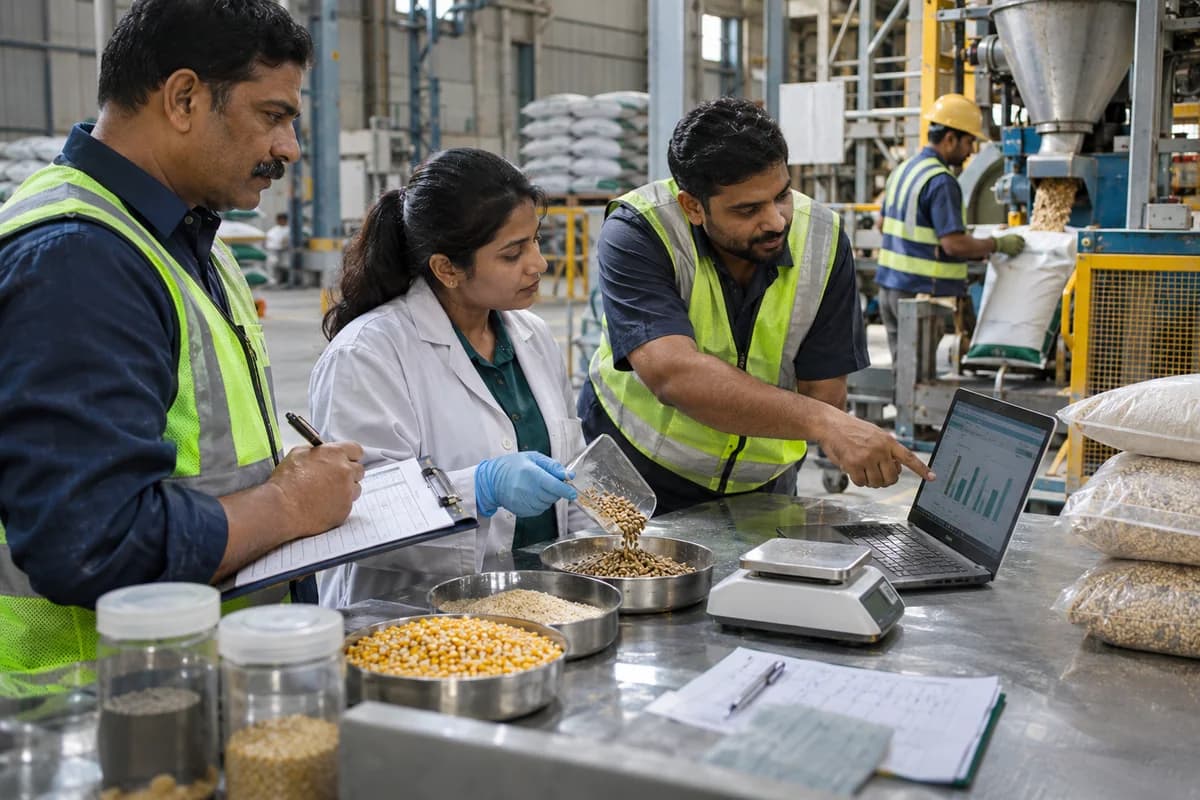
How the business operates.
Feed is made to a formula for a species and a growth stage, such as broiler starter, layer mash, dairy cattle pellet or fish grower. A formula can only perform as well as the grain and meal that go into the mixer. Maize moisture, soya protein and fish meal quality shift from one truck to the next, so the mill adjusts the mix each time. The record must follow.
The records that hold the operation together.
- Weighbridge and raw material intake. Weigh each truck, record the supplier, vehicle and declared quantity, and hold the load until the lab result is entered against that lot.
- Laboratory results. Save moisture, crude protein, fibre, aflatoxin screening and foreign matter results for every lot, with accept, reprice and reject decisions kept beside them.
- Bins, silos and ingredient stock. Track the level in each bin or silo by ingredient and supplier lot, with transfers between bins and alerts when a bin falls below the day’s need.
- Formulas and premix. Maintain formulas by species and stage, such as broiler starter, layer mash or dairy pellet, with revisions, premix inclusion and approved substitutions.
- Mixer batching. Record each ingredient weighed into a batch, compare it with the formula, and capture the reason whenever the operator changes a quantity.
- Pellet line runs. Log die size, conditioner temperature, cooler time and output for each run, along with fines returned for reprocessing.
- Bagging and batch codes. Fill bags by pack size, print or stamp a batch code, and count finished bags into stacks by product and pack.
- Retained samples and complaints. Shelve a sample for each batch, store finished feed test results, and trace a farmer complaint back through batch, bins and supplier lots.
Operational bottlenecks to check
Intake results are not attached to bins
A load fails on moisture, yet the same maize is already in a bin with earlier stock. The lab report sits in a file, and the batch that used it cannot be named.
Formulas drift on the shop floor
Operators substitute an ingredient when a bin runs low, and the change is made verbally. The bag says one thing and the mixer log says another. Nobody knows who changed it.
Premix and medicated feed need strict control
A medicated batch leaves residue in the mixer and the line. Without a recorded sequence, carry-over to the next feed is a risk no one can rule out.
Complaints cannot be traced
A poultry farmer reports low egg output after a feed change. Finding the batch, the bins and the raw lots takes days of reading registers.
Dealer credit grows beyond sight
Dealers take stock on rolling credit across brands and pack sizes. Returns, price schemes and unpaid cheques are tracked in separate sheets. Totals are never agreed.
Follow the work across teams.
This is a planning flow. Confirm the steps, owners and approval rules against your actual operation.
Roles and responsibility boundaries.
Reports your managers need.
- Raw material lots accepted, repriced and rejected, by supplier
- Ingredient cost per tonne of finished feed, by formula
- Formula variances flagged at the mixer, with reasons
- Pellet runs with settings and fines returned
- Batches traced to a complaint, with bins and supplier lots
- Bag stock by product, pack size and batch
- Dealer balances past credit limit, oldest first
Connections to scope
- Weighbridge ticket import
- Mixer controller file import
- Barcode and label printing
- WhatsApp or SMS
- Accounting export
Confirm data access, record ownership and the exchange method for each connection. Inclusion here does not mean every connection is available in a standard package.
Setup decisions and adoption risks.
Use these requirements to plan phases, data migration and user training. Agree the release sequence after reviewing your current systems.
Limitations to settle before implementation
- A farm that mixes its own feed for its own birds with a small mixer can use a notebook.
- Grain millers who sell flour and not animal feed will find Flour Mill Management Software closer.
Modules to consider first.
These functions connect to the operating model above. Confirm each one against the work your business actually runs.
Choose the operation you want to improve.
Use these activities to explain your scope. Your business does not need every function in the directory.
- Dealer margin and support
- Dairy farmer trust through demonstrations
- Poultry and aqua farm trials
- Cooperative and integrator supply
- Credit control on dealers
- Rep visit records
- Farmer meetings and field days
- Pet food shop and online sales
Explore the business functions.
Production, stock, fleet and recurring billing functions apply only where your business runs those activities. Read the suitability conditions on each page.
Manufacturing
Batch and Serial Tracking
Trace goods using batch identifiers or individual serial numbers.
View workflow and suitability →Bill of Materials
Define the materials and quantities needed for a manufactured item.
View workflow and suitability →Production Planning
Plan manufacturing quantities against demand, materials and capacity.
View workflow and suitability →Quality Control
Record specified inspections and the disposition of checked goods.
View workflow and suitability →
Sales and Distribution
Procurement
Inventory Management
Start with the problem your team can describe.
Bring a sample record and show where information is copied, missed or waiting for approval. Scope the first useful change from there.
What happens after you share your requirements
- We review your brief and the systems you already use.
- We clarify the workflow, missing information and the work to consider first.
- The proposed scope sets out the deliverables, responsibilities and dependencies.
- Review the scope and commercial terms before deciding whether to proceed.
Start with your requirements
Describe your current process, the people involved and the change you need. Start with the details you know; we can clarify the rest together.
Share your requirements