Tie every feed batch to its formula, raw material lots and the dealers who received it.
A feed mill buys grain, meals and premixes whose quality changes with each load, then sells a bag the farmer trusts to be consistent. Formulas, intake test results, batch mixing, pelleting and bag stock sit in one record here, which lets a single bag be followed back to the truckloads behind it.
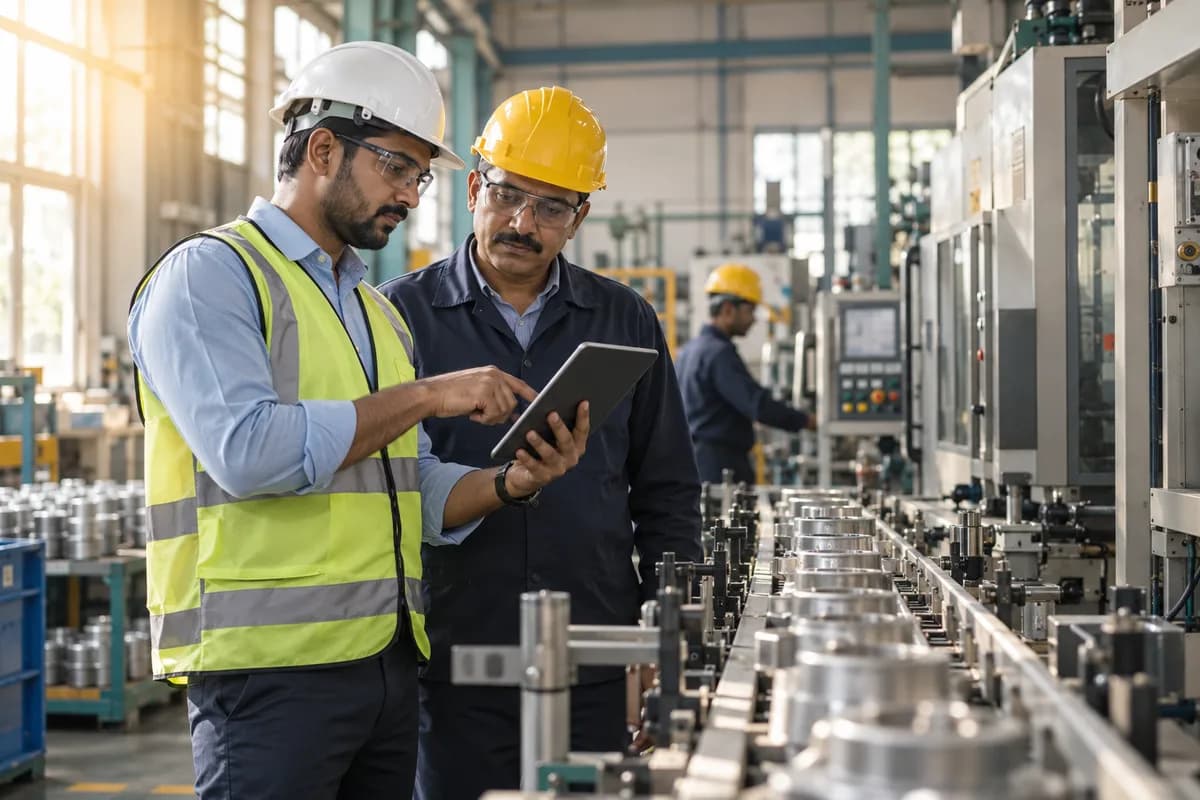
Feed is made to a formula for a species and a growth stage, such as broiler starter, layer mash, dairy cattle pellet or fish grower. A formula can only perform as well as the grain and meal that go into the mixer. Maize moisture, soya protein and fish meal quality shift from one truck to the next, so the mill adjusts the mix each time. The record must follow.
Animal feed manufacturer software keeps that chain in one place. Intake tests, silo and bin stock, mixer batches, pellet runs and bagged lots are linked. Any product line can be followed from the weighbridge to a dealer’s warehouse. No step rests on memory.
Trucks arrive at the weighbridge with maize, soya meal, bran, rice polish, limestone or fish meal. A sample goes to the lab for moisture, protein and a check for foreign matter, and the load is accepted, price-adjusted or sent back. Accepted material is tipped into a bin or silo, and the bin level is recorded against the supplier lot.
The production planner picks formulas for the day against dealer orders. Operators weigh the major ingredients, add the premix and run the mixer, then feed the mash to the conditioner and pellet press where the product needs it. Cooled pellets are screened, bagged and stamped with a batch code. A retained sample is shelved. Dispatch loads dealer orders from the stacks, and the accounts team follows credit and returns. Day ends with stock counted.
What goes wrong for animal feed manufacturers without a proper system.
What we would build for animal feed manufacturers.
Named the way your team already talks about the work. We start with whichever part the audit shows is costing you most.
A requirements checklist for animal feed manufacturers.
What to cover, which reports to ask for and what to put to every vendor, ready to print or save as a PDF.
A product already built for animal feed manufacturers.
It is adapted to how your business works before it goes live, and anything your trade needs that it lacks is added then.
Animal Feed Manufacturer Management Software
Raw material intake, formulas and premix, mixer batches, pellet runs, bagging, batch traceability, dealer orders and credit for animal feed mills.
The business modules animal feed manufacturers use most.
Each one is also available on its own, or inside a system built for you.
The services behind it.
Business Process Automation
Approvals, reminders, follow-ups and reports that run on their own instead of on someone remembering.
Learn moreERP, CRM and Business Software Implementation
One record of stock, orders, customers and accounts, set up so your team opens it every day.
Learn moreIoT and Edge Computing
Machines, meters and sensors feeding the same system your office uses, even when the network drops.
Learn moreData Engineering and Business Intelligence
Dashboards that answer the owner’s Monday questions without anyone building an Excel sheet first.
Learn moreHow the work runs from Bengaluru for your city.
- 1
The audit, by call
A screen-share and a look at the sheets, accounting reports and WhatsApp groups your team uses. No travel needed.
- 2
A written proposal
Scope, what we build first and the cost, agreed in writing before anything starts.
- 3
Build in short rounds
Working screens shared every few weeks. Your team tests them from your own office.
- 4
Go-live, in person when it helps
For data migration and training we can come to your city. Travel is agreed in advance.
- 5
Support online
Fixes, changes and hosting handled remotely by the same team that built it.
Software we have built and run.
We only name clients whose work is published. These are systems our team designed, built and supports.
PetSeva: matching owners to the right vet, at any hour
A two-sided veterinary platform where vets are searchable by specialisation and bookable outside clinic hours. It now carries more than 2,000 veterinary doctors.
Read the case study Paying guest accommodationSAM Atithi Pavathi: bed-level occupancy as the source of truth
PG management software where allocation, rates and invoices are derived from bed-level occupancy and not maintained in parallel spreadsheets.
Read the case study School transport servicesSAM Tours: school transport on a single ledger
Registration, fee collection, routing and finance write to the same records, closing the gap between journeys run and fees collected.
Read the case studyQuestions animal feed manufacturers ask before they call.
Can it trace a bag back to the raw material loads?
Yes. A bag carries its batch code, the batch carries the bins it drew from, and each bin carries the supplier lots. A complaint can be followed that whole path.
Does it cover medicated feed sequences?
It records which batches contain a medicated premix and in what order they ran. The flushing rules between them come from your own quality procedure and are set up with your team.
Can formulas be adjusted for ingredient quality?
Yes. A new formula revision can be saved when an intake result changes, and old batches stay linked to the revision they used. Least-cost calculation tools can be connected if you already own one.
Can it take weights from the weighbridge and the mixer panel?
Weighbridge tickets import easily, while the mixer panel depends on its make. We look at the panel together before promising a link. Operators can key weights by hand if no link is wanted.
What happens after I share my requirements?
An engineer reads what you send and replies within one business day. We then look at the software, spreadsheets and WhatsApp groups your business runs on today and write down what works, what slows your team down and what is missing. A demo login, a screen-share or a few screenshots are enough. You get a short written summary ordered by priority, with no obligation to hire us afterwards.
How much will the software cost?
We don’t publish a price, because it depends on what the system has to do. That first review settles the scope, and the cost goes into a written proposal before any work starts.
Related industries.
- Agri-drone operators
- Cattle farms
- Contract farming companies
- Crop farms
- Dairy cooperatives
- Dairy farms
- Fertiliser dealers
- Fisheries and aquaculture farms
- Flower farms and nurseries
- Goat and sheep farms
- Hatcheries
- Hydroponic and greenhouse farms
- Irrigation installers
- Milk collection centres
- Milk distributors
- Organic farms
- Plantation companies
- Poultry farms
- Seed dealers
Part of a wider group.
Tell us how your business runs today.
A few lines on your spreadsheets, software and WhatsApp groups is enough. We reply the same working day.
- No obligation
- A reply within one business day
- Your details stay private
Start with your requirements
Seven short steps that tell us what you need. An engineer reads them before getting in touch.
Share your requirements