Software Solutions for Gaming Accessory Sellers
Gaming accessories are a wide spread of items for different platforms: controllers, headsets, charging docks, capture cards and cables. Look-alike accessories work on one platform only. Sellers online need platform fields, licensed and third-party labels, bundles by game or console, and a fault path for drift and dead batteries.
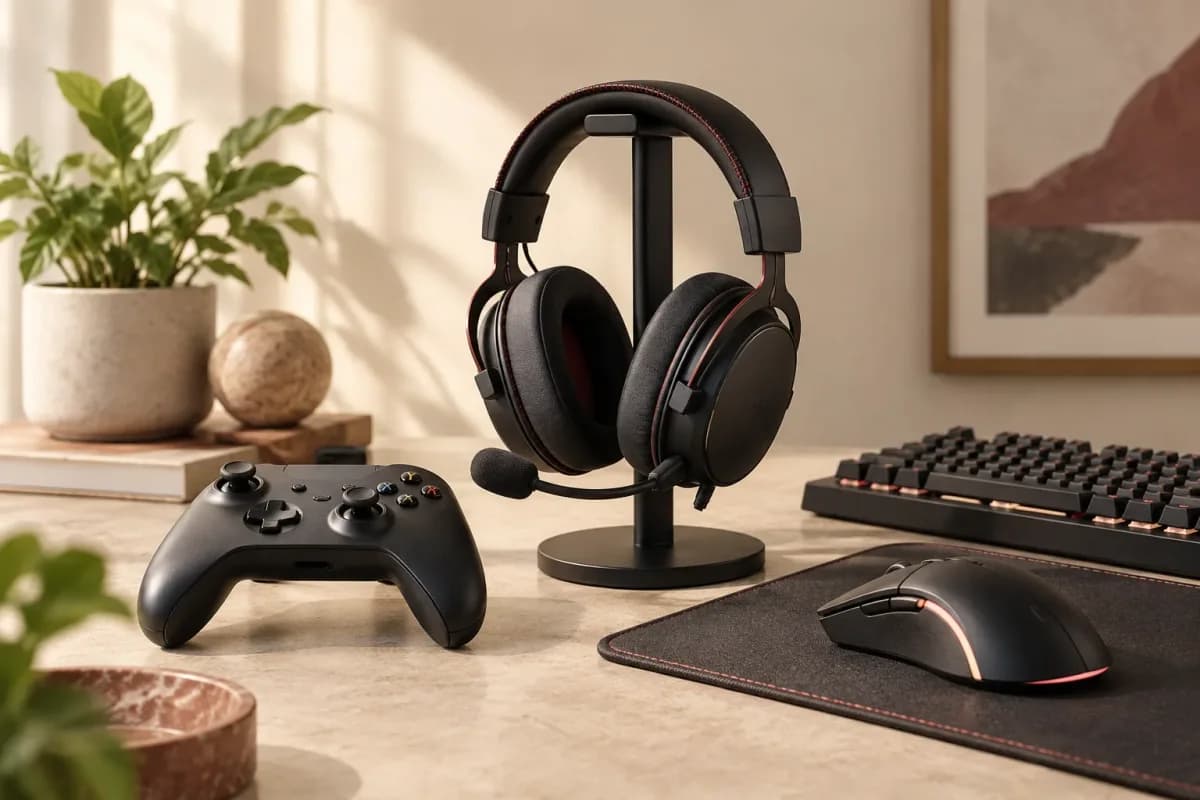
Match controllers, headsets and docks to the platforms they work on.
A controller that looks perfect for a console may not pair with it. Buyers expect the site to know.
Accessory and peripheral brands
A brand sells controllers and headsets direct and through marketplaces, and issues limited editions.
Game stores with an accessory wall
A store sells accessories beside consoles and games, mostly as add-ons to a bigger purchase.
Esports and creator suppliers
A supplier sells capture gear, microphones and pro controllers to streamers and teams.
The workflow for gaming accessories.
- 1
Platform compatibility listed
Each accessory records the platforms it works on, its connection type and whether it needs a dongle.
- 2
Licence status labelled
Items are marked as officially licensed or third-party, and the warranty text follows.
- 3
Bundled by console or game
An accessory can be bundled with a console or game, and each part keeps its own stock.
- 4
Limited edition handled
A limited colour is released with a quantity and cap, like a launch in miniature.
- 5
Fault claims by type
Stick drift, battery failure and pairing faults each follow a claim path, and the firmware version is noted.
The challenges, and what they cost.
What is specific to this trade.
These are requirements we would confirm in discovery. They describe what the solution may need to handle. They are not features that already exist.
- Platform and connection data on every accessory
- A licence label with warranty text
- Claim paths for common controller faults
What we would build for gaming accessories.
Chosen from the commerce capabilities this business needs, not a list of everything.
Who works in the system, and what each can do.
What it would connect to.
An integration is confirmed only after its API, access and scope are checked. A connection that updates on a schedule is described as scheduled, not real-time.
- Till-level stock counts from the shops
- Marketplace feeds, where a marketplace permits them
- Payment by card or UPI on the seller’s own gateway
How the work runs, and what we need from you.
What you provide
- Your accessories with platform and connection data
- Which items are licensed and which are not
- Your claim and warranty terms by brand
Platform data first
We settle the platform fields before loading the range.
Claim types from history
Claim paths are written from the faults that recur in your returns.
What you receive.
- A platform-aware catalogue
- A licence label and warranty set
- A limited-edition cap setup
- A claim path by fault type
How progress is judged.
Measures are agreed against your own baseline. We do not promise a result in advance.
- Returns where the platform was wrong
- Claims closed under the correct warranty
Selling at home and abroad.
Controllers and headsets are built for specific platforms, and wireless accessories use radio bands that vary by country. Listings state the platform and the markets an item is intended for.
The wider requirements for gaming are on the Gaming page.
Related subcategories.
Gaming Products E-commerce & Launch Management Software
Configured implementation
No ready GullySystem product covers this store. The web store, launch rules and stock links run on a platform picked at the end of discovery. Shops can keep serials and invoices in the retail product named on this page.
Platform compatibility and variants for small accessories are covered by the category solution’s catalogue fields.
Read about the softwareExisting GullySystem products that apply
Related services
Selling in a shop as well?
Test the order that does not follow the usual path.
Bring an awkward order or catalogue example to discovery and agree who handles the exception.
Controller faults dominate returns
Are the physical return, replacement and refund separate decisions?
For “Controller faults dominate returns”, use a partial return from an order containing several items. Agree what is inspected, what becomes sellable stock again, and which amount or replacement is owed before closing the case.
Background reading: Shopify: returns, exchanges and refunds
Platform field
Can the buyer verify the detail that determines whether this item fits?
For “Platform field”, compare one listing with its approved product record. Check the identifier, measurements and compatibility information, and agree who resolves missing or conflicting details before publication.
Background reading: Shopify: product details
Questions about gaming accessories e-commerce.
Can it tell if a controller works on my console?
It can show the platforms you record for each item. It cannot test a buyer’s console.
Does it handle limited editions?
Yes, with a quantity and a per-customer cap, as for a console launch.
Can claims be tracked by fault?
Yes. Each claim records its type, so repeated faults across a model become visible.
Talk through your commerce requirement.
Share what you sell, where orders arrive and how you manage stock and fulfilment today.
- Your products and sales channels
- Your order and stock workflow
- The connections you need
Start with your requirements
Describe your current process, the people involved and the change you need. Start with the details you know; we can clarify the rest together.
Share your requirements