Member and family records for country clubs
Member and family records hold each member with spouse, dependants, class, joining date and handicap on a single account. Every person carries the rules of their own class, so the desk knows what a junior, a spouse or a debenture holder may do. The membership office keeps the record current.
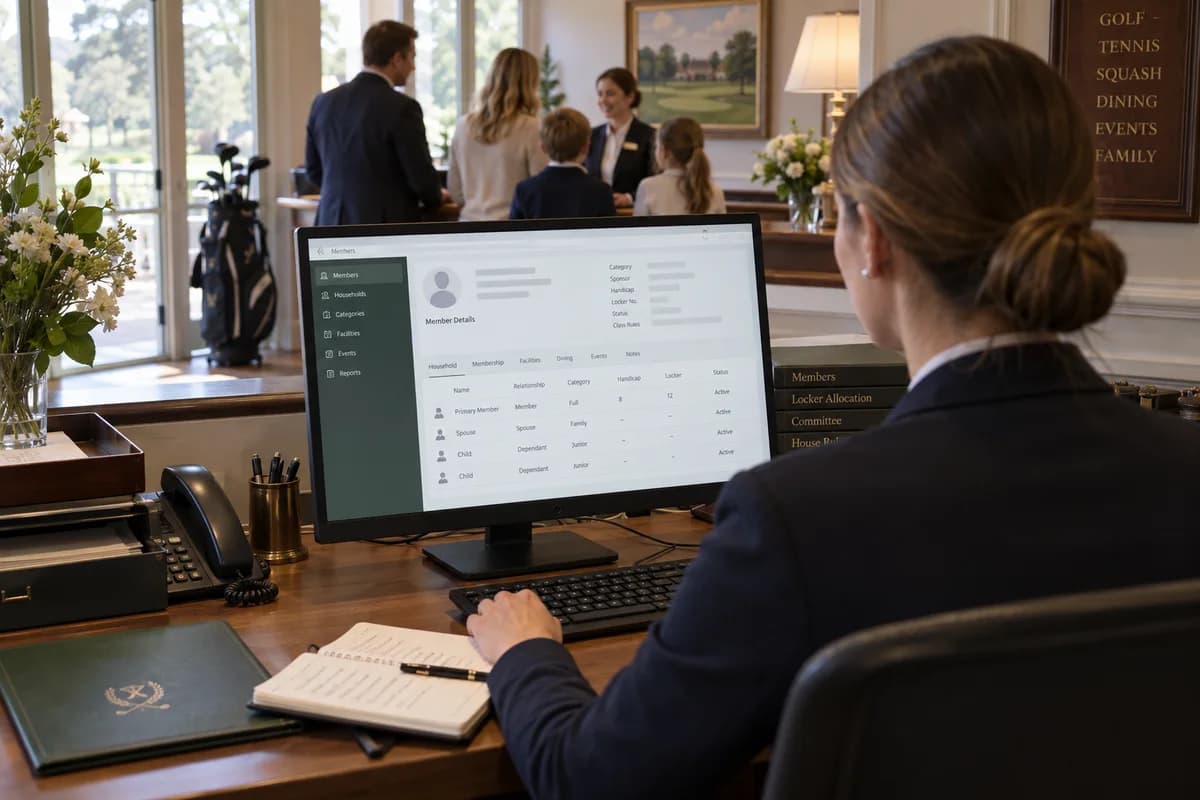
What a country club member record keeps
Each account starts with a member number. Beneath it sit the spouse and every dependant, each with a class, a joining date and, where relevant, a handicap. Staff read the account on screen instead of a card index or a loose sheet.
A member’s record through the club year
A record changes whenever family life does. Births, birthdays, marriages and moves all reach the account through the membership office. The desk, the bar and the starter then read the change together. Here is how that looks across a season at the club.
Who reads member records and what each sees
Everyone reads the same record. What differs is how much of it each person needs and what each may change. Four groups use it from day to day. Each sees its own slice.
Settling member record rules before set-up
A few choices decide how the records behave. Settle them before staff start entering families. The secretary and the general manager have the answers in hand already. Each takes a few minutes.
Where member records feed other club features
The member record is the base that other features read from. Little is typed again elsewhere. Staff work from one source. A class set here reaches fees, bookings and guest limits, and a charge anywhere in the club finds its way back to the account.
- Class rules decide fees raised under dues and joining fees
- Each booking reads the person’s class and priority window
- Guest allowances come from the host’s own line
- Bar and dining charges post to the member number
- Committee reports count members by class and status
Where member and family records stop
The record holds what the club tells it. It does not admit anyone, set a fee or rule on a dispute. Those stay with the committee. Handicap figures are held as entered, and the handicap committee keeps the official rules. Decisions on what to hold about children stay with the club and its adviser. A small club with a card index can keep it.
Frequently asked questions
Can a spouse carry different rules from the member?
Each person on an account holds a class of their own. The class decides facilities, hours and guest rights. A spouse can therefore follow different rules from the main member where the club’s constitution says so.
How are children added to an account?
The membership office adds each child under the parent’s account and sets the junior class. The child’s joining date is recorded. From that point the desk can see what the child may book, and where the parent is billed.
Does a resignation remove the whole family?
The account closes only once the final charge, locker fee and levy are settled. The number is then retired. Whether a family member stays on under a new account is the committee’s call. The office records whatever is decided.
Can sports staff update handicaps themselves?
The club decides who may. A club can give sports staff that right and keep every other field with the office. The line then shows the new figure to the starter and the desk straight away.
How do we avoid two records for one person?
Staff search by name and number before opening an account. They look first. At import, the member list is compared with your old register, line by line. The secretary signs off the totals before anyone relies on them.
How this feature fits the system.
Country Club Management Software: the parts that work with this feature, the trades that use it and the ways to put it in place.
Member and family records
Each member, spouse and dependant is held under one account, with class and joining date, so rules apply to the right person.
Contact & Account ManagementMembership applications
An application moves from sponsor to committee, and each decision is recorded with its date before the member number is issued.
Workflow and ApprovalsDues and joining fees
Annual dues and instalments are raised on set dates by category, and a part-paid or overdue account is flagged for the office.
Subscription BillingTell us what you need.
Tell us what your team does today, where work gets stuck and what you want to change.
What happens after you share your requirements
- We review your brief and the systems you already use.
- We clarify the workflow, missing information and the work to consider first.
- The proposed scope sets out the deliverables, responsibilities and dependencies.
- Review the scope and commercial terms before deciding whether to proceed.
Start with your requirements
Describe your current process, the people involved and the change you need. Start with the details you know; we can clarify the rest together.
Share your requirements