Dining and bar charges for country clubs
Dining and bar charges posts food and drink from the point of sale to a member number. A signed slip or a card kept on file backs each one. Bar, terrace and halfway house sales land on the same account, so the member receives one statement and the club reads its food and beverage cost.
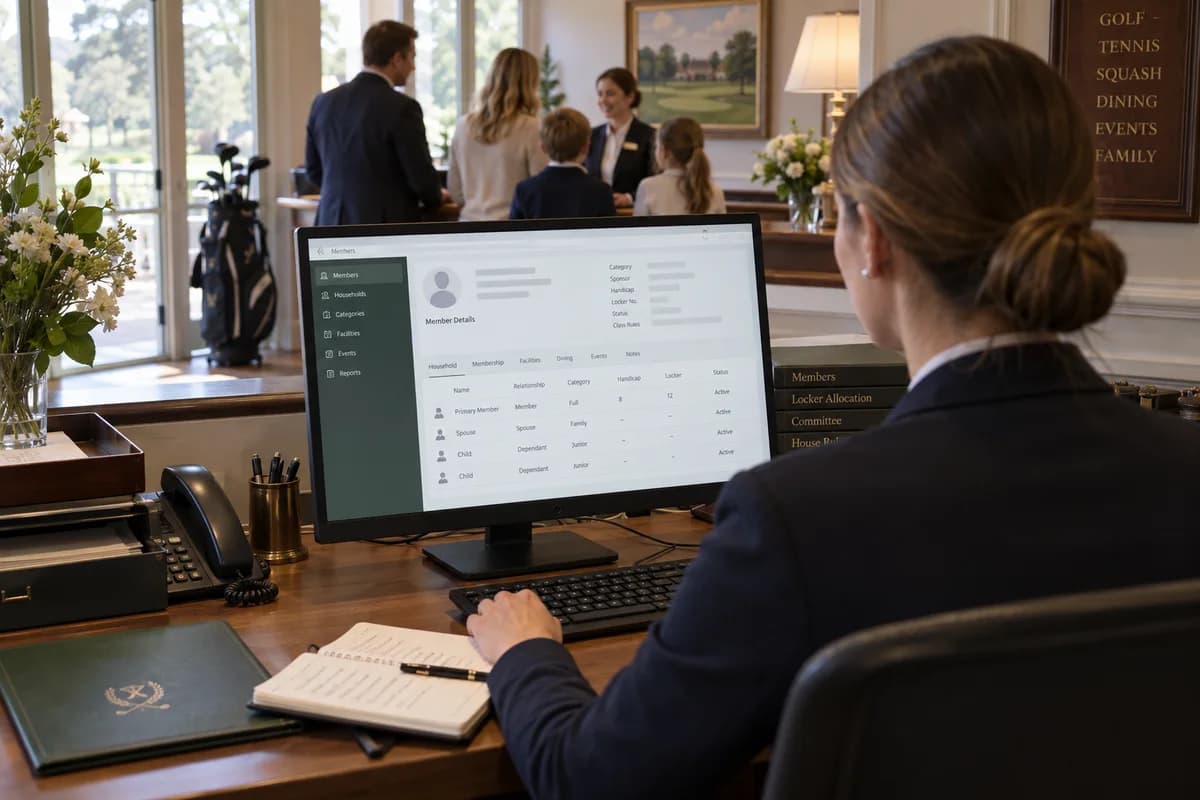
What a dining and bar charge records
Each sale becomes a line. It keeps the outlet, the time, the items and the way the member agreed to pay. A bar steward posts it in seconds, and the member sees the same line on the statement later in the month.
A service day from the bar to the statement
Charges are small and frequent. One member’s Saturday may run from a morning coffee to an evening drink on the terrace. Every sale is posted when it is rung, so the figures are right by closing time, and nobody reconciles slips at midnight.
Who posts charges and who reads them
Charges are posted by one team and queried by another. Each sees what its job needs. The records stay in step across both. Four teams meet on the same account, and none keeps a second list.
Settling bar and dining rules before set-up
Charging rules differ from club to club. Agree them before the till is connected. The food and beverage lead and the treasurer hold the answers. Four choices need an answer here.
How charges connect to other club features
Dining charges take their number from the member record and send their totals to the statement. Between those two ends, they share one account with dues and every other charge. The committee’s food and beverage figure comes from the same lines. One source feeds all.
- Member numbers and class come from member records
- Posted charges appear on statements and receipts
- Function meals link to events and functions
- Dining totals sit beside dues on one statement
- Food and beverage cost reaches committee reports
Where dining and bar charges stop
The software records what the till sends or what staff enter. It does not hold stock, order food, plan menus or set staff rotas. Tax and service charge rules stay with the club and its accountant. Card fees belong to the club and its payment provider. A club with one bar and a small membership can keep a tab book. It stops there.
Frequently asked questions
What happens if our till cannot send charges?
Staff enter the day’s charges from a summary printed by the till. Each line is still posted to a member number. The link can be added later, once the till supplier confirms what it can send. Posting never waits.
How does a signed slip match the account?
The line records the member number, the outlet, the time and the method used. A slip is compared against it. Queries are settled that way. The club decides how long slips are kept in the office.
Can a member dispute a bar charge?
A member asks at the desk. Reception reads the line and the membership office compares it with the slip. A named person corrects a line that is wrong. The change shows on the account with its date.
Can food and drink sales be split by outlet?
Each line carries its outlet, so bar, terrace and halfway house sales are reported separately. Cost reads the same way. Nobody re-sorts takings by hand for the board pack, and nobody adds up till rolls.
Are card payments taken for dining?
A card kept on file can be charged where the member has agreed. The card payment gateway is connected during the build, and its fees stay with the club and the provider. A signed slip remains an option.
How this feature fits the system.
Country Club Management Software: the parts that work with this feature, the trades that use it and the ways to put it in place.
Member and family records
Each member, spouse and dependant is held under one account, with class and joining date, so rules apply to the right person.
Contact & Account ManagementMembership applications
An application moves from sponsor to committee, and each decision is recorded with its date before the member number is issued.
Workflow and ApprovalsDues and joining fees
Annual dues and instalments are raised on set dates by category, and a part-paid or overdue account is flagged for the office.
Subscription BillingTell us what you need.
Tell us what your team does today, where work gets stuck and what you want to change.
What happens after you share your requirements
- We review your brief and the systems you already use.
- We clarify the workflow, missing information and the work to consider first.
- The proposed scope sets out the deliverables, responsibilities and dependencies.
- Review the scope and commercial terms before deciding whether to proceed.
Start with your requirements
Describe your current process, the people involved and the change you need. Start with the details you know; we can clarify the rest together.
Share your requirements