Events and functions for country clubs
Events and functions quotes a function, holds the date with a deposit and tracks guest numbers, menu and dress code. The balance is billed after the event. Marquee and banquet hall bookings share one calendar, so the manager and the kitchen work from the same page.
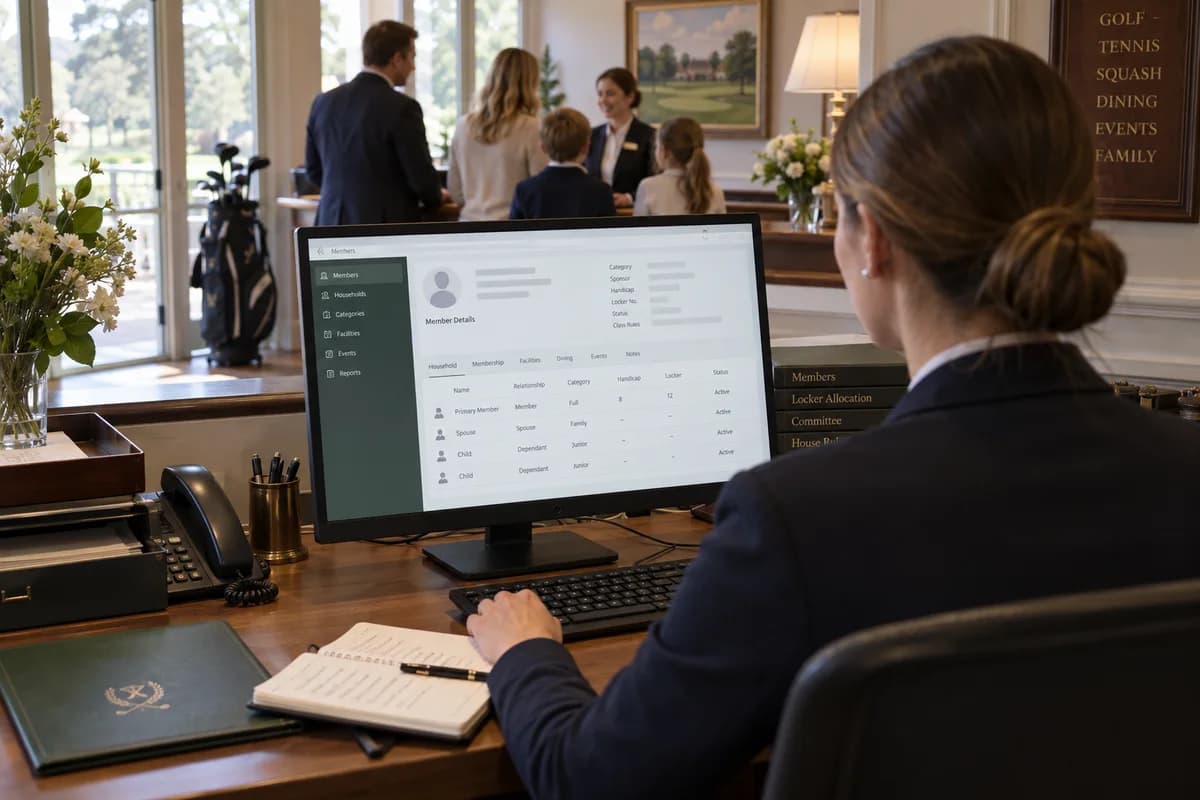
What a function booking holds
Every function starts as a quote. It ends as a bill. In between, the booking keeps the date, the space, the deposit, the guest count, the menu and the dress code. Each is a field on one record, so nobody searches email threads.
From first enquiry to the final bill
A function runs over a long stretch, and its details shift along the way. Here is the path from first enquiry to the final bill, as the people at the club meet it. Each step marks the one booking in turn.
Who handles functions and what each sees
Functions cross several desks, so each role needs its own view. All four read one booking. No role works from a second list, and the booking is the only record.
Settling function rules before set-up
Functions carry money and promises, so decide the rules first. Money is at stake. The general manager and the treasurer hold the answers. Four choices need an answer before the first booking is made.
How functions connect to other club features
Each function shares its calendar with room bookings and its money with the member account. Its meals add to the club’s food and beverage cost. Each hand-off is one entry made once. Staff do not rebuild the picture before a committee meeting. Nothing is rebuilt by hand.
- Room and hall dates share the facility booking calendar
- Member hosts are read from member and family records
- Deposits and balances are receipted on statements and receipts
- Function menus feed dining and bar charges
- Function income and food cost reach committee reports
Where events and functions stop
The software holds the quote, the date, the deposit and the bill. It does not design menus, hire staff, supply a tent or draw up the contract. Permits, safety checks and the tax on a booking stay with the club and its adviser. A club that lets its hall once or twice a year can use a diary. That work stays with people.
Frequently asked questions
How is a date held until the deposit arrives?
An enquiry stays open until a deposit is recorded. It is not yet firm. Staff see that, so they do not promise it twice. Once the deposit is receipted, the date is held for that host.
Can the marquee and banquet hall share a calendar?
Both sit on one calendar. Where the club has set that rule, a date taken for the marquee shows against the hall too. Staff see clashes while quoting, not after promising. Nobody is left to apologise to a host.
What happens when the guest count changes late?
The count is updated on the booking. It reaches the kitchen and the desk at once. The balance is billed from the final figures, so a late change reaches the bill without anyone retyping it by hand.
Who can see the menu and dress code?
Anyone with access to the booking can read them. Kitchen, manager and desk all work from the same entry. Decide who may edit before set-up. Reading is open to the whole team on duty that day.
What does the record show after a cancellation?
It keeps the full trail. The quote, the deposit received and the cancellation terms all remain. The terms on the quote decide what the club keeps. The outcome is recorded with its date by the manager, so the treasurer can follow it.
How this feature fits the system.
Country Club Management Software: the parts that work with this feature, the trades that use it and the ways to put it in place.
Member and family records
Each member, spouse and dependant is held under one account, with class and joining date, so rules apply to the right person.
Contact & Account ManagementMembership applications
An application moves from sponsor to committee, and each decision is recorded with its date before the member number is issued.
Workflow and ApprovalsDues and joining fees
Annual dues and instalments are raised on set dates by category, and a part-paid or overdue account is flagged for the office.
Subscription BillingTell us what you need.
Tell us what your team does today, where work gets stuck and what you want to change.
What happens after you share your requirements
- We review your brief and the systems you already use.
- We clarify the workflow, missing information and the work to consider first.
- The proposed scope sets out the deliverables, responsibilities and dependencies.
- Review the scope and commercial terms before deciding whether to proceed.
Start with your requirements
Describe your current process, the people involved and the change you need. Start with the details you know; we can clarify the rest together.
Share your requirements