Member statements and receipts for country clubs
Member statements and receipts issues one monthly statement with every charge on it, and a receipt for each payment by card, bank transfer or cash. Each line is explained, so a query at the desk is answered from the page. The membership office runs the statements and reads the receipts.
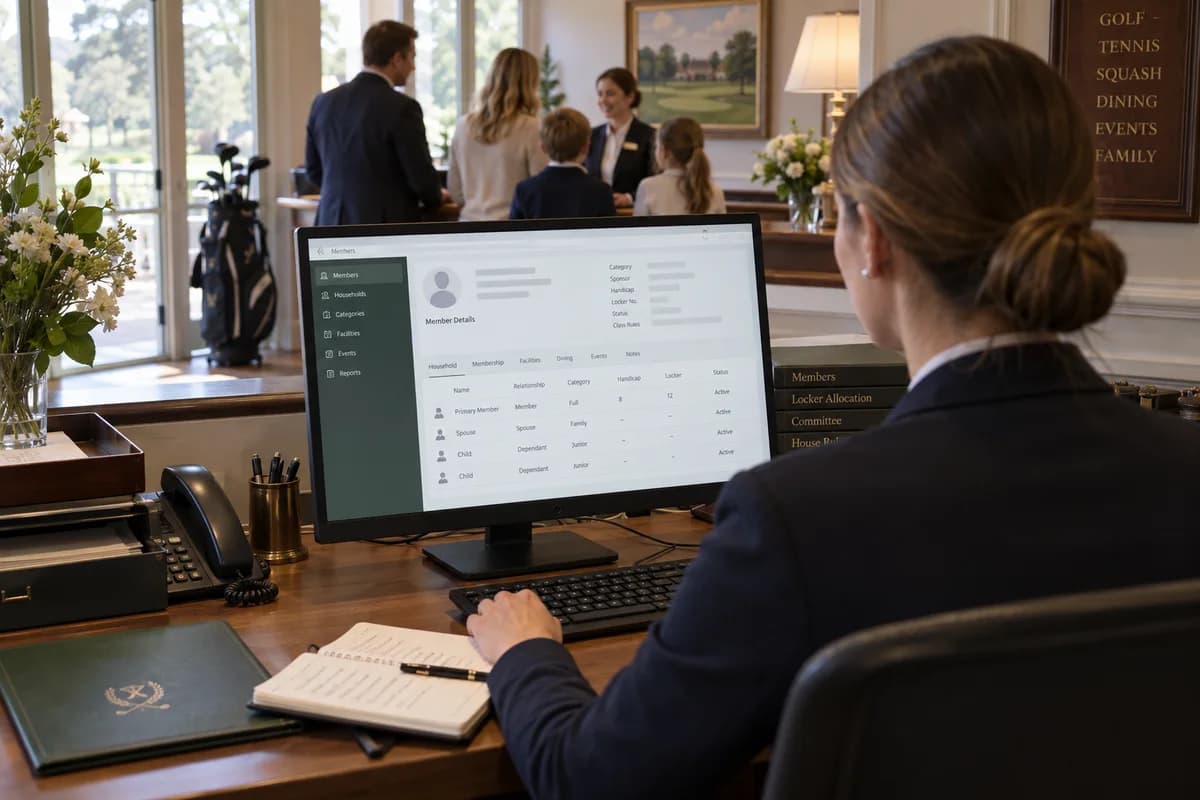
What a club statement and receipt carry
One page carries the month. Dues, dining, bar, lessons, functions and lockers each sit on their own lines, and every line says what it is. A receipt answers the other side. It records a payment against the account and shows what remains.
From month end to the member’s inbox
A statement ends the month for every account. Several teams post to it as the month runs, and the office then gathers all their charges. Here is how the run unfolds, and how receipts follow it once members start to pay.
Who issues statements and who reads them
Statements are issued by the office and read by everyone who answers a member. Receipts are written wherever money is taken. Four roles meet at the account, and each reads the same lines.
Settling statement rules before set-up
A statement is the club’s public face. Settle who changes what, and when the month closes. The membership office and the treasurer hold the answers, and they need a short talk.
How statements connect to other club features
The statement is where every other feature meets the member. Dues, dining, lessons and functions post to it, and payments reduce it. Receipts leave the account through an accounting export. Each connection means a line the office does not type. No line is typed twice.
- Dues and joining fees are raised as statement lines
- Dining and bar charges post to the same account
- Lesson and function balances appear as separate lines
- Accounting export carries receipts to the club’s books
- Dues outstanding and receipts reach committee reports
Where statements and receipts stop
The software issues statements and receipts. It does not take money itself, because the payment gateway and the bank do that, and their fees stay with the club. It does not keep the club’s accounts or decide how a receipt must read in law. Those stay with the club and its accountant. A small club can write receipts by hand.
Frequently asked questions
What does a member see on a statement?
A member sees the opening balance, each charge by date and source, each payment and the closing balance. Overdue amounts are marked. Every line says what it is, so the page answers its own questions.
Is a receipt issued for cash payments?
Cash is receipted like any other payment. The receipt shows the amount, the date, the method and the account credited. Staff issue it when the cash is counted in at the desk, not at month end.
How are part payments shown on a statement?
A part payment appears as a credit on the date it arrived. The balance still owed is shown beneath it. The account stays on the part-paid list until the remainder is received. The treasurer sees the gap.
Can a statement be corrected after it goes out?
A named person may correct a line and reissue the statement. The new copy carries its own date, so a member can tell it from the first. The correction is visible to the whole office.
How do receipts reach the club’s accounting software?
An accounting export carries receipts and charges to the club’s own accounting software. The treasurer sees what the export contains before it is used. Nothing leaves the club unchecked. The books themselves stay with the accountant.
How this feature fits the system.
Country Club Management Software: the parts that work with this feature, the trades that use it and the ways to put it in place.
Member and family records
Each member, spouse and dependant is held under one account, with class and joining date, so rules apply to the right person.
Contact & Account ManagementMembership applications
An application moves from sponsor to committee, and each decision is recorded with its date before the member number is issued.
Workflow and ApprovalsDues and joining fees
Annual dues and instalments are raised on set dates by category, and a part-paid or overdue account is flagged for the office.
Subscription BillingTell us what you need.
Tell us what your team does today, where work gets stuck and what you want to change.
What happens after you share your requirements
- We review your brief and the systems you already use.
- We clarify the workflow, missing information and the work to consider first.
- The proposed scope sets out the deliverables, responsibilities and dependencies.
- Review the scope and commercial terms before deciding whether to proceed.
Start with your requirements
Describe your current process, the people involved and the change you need. Start with the details you know; we can clarify the rest together.
Share your requirements