Committee reports for country clubs
Committee reports shows members by class, resignations, dues outstanding, the locker waiting list and food and beverage cost, ready for the board pack. The figures come from entries staff already make during the month. No one pulls them by hand from three files before each sitting.
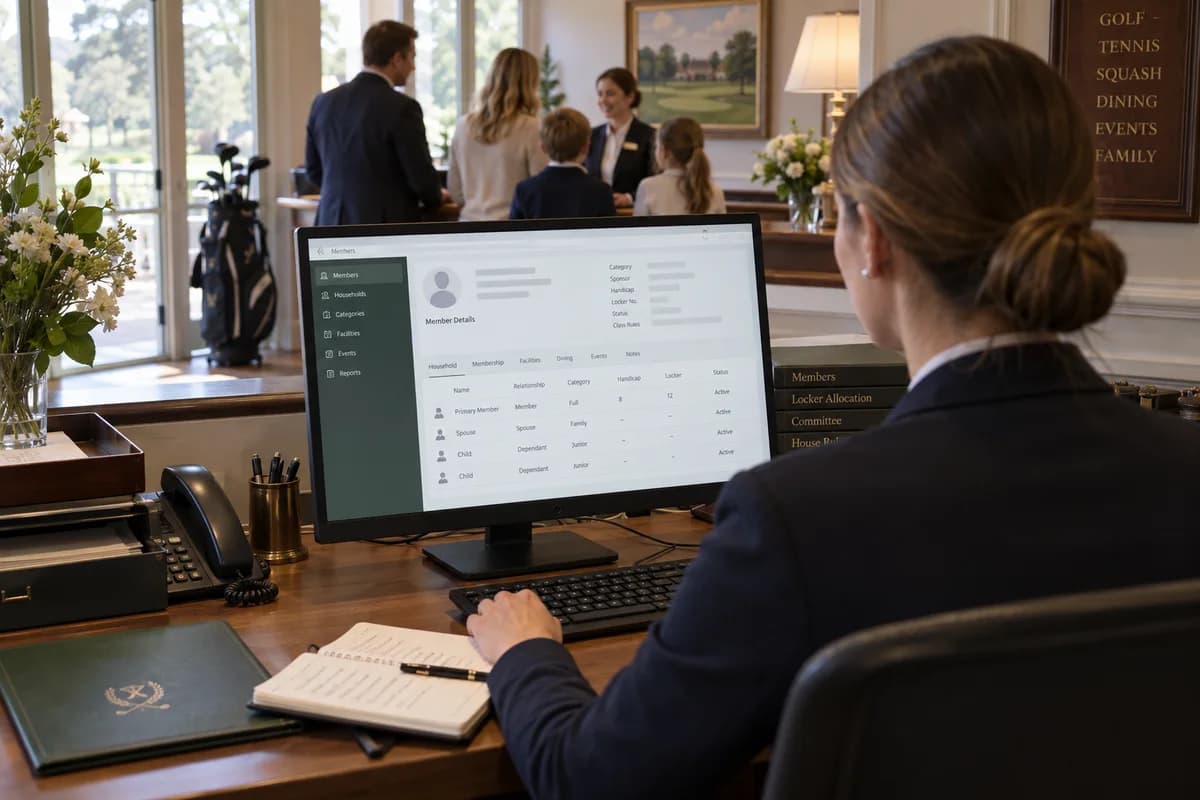
What the committee pack contains
A set of pages makes up the pack, each a count taken from live records. Members by class, resignations, dues outstanding, the locker waiting list and food and beverage cost form the core. Each page is current when opened. No figure is retyped.
Preparing for a committee sitting
A committee sits on a set date, and the pack must be ready before it. The work is reading, not compiling. Here is how the days before a sitting run, and how the meeting itself uses the pages in the room.
Who reads the pack and who prepares it
One audience reads it, and several hands build it. Members read it. Staff supply the entries behind it. Four roles touch it, and each has a different part to play.
Settling committee pack rules before set-up
A board pack goes to people who vote. Decide who sees what before the first one is built and sent. The general manager and the chair hold the answers.
How the pack draws on other club features
It makes nothing of its own. It reads what the other features hold. Every page traces back to entries made for another purpose, so staff do no extra work and the committee sees the same facts the desk sees. Nothing is invented for the pack.
- Class counts and resignations come from member and family records
- Dues outstanding come from dues and joining fees
- Food and beverage cost comes from dining and bar charges
- Function deposits and balances come from events and functions
- Application and waiting list counts come from membership applications
Where committee reports stop
It reports what has been entered. A charge not posted is not in it. It does not set policy, fix a fee or explain a figure, because the committee does that. Audited accounts, tax filings and legal advice stay with the club’s accountant and auditors. A small club with a short agenda can use a ledger.
Frequently asked questions
Can the board pack be ready before each sitting?
The pages are filled from live entries, so the secretary opens the pack and reads it. No one compiles figures from files. Late entries show as soon as they are made, even on the day.
Where do the figures in the pack come from?
Every figure traces back to an entry made elsewhere in the system, such as a member record, a charge or a receipt. It adds nothing of its own. A doubtful figure is checked at its source.
Can committee members see individual member names?
That choice rests with the club. A pack can show totals by class, or it can name members in arrears. Some committees choose totals for the pack. Settle this with the chair before the first one is built.
What if a figure looks wrong at the meeting?
The treasurer traces it to its entry. A missed posting or a late resignation is the usual cause. The office corrects the entry at once, and the page then agrees with the ledger the treasurer holds.
Does the pack replace our accountant’s accounts?
No, it cannot replace them. It serves the committee’s decisions during the year. The accountant prepares the accounts and any filings. An accounting export can carry figures across, and the books stay with the accountant.
How this feature fits the system.
Country Club Management Software: the parts that work with this feature, the trades that use it and the ways to put it in place.
Member and family records
Each member, spouse and dependant is held under one account, with class and joining date, so rules apply to the right person.
Contact & Account ManagementMembership applications
An application moves from sponsor to committee, and each decision is recorded with its date before the member number is issued.
Workflow and ApprovalsDues and joining fees
Annual dues and instalments are raised on set dates by category, and a part-paid or overdue account is flagged for the office.
Subscription BillingTell us what you need.
Tell us what your team does today, where work gets stuck and what you want to change.
What happens after you share your requirements
- We review your brief and the systems you already use.
- We clarify the workflow, missing information and the work to consider first.
- The proposed scope sets out the deliverables, responsibilities and dependencies.
- Review the scope and commercial terms before deciding whether to proceed.
Start with your requirements
Describe your current process, the people involved and the change you need. Start with the details you know; we can clarify the rest together.
Share your requirements