Price tiers by store for a discount chain
A discount chain does not charge one price in every store. Each item holds one price per store, with a start date. A buyer or owner sets it ahead, and every till changes on the morning it should. Shelf strips print from the same record. Nobody walks the aisle with a pen.
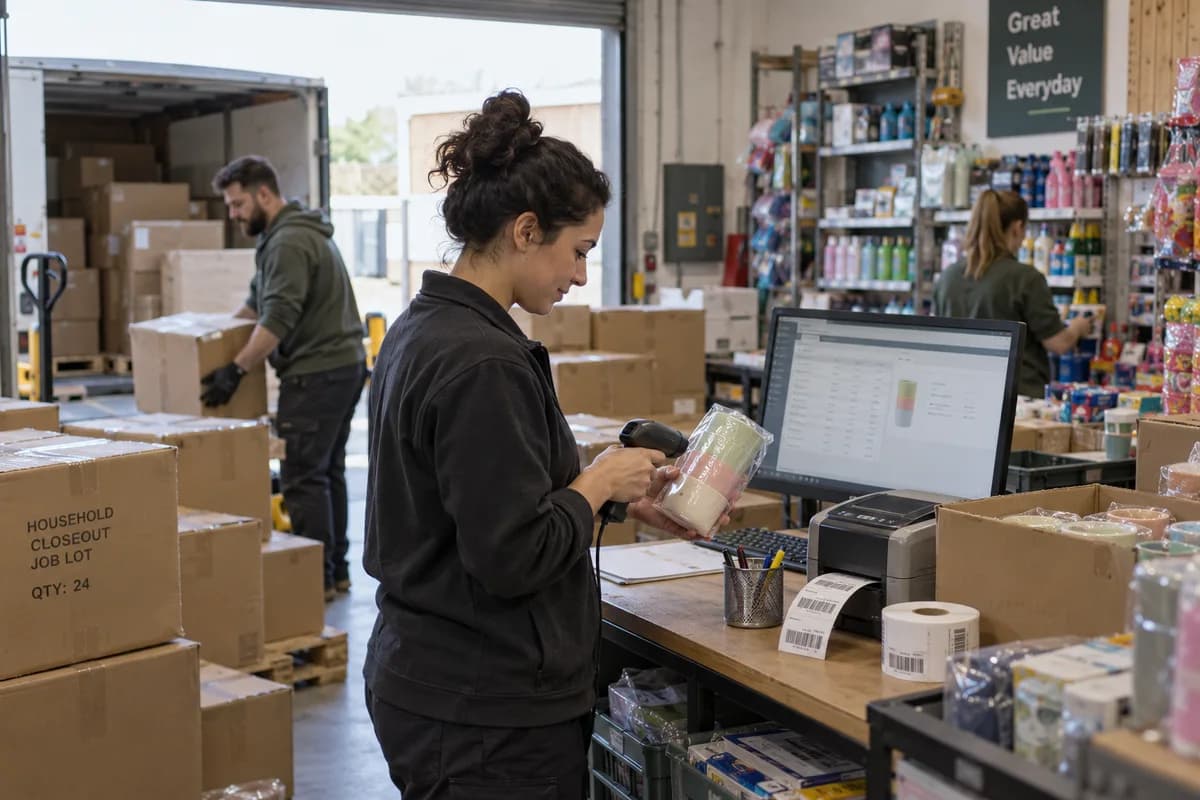
What a store price record holds
Each price is a small record with a store, an item and a date. Together they say what a blister pack costs in one shop on one morning. Two stores can hold two figures for the same line. That is by design.
Setting and reading prices through the week
Prices pass through several hands. The buyer sets one, the stockroom prints the strip, the stacker fits it and the cashier scans against it. The record keeps every one of them on the same figure, whichever store they work in.
Who sets a price and who only reads it
Every price touches the buying desk, the shop floor and the till. Four roles meet it, and each needs something different from it. Only some of them should change it. That is the owner’s decision.
Decisions to settle before prices are loaded
Prices are the quickest way to lose trust between the shop floor and the till. Four decisions should be agreed first. Take them to the owner, the buyer and each store manager together.
How price tiers feed the rest of the product
Price tiers are read by nearly every selling feature in the product. The item master supplies the line, and the price record becomes the figure that each label, each deal check and each sale depends on. Five links are worth knowing. They run in both directions.
- Takes items and landed cost from the item master
- Gives shelf strips their figure in barcodes and labels
- Sets the base price that multi-buy rules discount
- Hands the till its charge per store
- Supplies a starting price for seasonal mark-downs
Where price tiers stop for a chain
The figure you chose is what they record. They do not tell you what to charge, match a competitor’s shelf or settle what a price must show under local rules. Tax and currency settings are reviewed with your accountant at set-up. A single shop with a few dozen lines can keep prices in a notebook and a till roll.
Frequently asked questions
Can two stores charge different prices for one item?
Each item holds a price for every store, with its own start date. A till reads only its own store’s figure. The owner compares stores on one screen, and no store depends on another’s sign.
How do we schedule a price change for a future date?
Enter the new price for each store with a start date. The earlier figure holds until that morning. The new one then applies on every till at once. A strip for it prints from the same record.
Will shelf strips change on the same morning?
Strips print from the same price record the till reads. The figures match. Fitting a new strip on the peg before opening is a shop task, and a printed queue shows what is waiting for each store.
Does a new store inherit our prices?
A new store inherits the item list and takes its own prices. Enter a price for each line, with a start date. The new till then reads only that store’s figures. Nothing is copied by hand.
Who can override a price at the till?
An override at the till needs a supervisor’s key. It applies to that sale only and is recorded. The price record is untouched. The next sale charges the figure held for that store again, with no manual reset.
How this feature fits the system.
Discount Store Management Software: the parts that work with this feature, the trades that use it and the ways to put it in place.
Item master and job-lot receiving
Every closeout lot becomes items with your own codes and landed cost, so one mop head no longer sits under two names.
Product ManagementBarcodes and shelf labels
Cartons that arrive without a code get a printed barcode, and shelf-edge strips print from the very price the till reads.
Barcodes and LabelsPrice tiers by store
A price change is dated and reaches each store’s till together, instead of being copied by hand onto laminated signs.
Price Lists and SchemesTell us what you need.
Tell us what your team does today, where work gets stuck and what you want to change.
What happens after you share your requirements
- We review your brief and the systems you already use.
- We clarify the workflow, missing information and the work to consider first.
- The proposed scope sets out the deliverables, responsibilities and dependencies.
- Review the scope and commercial terms before deciding whether to proceed.
Start with your requirements
Describe your current process, the people involved and the change you need. Start with the details you know; we can clarify the rest together.
Share your requirements