Condition checks and hour meter readings for hire
Condition checks and meter readings record how a machine left the yard and how it came back. Photographs, diesel level, damage and the hour meter reading are taken at delivery and again at return. Comparing the two settles charges for a bent bucket, a missing key or an empty tank.
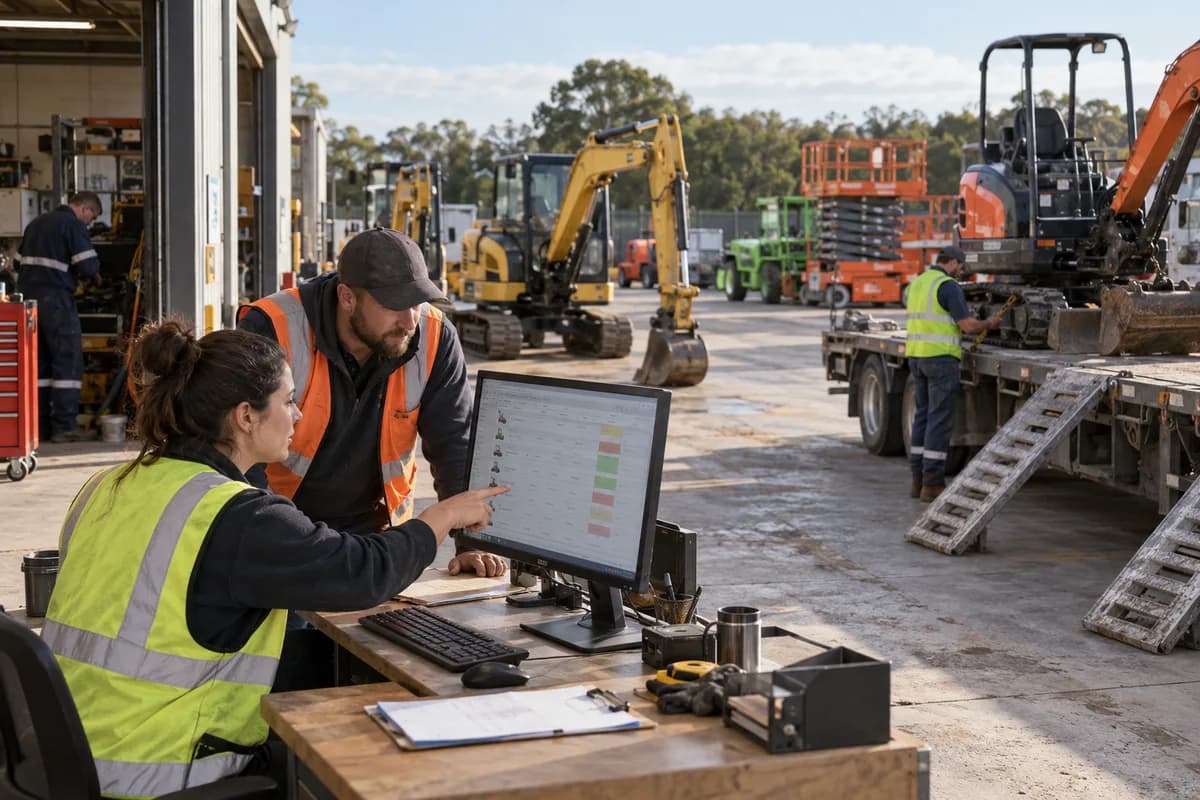
What a hire condition check records
A check is a short record made twice for every hire. The first is taken as the machine leaves. The second is taken as it returns. Each is dated and sits on the contract, so the pair can be laid side by side.
Checks through the hire of one machine
A machine is checked at the gate going out and again when it comes back. Four moments carry the value of this record. Each is small. Each shows a person at the yard or on site doing something small and specific.
Who uses the checks and readings
Several roles touch the same check, and each wants a different result. Counter staff want a clean answer for the hirer. The workshop wants the reading. Accounts want a charge they can defend.
Decisions about checks before set-up
No check is useful unless everyone fills it in the same way. Settle these four points with the yard manager, the workshop lead and the owner. Do it before a machine goes out.
How checks connect to the rest of hire
Checks sit in the middle of the hire. They take the unit and contract from one side and give charges and servicing data to the other. What they record is used again within the product, by several roles. Nothing is keyed twice, whichever role records it first.
- Rental contracts hold the delivery and return checks together
- Delivery and collection supply the gate and the photographs
- Workshop jobs open from damage and hour readings at return
- Invoices, deposits and dues take hours, damage and refuelling lines
- Equipment register keeps the latest reading on the unit
Where checks and readings stop
This feature records what a person saw and keyed in. It does not decide who is liable for damage or whether a claim would succeed. Those questions stay with the owner and a legal adviser. Software does not read a meter. A figure is only as true as the person who typed it. A single machine lent now and then can use a signed check sheet.
Frequently asked questions
How is a missing ignition key charged?
The key is noted as missing at return and compared with the delivery check. The delivery check shows whether it was there. If it left with the machine, a charge line goes to the invoice at the rate in your contract terms.
What if the hirer disputes the meter reading?
The delivery reading and the return reading are both on the contract, each with its date. Staff compare them with the figure the hirer gives on the phone. The record settles it. Recollection does not, and it need not be asked.
Do photographs stay after the hire is closed?
They stay on the contract. They sit beside the signed handover. Staff can open them whenever a query arrives later from the hirer. The owner decides how long contract records are kept, after advice from an adviser.
Does an empty tank add a charge automatically?
The diesel level at return is on the check, and a refuelling charge follows the terms on your hire form. Staff add the line to the invoice. The amount is not guessed at the counter.
Who carries out the check at delivery?
Yard staff or the driver, depending on how the yard works. The check is completed on a phone. It is done before the machine leaves. The site contact then confirms it on arrival, and the signature is saved.
How this feature fits the system.
Equipment Rental Management Software: the parts that work with this feature, the trades that use it and the ways to put it in place.
Enquiries and customers
Every enquiry is logged with its source, dates and site, so a request for a machine is followed up from the counter and not lost.
Lead ManagementEquipment register
Each excavator, lift or generator is held with its serial number, attachments, location and purchase details, and its hire history grows on the same record.
Fixed Asset RegisterQuotations and rate cards
A quotation is priced from the rate card for the machine class and hire basis, with operator and transport lines added and every revision kept.
Quote & Proposal ManagementTell us what you need.
Tell us what your team does today, where work gets stuck and what you want to change.
What happens after you share your requirements
- We review your brief and the systems you already use.
- We clarify the workflow, missing information and the work to consider first.
- The proposed scope sets out the deliverables, responsibilities and dependencies.
- Review the scope and commercial terms before deciding whether to proceed.
Start with your requirements
Describe your current process, the people involved and the change you need. Start with the details you know; we can clarify the rest together.
Share your requirements