Invoices, deposits and dues for hire firms
Invoices, deposits and dues turns a hire contract into a tax invoice and tracks what the hirer has paid. Charges run by period or by hours. Extension and damage lines are added. Deposits are held and then set against the final balance, and the oldest unpaid contract is shown first.
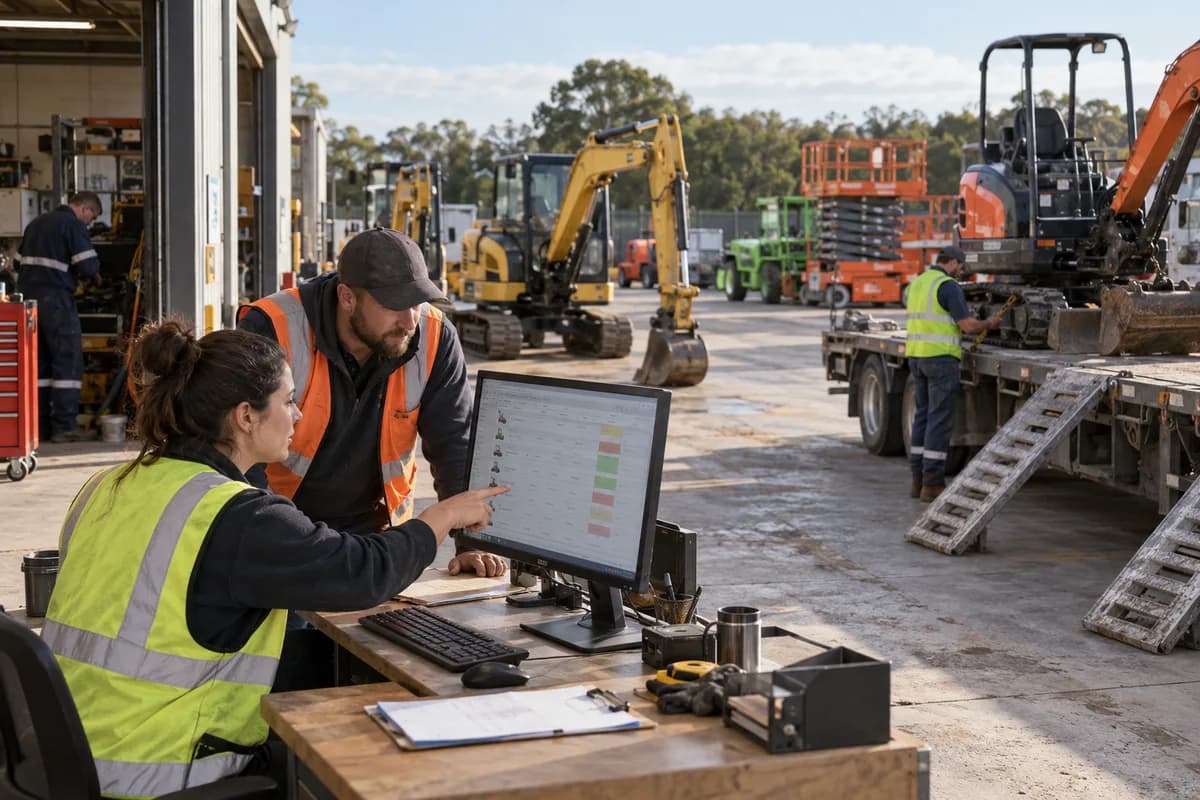
What a hire invoice and its payments hold
An invoice here is built from the contract, not typed afresh. A deposit and the receipts sit beside it, so the balance is always the contract’s own figure. Four kinds of record make up the picture. Each has its own place on the page.
Billing and collecting through a hire cycle
Money moves at several points in a hire. A deposit is taken before the machine leaves. Extensions arrive mid-hire. The invoice is raised at the end. The moments below follow that path in the order it runs, from the counter to the accounts desk.
Who handles billing and dues
Billing is an accounts task, but it draws on every other role. The yard supplies readings and fuel notes. The counter supplies extensions. The owner reads the totals that come out of it.
Decisions about billing before set-up
Billing rules touch money, so they are settled with the owner and accounts before any invoice goes out. Four points matter. Each is quick to state. Each is awkward to change once invoices are in the hirers’ hands.
How invoicing connects to the rest of hire
An invoice is the last thing a hire produces and the first thing accounts care about. It draws on nearly every other part of the product, from the rate card to the workshop. Reading from the contract means the agreement and the bill do not drift apart. They stay linked.
- Rental contracts supply period, units, extensions and standby days
- Condition checks supply hours run, damage and refuelling lines
- Quotations and rate cards supply the agreed rates and deposit
- Delivery and collection supply transport lines priced on the quotation
- Branches and yards read earnings and dues by yard
Where invoices, deposits and dues stop
This feature produces invoices and records payments. It does not file tax returns or decide how tax applies to hire. Tax lines and layout are agreed with you at set-up, and the conclusions stay with your accountant. A payment gateway and accounting software export are separate links, priced as parts. A yard billing a few hires can use an invoice book.
Frequently asked questions
Can a deposit be set against the final balance?
The deposit held against the contract is set against the total when the final invoice is raised. The remainder is what the hirer owes. If the deposit is larger, the difference is a matter for accounts and your terms.
How does the oldest unpaid contract come first?
Dues are listed by the age of the contract’s unpaid balance, oldest at the top. Accounts start there each day. A hirer long overdue is not buried under newer, smaller balances, and staff do not need to scroll.
Can a long hire be invoiced in stages?
Invoices can be raised by period as the contract runs. Extensions and standby days fall into the period they occurred in. Each stage points back to the same contract. The full hire stays easy to read.
Can payments be taken by card or online?
A payment gateway link can be added. It is priced as a part of the quotation. The fees your gateway provider charges are separate and are yours to pay. Receipts are then posted to the contract when payment arrives.
Can invoices go into our accounting software?
An accounting software export is available. Invoices and receipts leave in a form your accountant can load. Your accountant decides the ledger accounts. GullySystem staff set up the export with you at the start of the project.
How this feature fits the system.
Equipment Rental Management Software: the parts that work with this feature, the trades that use it and the ways to put it in place.
Enquiries and customers
Every enquiry is logged with its source, dates and site, so a request for a machine is followed up from the counter and not lost.
Lead ManagementEquipment register
Each excavator, lift or generator is held with its serial number, attachments, location and purchase details, and its hire history grows on the same record.
Fixed Asset RegisterQuotations and rate cards
A quotation is priced from the rate card for the machine class and hire basis, with operator and transport lines added and every revision kept.
Quote & Proposal ManagementTell us what you need.
Tell us what your team does today, where work gets stuck and what you want to change.
What happens after you share your requirements
- We review your brief and the systems you already use.
- We clarify the workflow, missing information and the work to consider first.
- The proposed scope sets out the deliverables, responsibilities and dependencies.
- Review the scope and commercial terms before deciding whether to proceed.
Start with your requirements
Describe your current process, the people involved and the change you need. Start with the details you know; we can clarify the rest together.
Share your requirements