Rental contracts for equipment hire firms
Rental contracts turn an accepted quotation into the hire agreement for a plant or equipment yard. The contract names the units, attachments, period, site, responsible person and terms. A hire that runs over, a machine kept on standby or one returned early is noted against the contract line, with the date and who agreed.
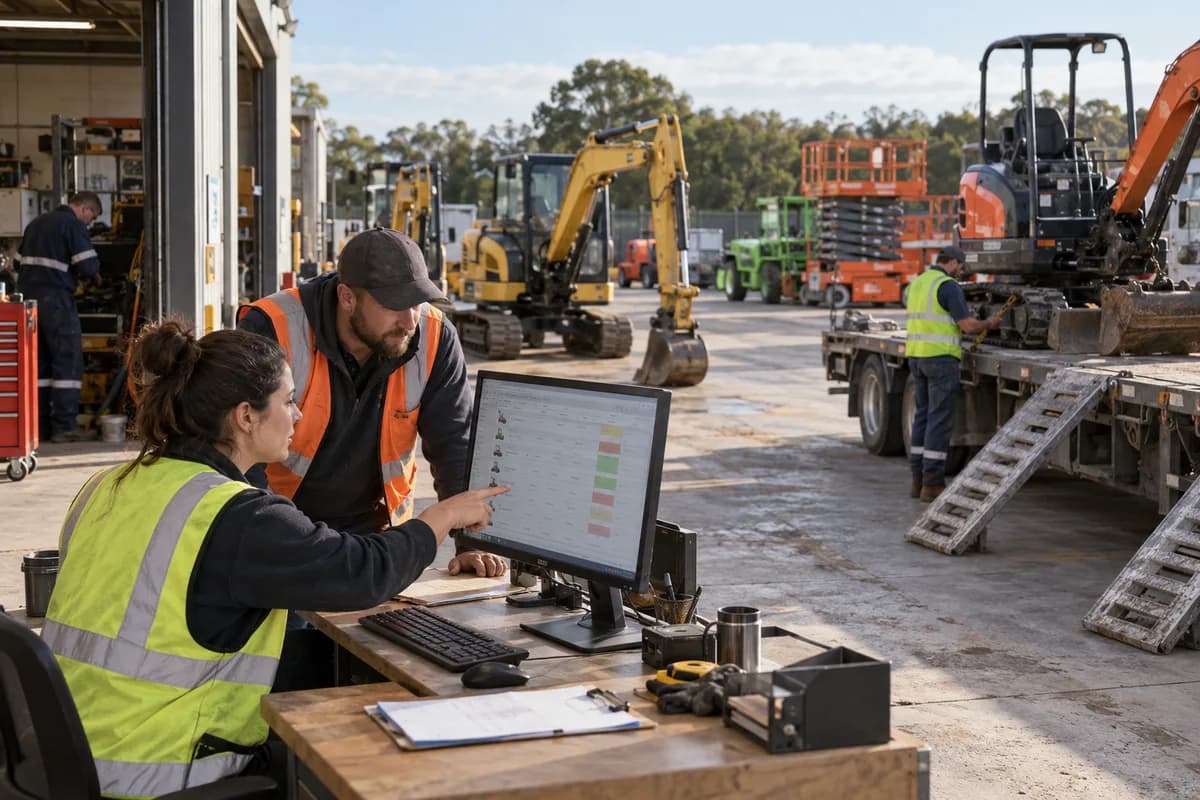
What a hire contract records
A contract is the one document a dispute is settled from. It starts as the accepted quotation. It grows as the hire runs, and nothing is deleted. Everything agreed about the machine, the site and the money is on it, in date order.
Contracts through a hire’s life
Few counter tasks last as long as a hire contract does. It is opened on one day, changed on several others, and closed when the machine is back and the invoice and deposit are settled. These moments mark that path.
Who handles the contract and how
Contracts pass through every role in the yard. Each person touches a different part, and each sees the whole page. That shared view is what ends the argument over who said what.
Decisions about contracts before go-live
Contract rules reflect how a yard wants to be treated by its hirers. Settle these four points with the owner and the counter lead. Keep the hire form on the table. Do it before any live contract is opened.
How contracts connect to the rest of hire
The contract is the centre of the hire. It takes its lines from the quotation and its dates from the calendar. It gives the delivery plan, the handover and the billing something to work from. Questions about a hire are answered here, whether they come from site or from accounts.
- Quotations and rate cards supply the priced lines
- Availability calendar holds the units for the contract dates
- Delivery and collection attach the signed handover
- Condition checks compare delivery and return against the contract
- Invoices, deposits and dues take charges and extensions from it
Where rental contracts stop
It does not draft your hire terms, judge whether a clause will hold up, or enforce it against a hirer. Wording and legal effect stay with the owner and a legal adviser. Insurance cover is arranged with an insurer. An owner with a single machine and an occasional hire can use a signed hire form and a diary.
Frequently asked questions
Can the yard open a contract from a phone?
Drivers and yard staff open it at the gate to check units, attachments and site. They add photographs and a signature there. Counter staff see the same page back at the yard. Nothing waits for a paper form to return.
Who is shown as agreeing a change?
Each change carries its date and the name of whoever agreed it. Staff record it at the time of the call. A later dispute is settled from the contract history.
What happens if a machine is returned early?
Staff record the return and note the early finish on the contract line. Charges follow the terms you agreed, such as a minimum hire period. The calendar then shows the machine free from that date. Billing follows from there.
Where is the signed handover kept?
It stays on the contract. It sits beside the delivery photographs. Drivers collect the hirer’s signature from a phone at the site. Staff can open the contract later to read it. A query from a hirer about who signed is settled by looking.
Who changes the terms printed on contracts?
Rate and contract-term changes are made by GullySystem staff when you ask. The owner decides the wording, and counter staff do not edit it at the counter. Take new clauses to a legal adviser first. Then send the request.
How this feature fits the system.
Equipment Rental Management Software: the parts that work with this feature, the trades that use it and the ways to put it in place.
Enquiries and customers
Every enquiry is logged with its source, dates and site, so a request for a machine is followed up from the counter and not lost.
Lead ManagementEquipment register
Each excavator, lift or generator is held with its serial number, attachments, location and purchase details, and its hire history grows on the same record.
Fixed Asset RegisterQuotations and rate cards
A quotation is priced from the rate card for the machine class and hire basis, with operator and transport lines added and every revision kept.
Quote & Proposal ManagementTell us what you need.
Tell us what your team does today, where work gets stuck and what you want to change.
What happens after you share your requirements
- We review your brief and the systems you already use.
- We clarify the workflow, missing information and the work to consider first.
- The proposed scope sets out the deliverables, responsibilities and dependencies.
- Review the scope and commercial terms before deciding whether to proceed.
Start with your requirements
Describe your current process, the people involved and the change you need. Start with the details you know; we can clarify the rest together.
Share your requirements