Asset Register for Facility Management Sites
The register lists what is actually installed at each site. Make, capacity, serial number, warranty and every service done against that unit sit on one page.
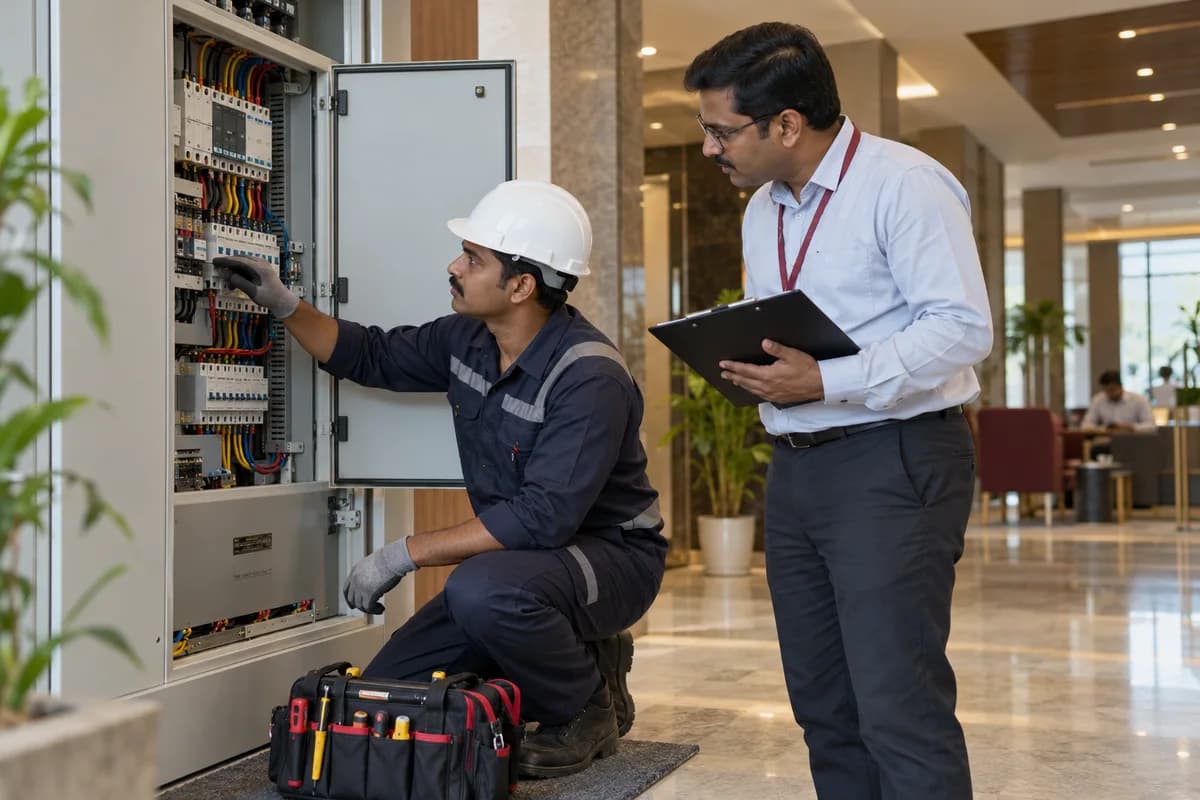
What is recorded against a unit
The register answers the questions a new facility manager asks in week one.
Building the register
A new site begins with a walk. The facility manager lists the pumps, panels, motors, lifts, tanks and fire equipment block by block. Photographs and nameplate readings go in with each entry, so make and capacity are not written from memory months afterwards. Your client is handed the list to confirm.
Labels on the unit
A QR label can be pasted on each unit. A technician scans it and the asset page opens with its history. The round for that unit can be filled from the same screen. Whether labels are used at all is your choice, site by site.
What the register does not claim
It records what your team entered.
- It puts no value on the asset for anybody’s books
- It does not settle who owns the equipment at the site
- It holds your own entries, not a vendor certificate
- Depreciation and capitalisation stay with the client’s accountant or advisor
Frequently asked questions
Who enters the assets at a new site?
The site facility manager, during the first walk, with photographs. The back office then checks the sheet before it is shown to the client.
Can a unit be moved between sites?
Yes. The move is dated on the register, and the service history travels with the unit rather than staying behind.
Does the register warn before a warranty ends?
Yes. Units whose warranty is running out appear on a dated list, so a renewal can be taken up with the vendor.
How are spare parts linked to a unit?
A part issued on a breakdown is recorded against the asset and against the complaint, so the cost of a troublesome pump is readable.
Tell us what you need.
Share your requirements and one of our engineers will come back to you within one business day.
- No obligation
- A reply within one business day
- Your details stay private
Start with your requirements
Seven short steps that tell us what you need. An engineer reads them before getting in touch.
Share your requirements