Handover and aftercare for paving contractors
Handover and aftercare close a hardscaping job properly. An inspection, a snag list and a sign-off are recorded with photographs. Then aftercare visits such as joint sanding and sealing are diarised, and the workmanship warranty terms stay with the job. Customers know what happens next, and so does the office.
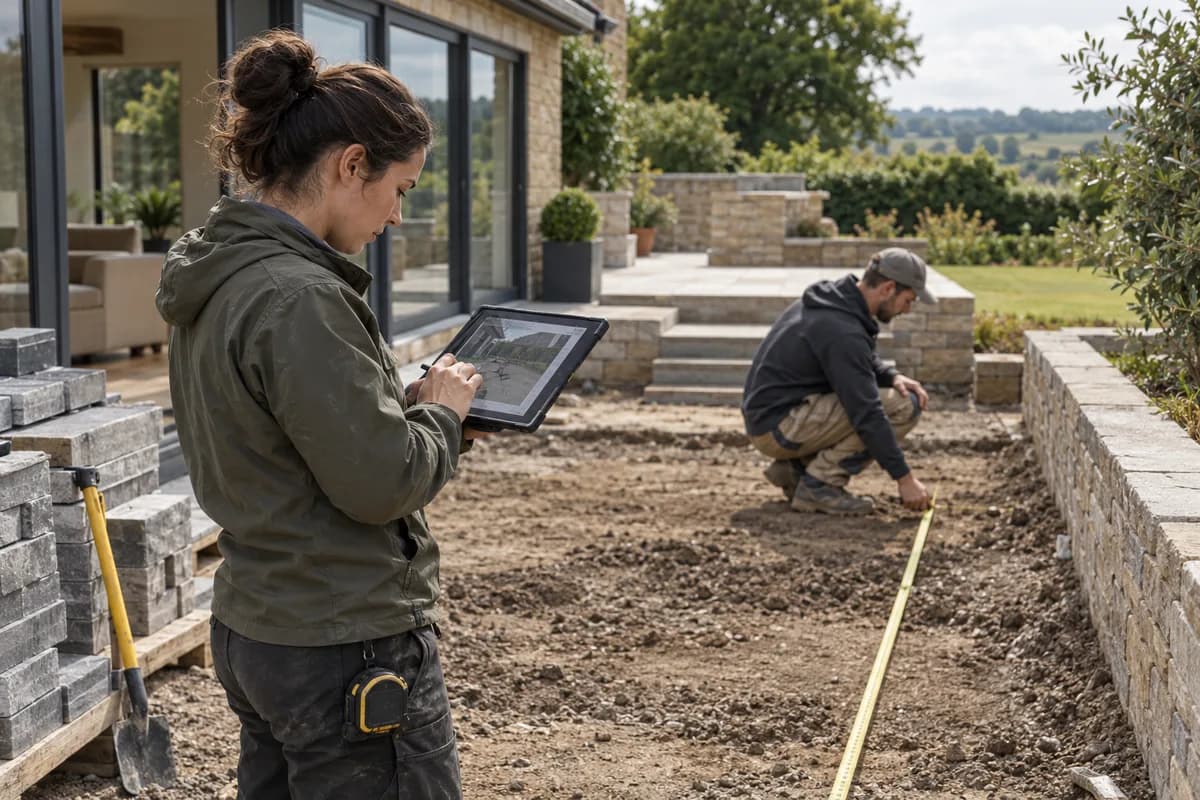
What a hardscaping handover record holds
A handover record is the last page of a job and the first page of its aftercare. It holds what was inspected, what was found, who accepted the work and what is owed afterwards. The warranty terms sit beside it.
A handover afternoon and the visits after
Handover is a short event with a long tail. On the day, a walk round the finished patio sets the snags, and a sealing visit follows later. Four moments show both ends. Each is held on the same job record.
Who uses hardscaping handover and aftercare records
Several people read a handover record. Crew leaders walk the site, the office books the visits, the owner reads the warranty terms and customers see their dates.
Hardscaping handover settings to agree first
Handover is where goodwill and money meet, so the firm should agree its habits first. GullySystem staff then set up the checklist and aftercare dates as agreed. Four decisions come first.
How handover connects to the rest of the product
Handover collects what the job has recorded. Then it passes it on to billing and the schedule. Stage photographs show the finished state, sign-off lets the final invoice be raised, and aftercare visits go on the schedule. A variation accepted late is settled and billed before the file closes.
- Stage photographs from job stages and progress show finished work
- Sign-off lets stage invoices and retentions close the account
- Aftercare visits go onto crew and plant scheduling
- Job costing keeps any aftercare cost against the job
- Late variations are settled before the file closes
Where hardscaping handover records stop
Handover records the inspection, the snags, the sign-off and the aftercare dates. It does not decide whether work meets a standard, certify it for any authority or settle a warranty claim. A failed joint is judged by the owner and, if needed, by an independent adviser. The firm’s adviser writes the warranty’s legal terms. A one-off garden path can be handed over with a signed note and a photograph.
Frequently asked questions
Can snags be raised by the customer later?
A snag found after sign-off is logged against the same job, with a photograph and the date reported. Whether it falls under the warranty is the firm’s decision. The record keeps the dates side by side.
How are aftercare visits scheduled?
Each aftercare visit, such as joint sanding or sealing, is given a date on the job at handover. A crew is booked nearer the date. Customers see the date on their own record and are told by message.
Where are warranty terms kept?
The workmanship warranty terms are stored with the job, beside the sign-off and the photographs taken at each stage. They are keyed in from the firm’s own wording. A later call finds them in one place.
Can the final invoice wait for snags?
That is the firm’s rule. Where the contract ties the final invoice to a clear snag list, it is raised after the last snag is closed. Otherwise it follows sign-off. Both routes are set up with you at implementation.
Does handover cover retention release?
The retention held on a commercial job is shown at handover, with its release date from the contract terms. When the date falls due the office sees it on the list. Release follows the contract terms agreed.
How this feature fits the system.
Hardscaping Contractor Management Software: the parts that work with this feature, the trades that use it and the ways to put it in place.
Quotations by area and material
Measured areas and depths multiply your unit rates into a quote, and each revision the customer saw stays on file.
Estimate/Quotation ManagementSupplier orders and deliveries
Orders for aggregate, block and pavers are raised per job, and each delivery is received against its order.
Purchase Order ManagementSupplier orders and deliveries
A drop is checked on arrival against its delivery note, so short or damaged pallets are noted before the driver leaves.
Goods Receipt (GRN)Tell us what you need.
Tell us what your team does today, where work gets stuck and what you want to change.
What happens after you share your requirements
- We review your brief and the systems you already use.
- We clarify the workflow, missing information and the work to consider first.
- The proposed scope sets out the deliverables, responsibilities and dependencies.
- Review the scope and commercial terms before deciding whether to proceed.
Start with your requirements
Describe your current process, the people involved and the change you need. Start with the details you know; we can clarify the rest together.
Share your requirements