Masonry site jobs and work orders on one record
Masonry site jobs and work orders turn an accepted estimate into one running record for a building, a wall or a repair. Stages, crew, material and schedule sit together, from the first course to the final finish. Foremen log the day’s work and any weather delay from a phone.
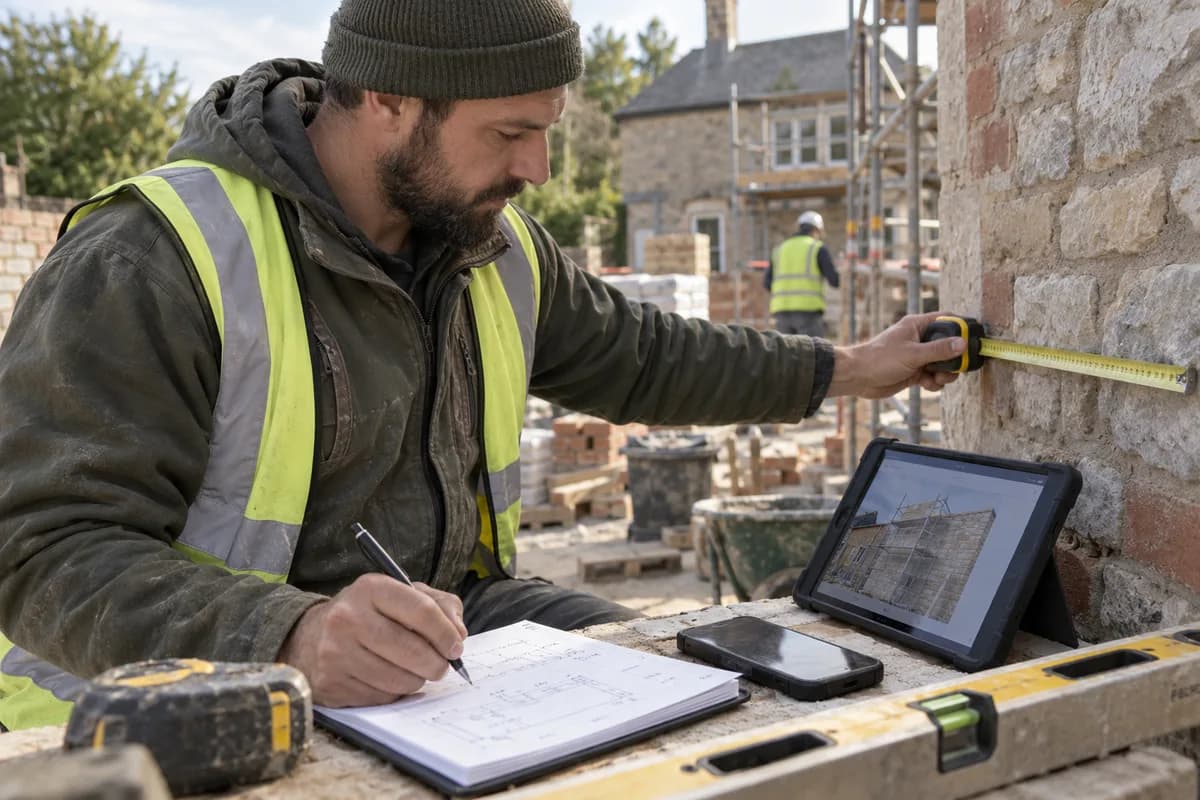
What a masonry site job record carries
A job record opens from an accepted estimate and stays open until handover. It holds the stages the work will pass through, the crew named for it, the material it draws and the dates it is meant to keep. The foreman adds each day’s work.
A masonry job from first course to handover
The office opens a job record, and the site team then lives in it. These moments follow a house extension, with a retaining wall beside it, from acceptance to handover. Each moment is a small entry made on a phone or at the desk. Entries are short.
Who sees what on a masonry job
One job record serves the whole firm. Each person opens it for a different reason. The four roles below touch it on every working day, from the owner’s desk to the scaffold.
Job set-up decisions for a masonry firm
Stages and rules decide how useful a job record is. These four points are agreed with you during the build, and the office works to them afterwards. Settle them before the first live job.
How site jobs link to other masonry features
The job is the spine of the record. It takes its quantities from the estimate and its crew from attendance, then gives orders, bills and repairs a place to attach. Each hand-off points back to one job, so nobody searches three separate files or a foreman’s notebook.
- Takes stages and quantities from Estimates and rate lists
- Draws crew days from Mason crews and attendance
- Raises Material orders and delivery checks against the job
- Hands measured stages to Measurements and stage bills
- Keeps the structure for later Repairs, restoration and call-backs
Where site job records stop
A site job records what happened and what is due. It does not design the wall. It does not check structural soundness or replace the supervisor’s judgement on site. Safety rules, permits and an engineer’s sign-off stay with the owner and the people qualified to give them. A single mason on a small garden wall can keep a notebook.
Frequently asked questions
Can one job hold several stages and several crews?
Yes, a building job carries each stage with its own dates, and crews are assigned stage by stage or for the whole job. A subcontractor can be named on one stage only. The stage list is set during the build.
Can one mason be marked present at two sites?
Attendance is marked by site, so the foreman can record a mason on one site and then another. Wages are worked out from those entries. Say how a split day is paid when the wage rules are set.
Can we see how far each stage has got?
Stages carry their own status, set by the foreman or the office as work is laid. The job lists stages in order. An owner sees what is done, under way or still waiting, at a glance.
What if a late delivery holds up a job?
Log the hold on the job. Name the late order in the note. Expect the schedule to move, with the delay note beside the order. Later, if the client queries the date, both entries are there.
How do we close a job when snags remain?
Keep the job open and list each snag. Each is closed by the foreman as the crew fixes it. Handover is recorded when the list is clear. The final bill follows from the last stage measured.
How this feature fits the system.
Masonry Contractor Management Software: the parts that work with this feature, the trades that use it and the ways to put it in place.
Enquiries and site visits
Each enquiry is logged with its source and address and a visit is scheduled, so builders and homeowners are followed up from one list.
Lead ManagementEstimates and rate lists
Estimates are built from the firm’s own material, labour, scaffolding and waste rates, with each revision kept beside the original figure.
Estimate/Quotation ManagementSite jobs and work orders
Every wall, building or repair runs as a job with stages, crew, material and schedule, from the first course to the final finish.
Work Order ManagementTell us what you need.
Tell us what your team does today, where work gets stuck and what you want to change.
What happens after you share your requirements
- We review your brief and the systems you already use.
- We clarify the workflow, missing information and the work to consider first.
- The proposed scope sets out the deliverables, responsibilities and dependencies.
- Review the scope and commercial terms before deciding whether to proceed.
Start with your requirements
Describe your current process, the people involved and the change you need. Start with the details you know; we can clarify the rest together.
Share your requirements