Measurements and stage bills for masonry contractors
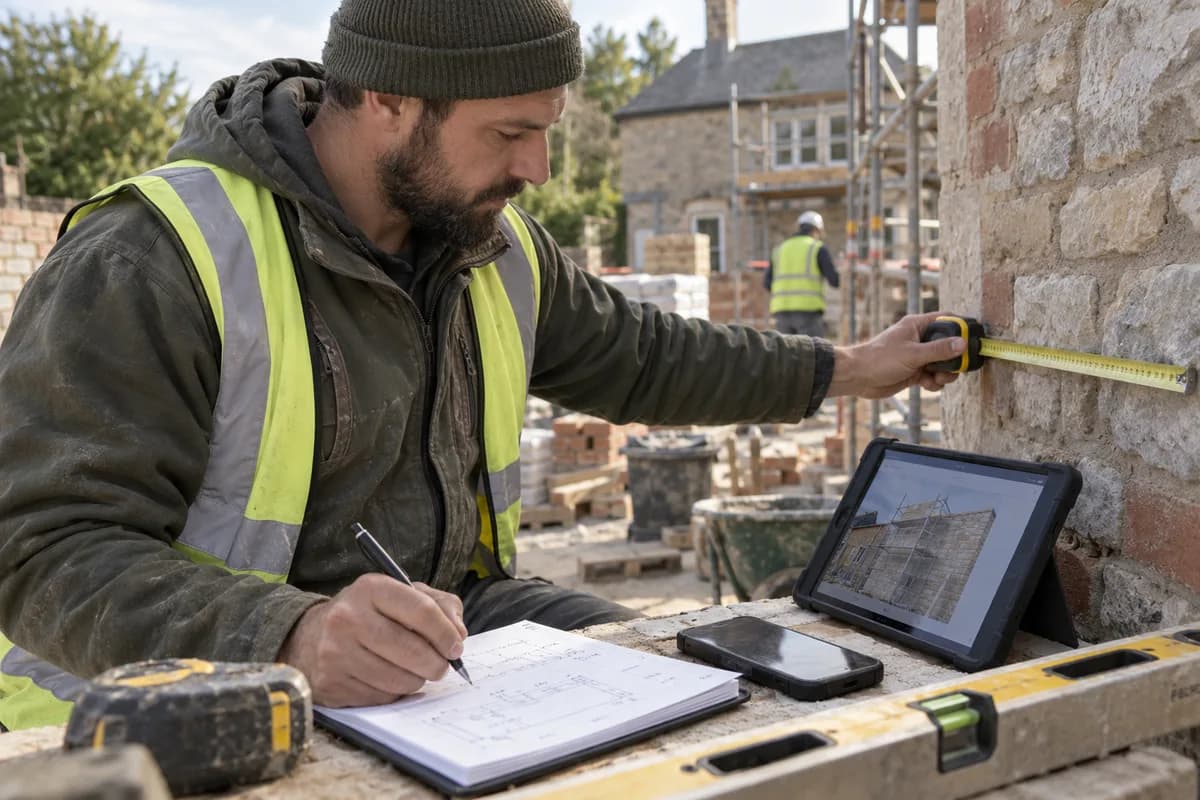
Measurements and stage bills records the work done against each stage as the measurement behind the bill. Stage and final bills are raised from it, and the retention each client holds back is tracked. Foremen measure on site, and the office bills from what they recorded.
What a masonry measurement and stage bill keep
A measurement is the quantity of work done in a stage, taken on site. A stage bill is raised from it. The bill, the measurement behind it and any retention held back are kept together on the job, under the client’s name.
From measurement to stage bill on site
Every stage bill starts on the wall, not at the desk. These moments follow a boundary wall, a house extension and a chimney repair through measurement, billing and handover, from the first level to the last bill. Each step adds to the same record.
Who measures, bills and reads the stage bills
Billing runs on four hands. Foremen measure and the office bills. The owner watches the gap between work laid and work billed. Piece-rate crews are paid from the same figure.
Billing decisions to settle before stage bills start
Stage bills carry the firm’s money. The rules should be plain. These points are agreed with you during the build. Settle them before the first live bill goes to a client.
How measurements link to other masonry features
Measurements sit at the middle of the money side of the product. They come from the job’s stages, feed the bill, and then hand each bill on to receipts. Some also feed crew pay and subcontractor balances. Five hand-offs matter.
- Takes stages and quantities from Masonry site jobs and work orders
- Gives piece-rate quantities to Mason crews and attendance
- Hands each raised bill to Receipts and dues
- Reads subcontract work done from Subcontractors and vendors
- Keeps the measured structure for Repairs, restoration and call-backs
Where measurement and billing stop
This feature records measurements and raises bills. It does not agree the contract, certify the work as sound or decide what a client may withhold. Tax lines, retention law and any dispute over a measurement stay with the owner and an adviser. A single small repair billed once on completion needs no stage record, only a bill.
Frequently asked questions
Can a stage be measured more than once?
Yes, a long stage can be measured as it goes, and each measurement is kept with its date. Earlier figures stay on file. A bill for part of a stage points to the measurement it rests on.
Where does the measurement behind a bill live?
It is kept with the bill and with the job. Open a stage bill and read the measurement that supports it, with its date and the stage it belongs to. A client query starts there.
Can we see all the retention clients hold?
Yes, the report of stage bills raised and retention held lists each client’s retention. It shows what is withheld now and what has been released. Release dates are tracked too. The date follows the contract.
What does a stage bill show the client?
The bill shows the stage, the quantity measured, the rate and the retention withheld. Currency, tax lines and the layout follow your country. Each one is set with you during the build. You review the layout before use.
What if a measurement is wrong after billing?
A correction follows the rule you set for who may change a measurement. The bill rests on the measurement, so the office reviews the bill too. Agree how an adjustment is shown to the client. Set that rule early.
How this feature fits the system.
Masonry Contractor Management Software: the parts that work with this feature, the trades that use it and the ways to put it in place.
Enquiries and site visits
Each enquiry is logged with its source and address and a visit is scheduled, so builders and homeowners are followed up from one list.
Lead ManagementEstimates and rate lists
Estimates are built from the firm’s own material, labour, scaffolding and waste rates, with each revision kept beside the original figure.
Estimate/Quotation ManagementSite jobs and work orders
Every wall, building or repair runs as a job with stages, crew, material and schedule, from the first course to the final finish.
Work Order ManagementTell us what you need.
Tell us what your team does today, where work gets stuck and what you want to change.
What happens after you share your requirements
- We review your brief and the systems you already use.
- We clarify the workflow, missing information and the work to consider first.
- The proposed scope sets out the deliverables, responsibilities and dependencies.
- Review the scope and commercial terms before deciding whether to proceed.
Start with your requirements
Describe your current process, the people involved and the change you need. Start with the details you know; we can clarify the rest together.
Share your requirements