Mason crews, attendance and wages for contractors
Mason crews and attendance lets a masonry firm mark masons and labourers present by site and assign them to jobs. Daily wages, piece-rate pay and advances are worked out from those entries. Foremen mark the day, and the office reads the wages due before each pay date.
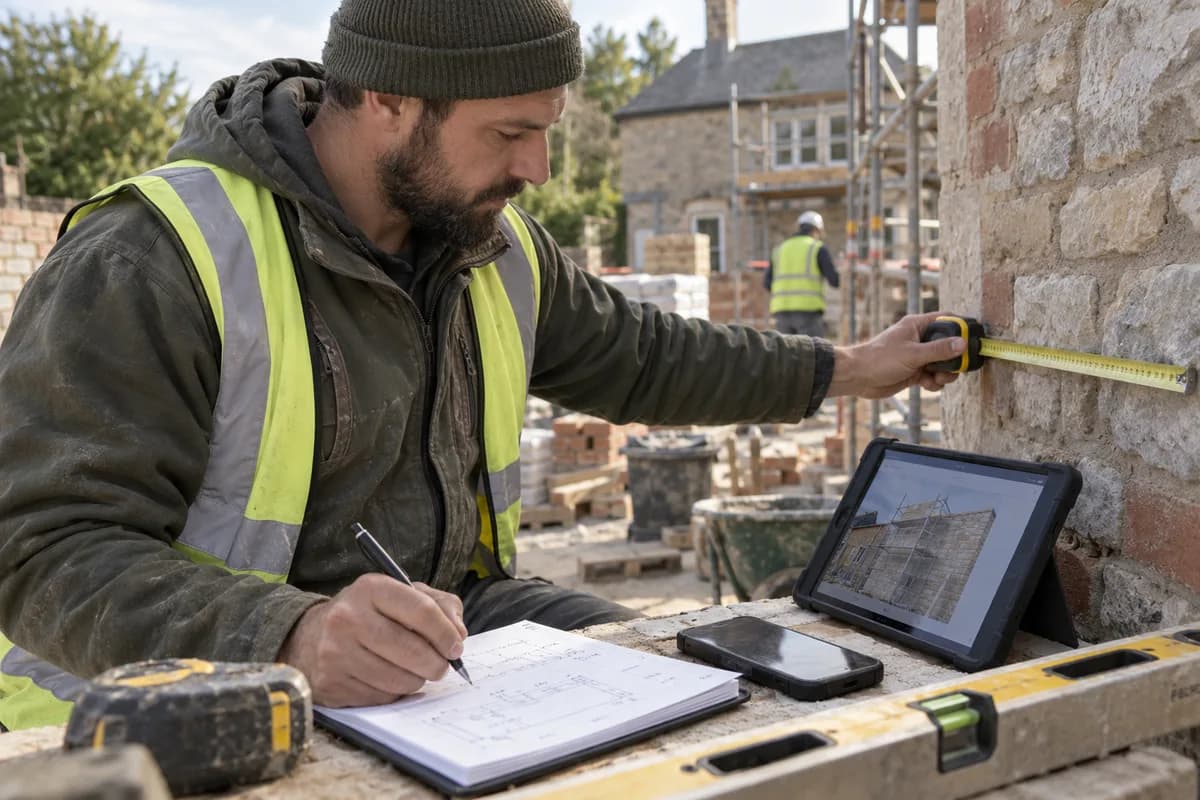
What the mason crew record keeps
Each mason and labourer has a record with a trade, a pay basis and the list of jobs worked. Daily marks build the attendance record. Pay is then worked out from those marks and from the work laid at piece rate.
A week with a mason crew on site
A crew week starts with a muster and ends with a wage read. These moments follow one foreman, one piece-rate mason and one day-paid helper through it, from the first morning to the last entry on the pay date. Each entry is short.
Who marks, who earns and who reads wages
Four people touch the crew record. Foremen mark, workers confirm, the office works out the pay and the owner reads the total. Each sees what is needed for that part.
Wage and attendance decisions before set-up
Pay rules touch every worker. Agree them early. These points are written down with you during the build. Settle them before the first live week of marks, so the first wage read is clean.
How crew records link to other masonry features
Crew records sit between the job and the pay desk. The day’s sites come from the job, the quantities laid come from the foreman’s measurement on site, and the wage cost flows back to the job. Five links follow. The lines below name each hand-off in daily work.
- Takes the day’s sites from Masonry site jobs and work orders
- Reads piece-rate quantities from Measurements and stage bills
- Sets wage cost beside work laid on each job
- Leaves stone cutters and scaffold hirers to Subcontractors and vendors
- Gives Estimates and rate lists real labour days to price from
Where crew and wage records stop
This feature works out wages from marks and quantities. It does not decide minimum pay. It does not withhold tax or file anything with an authority. Wage law, deductions and benefits stay with the owner and the accountant. One mason with a single helper paid weekly in cash can keep a notebook and a phone.
Frequently asked questions
Can masons be paid by day or by piece?
Pay basis sits on each person’s record. One mason can be on day rates and another on piece rates. If one person moves between the two, agree the rule in set-up, so the pay is worked out the same way each time.
What if a worker has no phone?
The foreman marks that person. The mark is made from the site list. Attendance by site works the same way whoever enters the mark. A worker’s own confirmation is an extra check, not a requirement for pay.
How are advances recovered from wages?
Each advance is recorded with a date and an amount. When wages are worked out, the advance is shown beside the days worked or the quantity laid. Your rule sets the amount taken each time.
Can we see what a crew cost on one job?
Attendance is marked by site and linked to the job. The days a crew spent on one job can be read beside the work laid there. Piece-rate pay is added from the quantities recorded on that job. Wage cost then sits with the job.
Can attendance be corrected after the day?
Yes, a mark can be corrected, within the rule you set for who may change it. Wages are worked out from the corrected entry. The pay then matches the record. Say who may correct a mark after the day closes when the rules are set.
How this feature fits the system.
Masonry Contractor Management Software: the parts that work with this feature, the trades that use it and the ways to put it in place.
Enquiries and site visits
Each enquiry is logged with its source and address and a visit is scheduled, so builders and homeowners are followed up from one list.
Lead ManagementEstimates and rate lists
Estimates are built from the firm’s own material, labour, scaffolding and waste rates, with each revision kept beside the original figure.
Estimate/Quotation ManagementSite jobs and work orders
Every wall, building or repair runs as a job with stages, crew, material and schedule, from the first course to the final finish.
Work Order ManagementTell us what you need.
Tell us what your team does today, where work gets stuck and what you want to change.
What happens after you share your requirements
- We review your brief and the systems you already use.
- We clarify the workflow, missing information and the work to consider first.
- The proposed scope sets out the deliverables, responsibilities and dependencies.
- Review the scope and commercial terms before deciding whether to proceed.
Start with your requirements
Describe your current process, the people involved and the change you need. Start with the details you know; we can clarify the rest together.
Share your requirements