Enquiries and test rides for motorcycle showrooms
A motorcycle showroom hears from riders through the door, over the phone and from listing portals. This feature puts each lead on one list and books test rides on the demo bikes. It keeps the rider’s remarks on seat height, mirrors and braking beside the enquiry. Salespeople work from it all day.
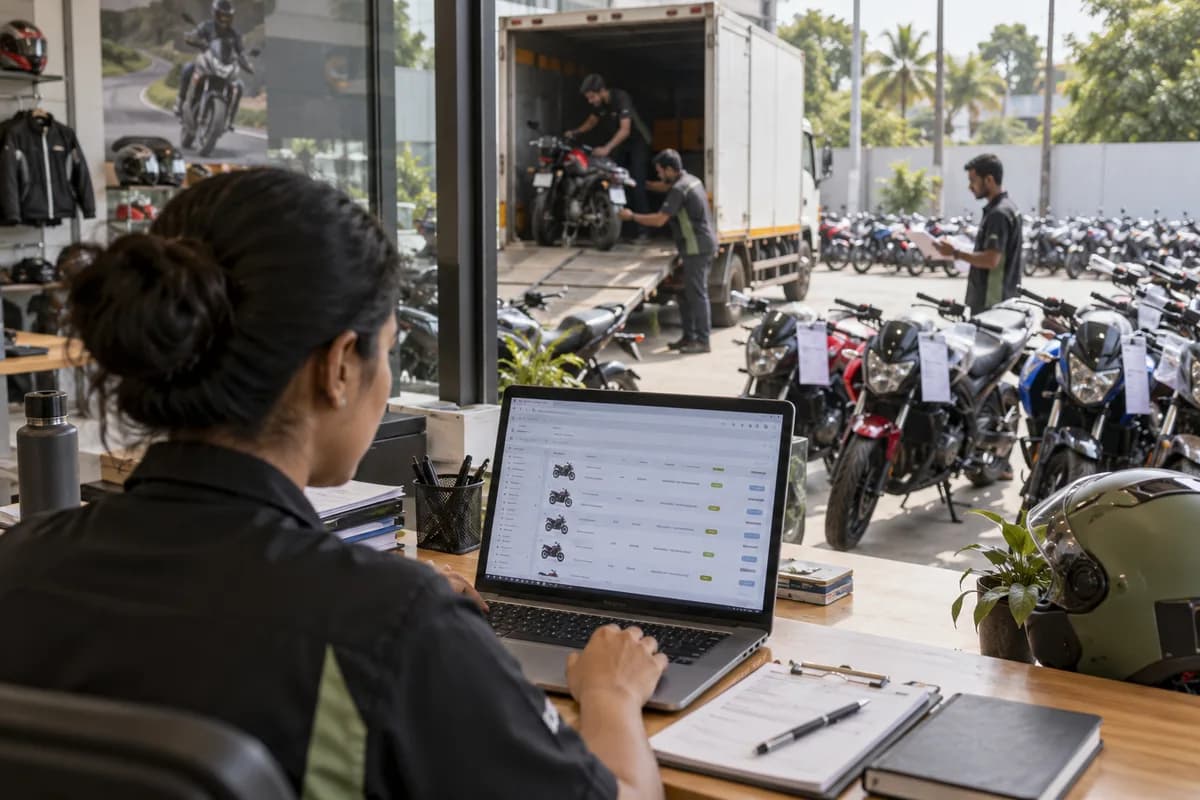
What an enquiry and test ride record holds
Each lead becomes a record the moment it is heard, with the model the rider asked about. The test ride is attached to that record rather than kept in a separate diary. The rider’s file starts here. A later booking continues the same page.
A showroom week from first call to follow-up
Enquiries arrive unevenly. A quiet Tuesday can be followed by a Saturday full of walk-ins, calls and portal leads. These moments show how salespeople and the demo fleet use the record, from the first call through to the next contact.
How each role reads the enquiry list
A showroom lead passes through several hands, so the list is read in different ways. One person looks at results. Salespeople work their own riders. The workshop cares about the demo bikes, and accounts waits for a booking.
Decisions to settle before enquiries are loaded
A lead list is only as clean as its rules. Agree a few points with the showroom team before go-live. GullySystem staff then set the list up the way the sales desk wants to work it. Keep the rules short.
How enquiries connect to the sales and demo fleet
An enquiry is the first page of a rider’s file. When a rider decides to buy, the same record carries forward into the quotation and booking. Demo bikes are real units in stock. Their frame numbers link back to the yard, so the diary and the stock list agree.
- Starts the quotation in bookings and quotations
- Reads demo bikes from bike stock by frame number
- Receives exchange bike details when a rider trades in
- Sends rider contact details to registration tracking
- Feeds job cards when a demo bike goes for service
Where the enquiry list stops
This feature keeps the list, the ride diary and the feedback. It does not price the bike, take a booking amount or promise a delivery date. Those steps belong to quotations and bookings. Rider consent for messages remains a matter for the dealer. A showroom with one salesperson and a handful of leads can run on a notebook.
Frequently asked questions
Does it stop two riders getting one demo bike?
A demo bike is booked by day and time, and the diary shows when it is taken. Any clash shows before the slot is promised. The rider is then offered another time instead of waiting at the counter.
Can leads from listing portals come in automatically?
Portal links are listed among the integrations and need access from the dealer. Where a link is not set up, the salesperson keys the lead and picks the source. The record looks identical either way.
Where does a rider’s feedback on braking go?
Feedback is typed after the ride and sits beside the enquiry. When the salesperson rings back, the remarks on braking or seat height are on screen. They also shape the quotation, so the accessory kit offered fits what the rider said. Nothing is retyped.
How do I see which salesperson converts best?
The test rides and conversions report lists each salesperson’s rides and the bookings that followed. The principal reads it by person. The source column shows which door brought those riders. Compare them side by side.
What happens to a rider who never books?
The enquiry stays on the list with its last note and a follow-up date. It can be closed as lost, with a reason. The history remains. If the rider returns months later, the first test ride and remarks are still on file.
How this feature fits the system.
Motorcycle Dealer Management Software: the parts that work with this feature, the trades that use it and the ways to put it in place.
Bike stock by frame and engine number
Frame and engine stamps travel with the bike from the dispatch list into the invoice, the registration form and every later job card, so no digit is retyped.
Batch and Serial TrackingEnquiries and test rides
Walk-ins, manufacturer leads and listing enquiries join one list, tagged by source and by the model the rider asked to try on a demo bike.
Lead ManagementBookings and quotations
A quotation adds accessory kits, insurance and a loan scheme to the bike, and earlier revisions stay on file beneath the accepted one.
Quote & Proposal ManagementTell us what you need.
Tell us what your team does today, where work gets stuck and what you want to change.
What happens after you share your requirements
- We review your brief and the systems you already use.
- We clarify the workflow, missing information and the work to consider first.
- The proposed scope sets out the deliverables, responsibilities and dependencies.
- Review the scope and commercial terms before deciding whether to proceed.
Start with your requirements
Describe your current process, the people involved and the change you need. Start with the details you know; we can clarify the rest together.
Share your requirements