Organic lots, counter sales, weekly boxes and growers in one system.
Manage organic stock lot by lot, with the grower, certificate reference and best before date held against each delivery. Bill loose goods by scale weight and packed goods by scan, plan weekly vegetable boxes, route home deliveries and keep a ledger for every farmer group and mill. The shelf label, the sale and the supplier payment all point back to one lot.
- Item list, pack sizes, tare weights and supplier rates entered exactly as you buy and sell them, down to the half-kilo pouch of ragi flour
- Open lots, supplier balances and box subscribers moved across before go-live, with the shelf count checked by your own staff
- Rate, label and box changes made by our team whenever you ask, with no new project to scope
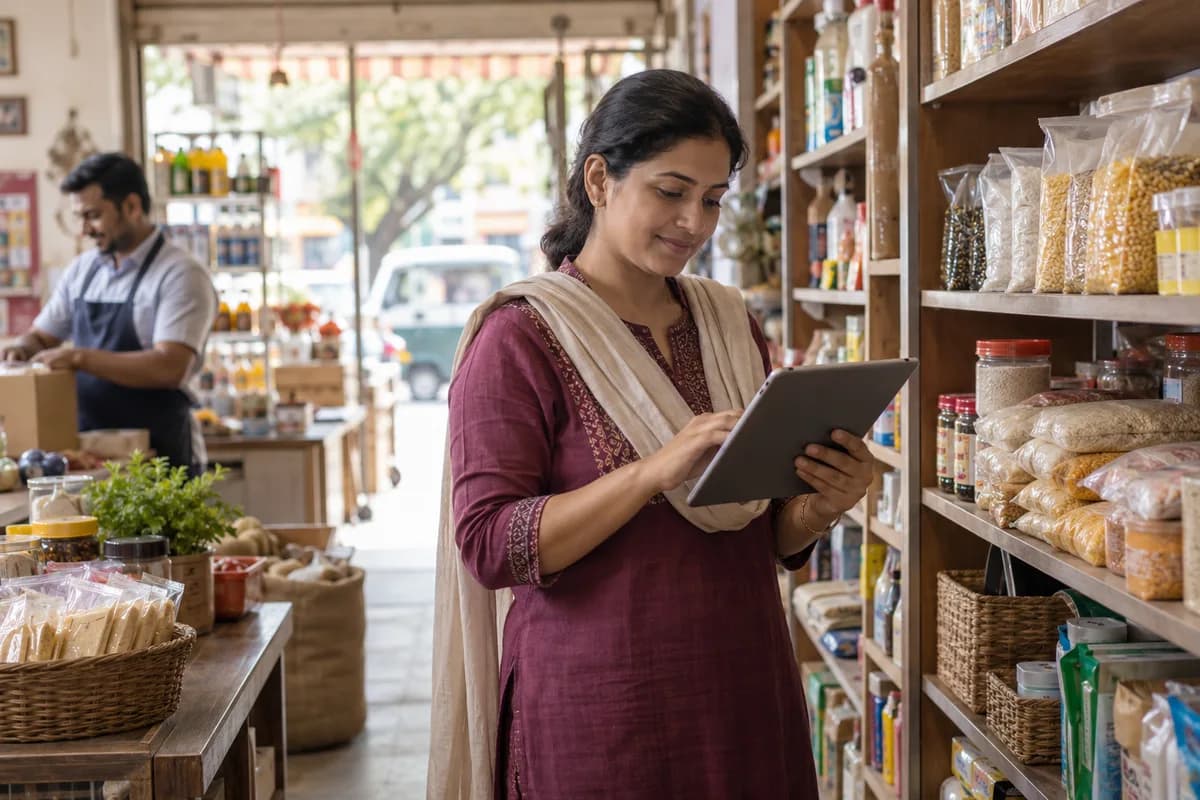
Shops selling grains, pulses, cold-pressed oils, produce and packed foods use Organic Store Management Software from GullySystem to track each delivery by grower and certificate. A delivery becomes a lot. Counter sales, repacked pouches, weekly boxes and home deliveries draw that lot down, and supplier balances follow from the same entries.
What goes wrong before the software.
How the work flows through it, step by step.
- 1
Delivery and lot entry
A grower, farmer group or processor delivers against a delivery note. Staff weigh the goods and enter a lot with its supplier, certificate reference, pack date and best before date, so nothing is keyed twice.
- 2
Shelving and repack
Sacks are decanted into bins and bins into pouches. Each step is recorded, and every pouch label carries the source lot so the history of a scoop of millet is never lost.
- 3
Counter and online sales
The counter bills by scale weight or scan. Phone and message orders are entered as home delivery orders with the slot the shopper asked for, and the slot is kept.
- 4
Weekly boxes
Box contents are set from what arrived that week. A pick list per household goes to the packers, and any swap made at the packing table is recorded, so cost follows what actually went in.
- 5
Delivery rounds
Orders are grouped into rounds. The driver gets a drop list, collects payment on delivery where agreed and marks each household done from a phone.
- 6
Reorder and supplier payment
Low and short dated items form the next order. Goods received update the supplier ledger, and payments to growers, mills and honey collectors are posted against the exact lots they supplied. Nobody argues from memory.
What is inside.
Every module can be switched on, left out or changed to match how your team already works.
The business modules it is built from.
Each one is also available on its own, or inside a system built for you.
- Point of Sale Billing
The counter screen bills loose rice from the scale and packed jars by scan, and a returned jar is posted against its original sale.
- Batch and Serial Tracking
Every delivery is stored as a lot with grower, certificate reference and best before date, so a recall can name the exact sacks affected.
- Barcodes and Labels
Pouches filled from a bin print a shelf label that carries the source lot, keeping the history of decanted millet and oil.
- Subscription Billing
A household’s box size, delivery day and pauses drive each cycle invoice, so a holiday pause never produces a wrong bill.
- Order Management
Phone and message orders become numbered delivery orders with slots, grouped into rounds that the driver works through with a drop list.
- Stock Tracking and Alerts
A morning list shows lots close to best before date and items under their set level, so oils and flours are marked down early.
- Purchase Order Management
Orders to farmer groups and mills are raised from the stock gap, then matched with goods received at the agreed rate.
- Vendor Management
Each grower, mill and honey collector has a record of rates by unit, delivery history and balance, with the certificate on file.
How we would put it in.
Setup, data migration, integrations and anything built on top.
One system, each person sees their part.
For owners
Read lots near expiry, certificates due, box cost against box price and grower balances without leaving the office. Nothing waits for month end.
For counter staff
Bill from the scale and scanner. Apply an offer. Take a return. Shelf label wording comes from the record, so the till shows the same item name, pack size and unit that the shopper reads on the shelf.
For the receiving and packing team
Enter lots at the delivery bay, record each decant and repack, and follow every weekly box’s pick list. Any pouch on the shelf points to the supplier delivery that filled it.
For delivery drivers
Open the drop list for the round, then collect payment where agreed and mark each household done from a phone as the van moves down the street. Every stop is closed out.
For the buyer
Watch low and short dated items, compare grower rates and send orders to farmer groups and mills, with prices taken from the record and never from memory.
The numbers the owner asks for.
- Lots on the shelf by best before date
- Certificates expiring by grower
- Weekly box cost against box price
- Repack and bin history by source lot
- Sales by item, weighed and packed
- Delivery rounds completed and payments collected
- Grower and mill balances payable
Who this is built for.
- Organic grocery shops selling grains, pulses, cold-pressed oils, dried fruit and whole spices by weight from open bins and sacks to regular households
- Stores that pack and deliver weekly vegetable and fruit boxes to subscribed households on fixed days, each box swapped by season
- Farm shops that sell their own produce alongside bought-in organic goods from neighbouring growers, a honey collector and a local oil press
- Refill and loose goods shops that decant from sacks and drums into gravity bins and pouches that customers fill with their own jars
- Small chains of organic outlets that share one supplier list, one box calendar and one stock of certificates
When it is not the right choice.
- A weekend stall with one grower’s produce and a hand scale has little need for lot records or supplier ledgers.
- If your main work is growing and certifying crops, Organic Farm Management Software fits you better than a retail system.
Adapted to your business before it goes live.
You are not handed a login and left to it. The product is set up around your records, your people and the tools you already use.
Works alongside
- Weighing scale
- Barcode scanner and label printer
- WhatsApp or SMS
- Card and payment gateway
- Accounting export
Questions owners ask before a demo.
Does the system verify that a certificate is valid?
No. It stores the reference and expiry a grower supplies and flags the date when it passes, while checking the certificate itself stays with your staff and the issuing body.
Can one bin hold more than one lot?
Yes. Every refill from a sack or drum is booked against its source lot, so a millet bin filled from two deliveries lists both and uses the older date.
How are weighed items billed beside packed ones?
The counter reads weight from a connected scale for loose items and scans packed jars, and both reduce one item stock, so rice sold either way keeps one count.
Can a household pause a weekly box?
Yes. A pause is entered with its dates, the packing sheet skips that household, and the cycle invoice reflects the gap. The same screen holds the delivery day and slot.
What if a vegetable in the box is replaced at the packing table?
The packer notes the swap on the pick list, and the box cost for that week is then worked from what went in rather than from what was planned.
Does it work for a store with two outlets?
Yes. Each outlet keeps its own shelf and bin lots, the buyer sees both when ordering, and transfers between outlets are recorded as movements of a lot.
How do records get in from my current spreadsheet?
Your item sheet, supplier list, box subscribers and opening balances come in from files, and the shop team reviews them before the first sale is billed. Opening stock comes from a shelf count.
Can I take my records out later?
Your lots, sales and supplier history belong to you, and before work begins the quotation names the export file type and who hands it over.
How is the cost of a project worked out?
Cost follows the number of counters, outlets and delivery staff, plus any scale or label equipment to connect, and a demo runs on your own item list first. The quotation comes after you have seen it.
Is help available once the shop is live?
Yes. Our team answers questions about lots, labels and box planning, and edits the item list or box contents when you ask.
Wondering what it would cost? Share your requirements and an engineer will come back with a scope.
Businesses that use this.
Related products.
See Organic Store Management Software with your own data.
Tell us how you run things today. We’ll show you the parts that matter to you and say plainly what would need changing.
- No obligation
- A reply within one business day
- Your details stay private
Start with your requirements
Seven short steps that tell us what you need. An engineer reads them before getting in touch.
Share your requirements