Warranty Claim Packs for RV Dealerships
Evidence comes first. Each pack gathers the failure description, photographs, replaced part number and labour hours from the repair order into one place. A clerk files it with the manufacturer. Every claim is then tracked from submission to payment or rejection, so nothing waits unseen.
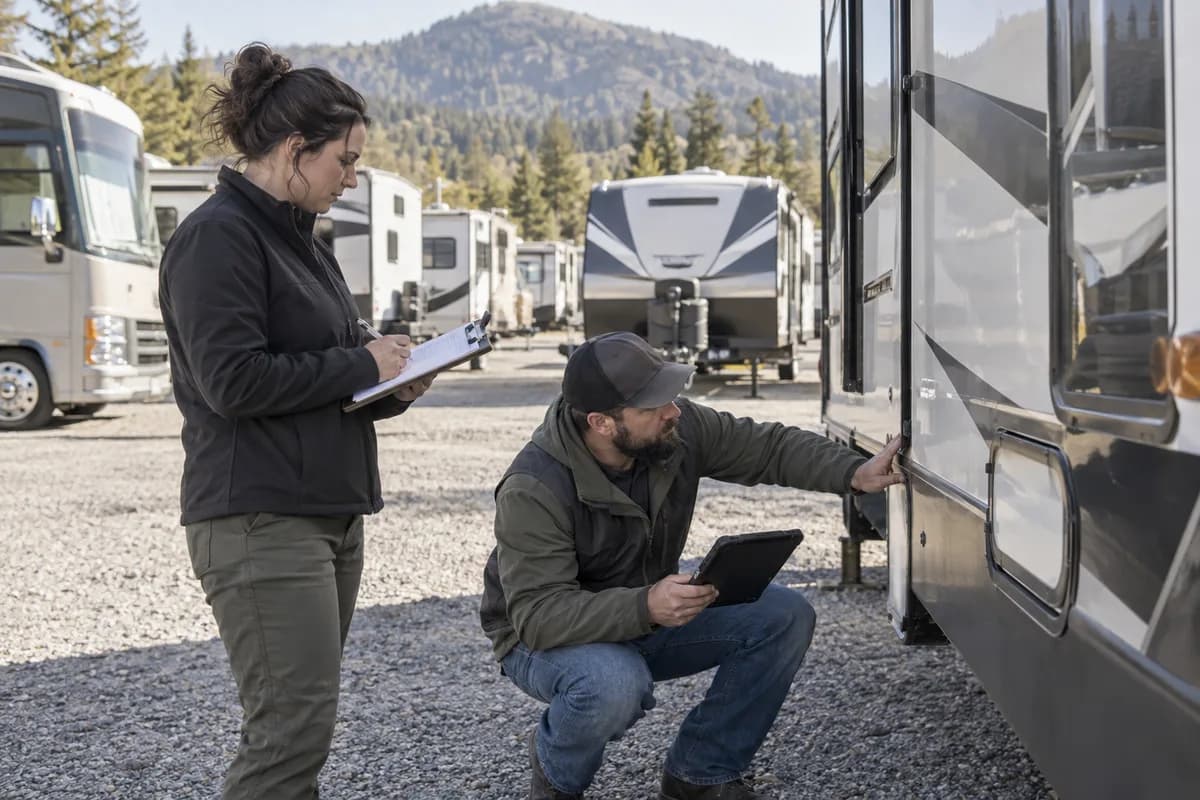
Evidence and status held in a claim pack
A manufacturer pays on what the pack proves. Missing photographs and vague failure notes send claims back. Each manufacturer’s own claim fields and evidence requirements are entered, so the pack matches what is asked rather than what the dealership guesses.
A claim from failed motor to settled invoice
A slide-out motor fails on a coach still under cover. The technician finds it on Tuesday, a clerk builds the pack on Wednesday, and the manufacturer’s answer comes back later. Evidence is gathered as the work is done. It is not chased afterwards.
Who builds, files and answers for a claim
Several hands touch a claim before money returns. Technicians supply the proof, clerks assemble it, advisors tell owners the status and principals judge the outcome. Each reads its own part.
Claim rules to settle with each manufacturer
Every manufacturer asks for slightly different proof. Settle which evidence is required, who files and how rejections are handled before the first pack is built. The bay then knows what to photograph.
Where a claim pack takes its facts from
This record builds itself from other records. The repair order supplies the complaint, hours and cover type. The parts counter supplies the replaced part number. The result goes outside the dealership as one bundle, ready to file. Little is typed afresh, and nothing is photocopied.
- Repair orders marked warranty feed each pack
- Parts and accessories counter supplies replaced part numbers
- Unit stock supplies the serial number the claim names
- Invoices bill the owner only for work outside warranty
- Pre-delivery inspection defects can become manufacturer claims
What a claim pack does not decide
The pack gathers evidence and tracks the answer. It does not file a claim with a manufacturer by itself, judge whether a failure is covered or collect the money. Filing is done by a clerk, and the manufacturer decides. Agreements with the manufacturer stay with the owner and the adviser. A dealer with a few claims a year can use the manufacturer’s own form.
Frequently asked questions
Does the pack file itself with the manufacturer?
No. Collecting the evidence is the pack’s job, and a clerk files it in the way each manufacturer asks. Automatic filing is not built in. The system then tracks the answer, and the status is shown beside the claim.
Can each manufacturer have its own claim fields?
Each manufacturer’s claim fields and evidence requirements are entered, so the pack matches what they ask for. A pack for one brand does not carry the fields of another. Mixing them up is not possible.
How do we spot claims missing photographs?
Packs short of required evidence show as incomplete on the claims list. The warranty clerk sees the gap before filing. A count of claims missing photographs sits on the dealership screen. Gaps are found early.
What happens when a claim is rejected?
The status changes to rejected, and the reason given is kept. The principal or a nominated person then decides what to do. Resubmission and write-off are both choices for the dealership.
Where do the labour hours in a pack come from?
From the repair order, entered by the technician who did the work. Hours are never retyped, whoever files. Hours in the pack and hours on the order are therefore one figure, and they cannot drift apart.
How this feature fits the system.
RV Dealer Management Software: the parts that work with this feature, the trades that use it and the ways to put it in place.
Enquiries and showings
Each walk-in, rally show visitor and web form becomes a logged enquiry with the units shown, so the follow-up call has something to refer to.
Lead ManagementQuotations and deal sheets
A quotation lists the unit, fitted options and accessories, keeps every revision, and turns into the deal sheet once the buyer approves it.
Quote & Proposal ManagementDeposits and receipts
Deposits and stage payments are posted to the deal as they arrive, and the balance due before delivery is always visible.
Receipts ManagementTell us what you need.
Tell us what your team does today, where work gets stuck and what you want to change.
What happens after you share your requirements
- We review your brief and the systems you already use.
- We clarify the workflow, missing information and the work to consider first.
- The proposed scope sets out the deliverables, responsibilities and dependencies.
- Review the scope and commercial terms before deciding whether to proceed.
Start with your requirements
Describe your current process, the people involved and the change you need. Start with the details you know; we can clarify the rest together.
Share your requirements