Visit Reports with Photographs for Solar Plants
Finishing a solar plant visit, the engineer records readings, parts fitted and photographs on a phone, then collects the owner representative’s sign-off before leaving the roof. That report is stored against the plant and the ticket it closed. Supervisors, stores staff and owners read it later without a second round of typing.
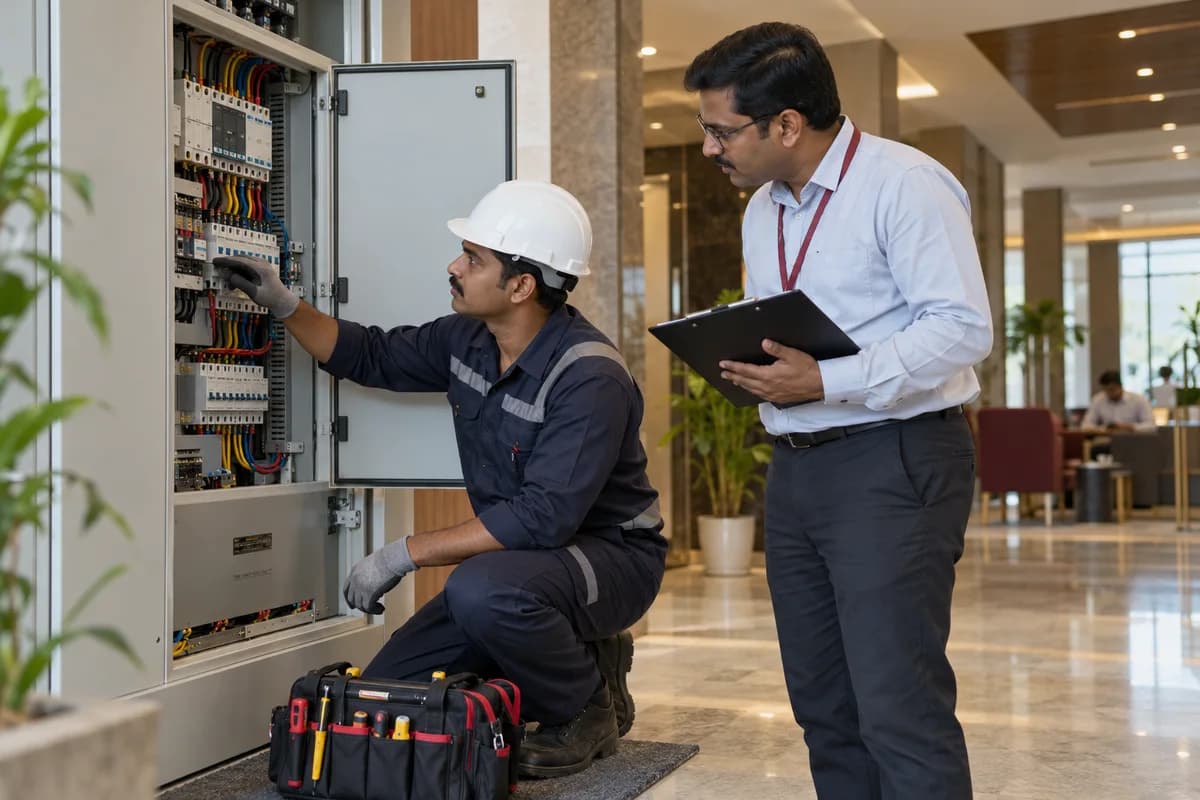
From the roof to the owner’s signature
An engineer reaches a rooftop plant after a ticket for a tripped string. By the time the vehicle leaves, the readings are in, the photographs are attached and the owner’s representative has signed. The paperwork is done. Nobody at the office rings to ask what was done.
Contents of a stored solar visit report
A visit report is the record of one visit to one plant. It is tied to the plant and to the ticket that sent the engineer. That link matters. Inside sit readings, parts, photographs and a signature, each stamped with the time it was entered.
A report read by four different people
One stored report is opened by the author, the supervisor who sent the engineer, the owner’s contact and the store. None has to ring anyone with a question.
Where a closed visit report travels next
A closed report moves on. It lets the ticket close, adjusts the spares balance, supplies a claim with its evidence and gives the owner’s report its visit lines. One entry on the roof feeds every one of them, and none of them is retyped later at a desk.
- Fault tickets close once the report is stored
- Spares and tools issue shows parts fitted at each plant
- Warranty claims pick up serial numbers and fault photographs
- Owner reports list each visit with its sign-off
- Plant history keeps every report in date order
Rules for a report that can be trusted
A report is worth reading only if every engineer fills it the same way. Rules on photographs, sign-off, readings and corrections set that standard. Agree them early. They are quick to settle with supervisors before the first roof visit and hard to impose afterwards.
What a stored visit report does not settle
A report records what the engineer saw, measured and fitted. It does not judge the cause of a fault, certify that a plant is safe or decide who pays. A signature records acceptance. It is not a legal conclusion. Disputes with an owner stay with management and, where needed, an adviser. A caretaker who visits one small plant a month can keep a paper sheet.
Frequently asked questions
Does the owner’s representative need an account to sign?
No account is needed. Signing happens on the engineer’s phone after the summary is read. The signature is stored with the report, with the time it was given. Contacts still receive reports without any portal login.
Can a visit report be corrected after sign-off?
A correction is added as a dated note beside the signed report. Who may add such a note is set by role at set-up, so field staff do not rewrite signed visits.
Do parts fitted on a visit update the stores balance?
Parts picked from the engineer’s issue list are written against the plant when the report is saved. The store then sees what was fitted and what remains in the vehicle. Differences stand out at the next count.
Can earlier reports for one plant be found together?
Each report is stored against the plant and the ticket. Opening a plant lists its reports in date order. Old ones stay. A visit from last season sits beside last week’s, and photographs travel with each one, so nothing is hunted for.
Will the owner receive every visit report?
Each plant’s owner report lists the visits made, with photographs and sign-offs attached where the contract promises them. Layouts follow each owner’s contract wording. Owners can differ. Changes are made on request by GullySystem staff, after go-live too.
How this feature fits the system.
Solar Plant Maintenance Company Management Software: the parts that work with this feature, the trades that use it and the ways to put it in place.
Plant and contract register
Each plant’s contract holds its response time, visit frequency and renewal date, so every ticket and visit is judged against the right terms for that owner.
AMC and Service ContractsFault tickets and response clocks
A tripped inverter or a call from the owner becomes a numbered ticket with an owner, a fault class and a response clock from the contract.
Ticket ManagementEngineer scheduling and visit routes
Visits are assigned by area and skill, so the supervisor sees which engineer is at which plant and which tickets are still waiting for someone free.
Technician SchedulingTell us what you need.
Tell us what your team does today, where work gets stuck and what you want to change.
What happens after you share your requirements
- We review your brief and the systems you already use.
- We clarify the workflow, missing information and the work to consider first.
- The proposed scope sets out the deliverables, responsibilities and dependencies.
- Review the scope and commercial terms before deciding whether to proceed.
Start with your requirements
Describe your current process, the people involved and the change you need. Start with the details you know; we can clarify the rest together.
Share your requirements