Follow each opening from the first measurement to the signed handover.
Enquiries from the showroom, opening-by-opening measurements, quotations, cutting lists, glass orders, section issue, installation crews, snags and stage payments sit in one system for companies that make and fit windows and doors. A project with sixty openings stays sixty separate lines, each with its own size, glass and hardware. Factory, glass supplier and fitters all read the same final sheet.
- Series, glass types, hardware and mesh entered with the rates you quote today
- Open projects, measurement sheets and unpaid balances loaded before go-live
- Changes to rate cards and opening types handled by GullySystem staff when asked
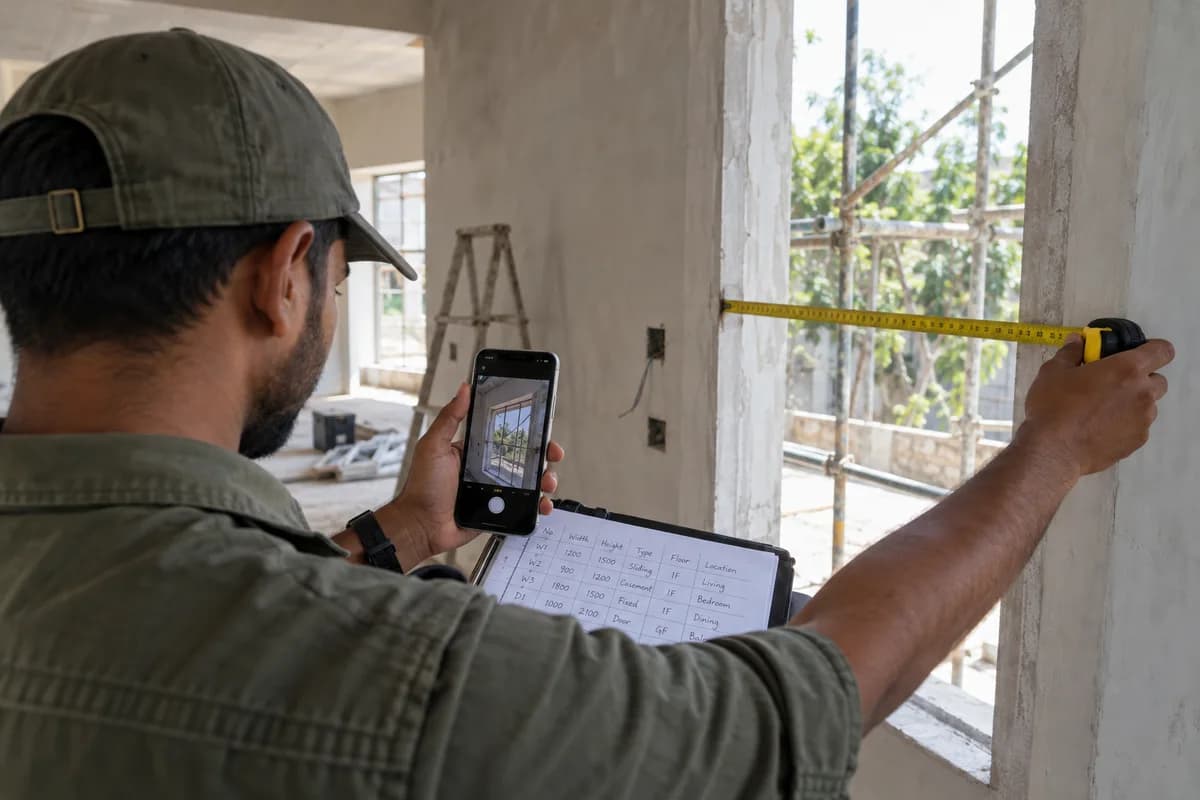
Each opening a window and door company sells gets its own line in this system, built by GullySystem around the way that business measures, cuts and fits. Each line holds its first and final size, series, glass, hardware and mesh. Quotations, cutting lists and glass orders are produced from the approved measurements. Crews install against a readiness check, snags are listed per opening, and stage payments follow the handover.
What goes wrong before the software.
How the work flows through it, step by step.
- 1
Enquiry and showroom visit
A walk-in, call or builder’s enquiry is logged with the series and colour viewed, the samples shown and who attended. A site measurement is booked.
- 2
Survey and quotation
The surveyor records each opening with width, height, floor, opening type and a photo. A quotation is built opening by opening from series, glass, hardware and mesh rates. Nothing is retyped.
- 3
Final size and release
After the advance, finished walls are re-measured. The final size sits beside the first, and only approved figures release the cutting list and glass order. No guess reaches the saw.
- 4
Fabrication
Section lengths are issued to the job, frames are cut, joined and reinforced, and glass arrives from the supplier. Assembly and packing are ticked off opening by opening.
- 5
Delivery and installation
Site readiness is confirmed before the crew is dispatched. Fitters mark each opening as fixed, sealed and glazed, and note any damage found on arrival. Damage is noted early.
- 6
Snags, handover and balance
The customer’s snags are listed per opening and cleared one by one. A signed handover releases the balance and starts the warranty period. The file then closes.
What is inside.
Every module can be switched on, left out or changed to match how your team already works.
The business modules it is built from.
Each one is also available on its own, or inside a system built for you.
- Lead Management
Each visitor is logged with the series and colour shown, and the next follow-up date keeps a builder’s enquiry from ageing in someone’s phone.
- Estimate/Quotation Management
Prices are built opening by opening from series, glass, hardware and mesh rate cards, and every revision after a site visit is kept.
- Order Management
Approved opening sizes become the cutting list and the glass schedule, so no figure is retyped between the survey, the factory and the supplier.
- Stock Tracking and Alerts
Locks, rollers and mesh are checked against stock before a job is released, and a low fitting raises a reorder alert.
- Purchase Order Management
Bar lengths issued per project and offcuts returned feed the next profile purchase, so ordering follows the real use of each series.
- Technician Scheduling
A crew is allocated to a project only after readiness is confirmed, and each opening is logged as fixed, sealed and glazed.
- Job Cards
Each snag is a small job card against an opening, assigned to a fitter, closed with a photo, and signed off at handover.
- Collections and Payment Follow-Up
Advance, delivery and completion payments are tracked per project, and reminders go to customers whose balance is due and not held by a snag.
How we would put it in.
Setup, data migration, integrations and anything built on top.
Every part of the system, by area.
Take the modules you need. Each one works on its own or inside a larger system built for you.
- Applicant Tracking (5)
- CRM (8)
- Finance & Accounting (10)
- Helpdesk (4)
- Human Resources (13)
- Inventory Management (5)
- Project Management (7)
- Manufacturing (6)
- Procurement (4)
- Sales and Distribution (6)
- Field Service (5)
- Statutory and Compliance (4)
- Retail and POS (4)
- Bookings and Appointments (3)
- Subscriptions (2)
- Assets and Fleet (4)
- Platform (6)
- Analytics (2)
- Documents (1)
- All business solutions
One system, each person sees their part.
For owners
See projects by stage, balances due, glass orders open and profile use against each quotation, without phoning the factory or the site. No calls needed.
For sales and the showroom
Log visitors, build quotations from the rate cards, revise them after a site visit, and chase the enquiries that have gone quiet.
For surveyors
Measure each opening on a phone, add photos, flag what is out of square, and return for the final size once the walls are finished. Mark it, move on.
For the factory and store
Receive approved cutting lists, issue section lengths and hardware to each job, record offcuts, and mark openings assembled and packed.
For installation crews
See the day’s openings with size, floor and hardware, mark each one fixed, and record any site problem before leaving.
The numbers the owner asks for.
- Openings by stage: surveyed, final size, cut, glazed, fixed, handed over
- Quotations still open, won or lost, by series and customer
- Glass orders placed, received and short, by supplier
- Section lengths issued and offcuts returned, by series and project
- Sites held for readiness, with days lost per project
- Snags open by opening, fitter and age
- Balances due by project, with the amount held by open snags
Who this is built for.
- Companies that make aluminium, uPVC or timber windows and doors and fit them
- Fabricators who supply frames to builders and install on site
- Showrooms that sell a profile series and run their own fitting crews
- Firms that handle glazing, sliding doors, mesh and shutters in the same project
- Installers who buy frames from a factory and manage their own site schedule
When it is not the right choice.
- A lone fitter doing a handful of replacements monthly can manage with a tape, a measuring book and an invoice pad.
- Factories that mainly produce doors and windows for the trade, with little site fitting, will find Door and Window Manufacturer Management Software closer.
Adapted to your business before it goes live.
You are not handed a login and left to it. The product is set up around your records, your people and the tools you already use.
Works alongside
- Glass supplier order files
- Cutting and optimisation software
- WhatsApp or other messaging
- SMS
- Card and payment gateway
- Accounting export
Questions owners ask before a demo.
Does it replace our cutting and optimisation software?
No. Bar nesting and machine programs stay in that tool. This system hands it the approved sizes and records the lengths issued to each job.
What happens when the final size differs from the survey?
Both sizes are kept on the opening. A difference beyond your set tolerance is flagged, and the cutting list is released only from the final figure.
Can a quotation list every lock, stay and mesh panel?
Yes. Every opening type carries a hardware set and mesh option from your rate card, so the quotation shows them as lines instead of leaving them to memory.
How are glass orders sent to the supplier?
Glass sizes, type and quantity are produced from the approved openings and exported in the format your supplier accepts. The supplier’s layout is fixed during the opening workshop, before any glass order goes out.
Can fitters use it on site without a signal?
Not fully. A fitter sees the day’s openings and marks each one fixed on a phone, but the app needs a connection, so a basement or unfinished tower waits until signal returns.
How do we stop the balance being held for one snag?
Each snag belongs to an opening and shows its value. The balance screen separates what is due from what an open snag is holding, so the customer sees the same figures.
Is an old measurement sheet reusable for a repeat customer?
Yes. Past projects stay on the customer record with sizes and hardware, and a new quotation can start from any earlier opening list.
Does it keep warranty details for each opening?
Yes. The handover date starts the warranty on every opening, and a later complaint is logged as a service call against that opening’s size and glass.
Will open projects and balances move across from our files?
Yes. Customers, half-finished measurement sheets and unpaid stages arrive from the registers and spreadsheets the office keeps today. Before anyone relies on it, the office compares a handful of projects with the originals.
Can we see it working before we choose?
Yes, in a walkthrough that uses a sample project of a few dozen openings. The written proposal then names the modules, the supplier formats and a quoted figure for your team size.
How soon could the showroom quote from it?
Showroom enquiries, the opening-wise measurement sheet and quotation by series and opening make the natural first release, since sales and surveyors use them from the start. Cutting lists, glass orders, hardware schedules, installation and snag handover follow. The dates track your project pipeline.
What do the showroom and workshop bring along?
A measurement sheet and a quotation from a finished project, the series and price list, and a glass order sample. Add a hardware and mesh schedule, a snag list and a stage payment note. A showroom lead, a surveyor and a workshop supervisor should each be reachable for layouts. Cutting software export files help.
Wondering what it would cost? Share your requirements and an engineer will come back with a scope.
Built for.
The trades this product is set up for. Pick yours to see how the work runs there.
See Window and Door Company Management Software set up around your records.
Tell us how you run things today. An engineer reads it and writes back with what fits as it is, what would need changing, and what we would start with.
What happens after you share your requirements
- A senior engineer reads your answers. Nobody phones first.
- Within one business day you get a written note: what we understood, what we would start with, and the questions we still have.
- If it fits, a proposal follows with the order of work, what we need from you and what you receive at each step.
- No call is booked and nothing is paid until you have read the note. Your details stay with us.
Start with your requirements
Seven short steps that tell us what you need. A senior engineer reads them before anyone gets in touch.
Share your requirements