Business solutions for Aluminium die casting companies
Explore software for work such as “Motor and gearbox housings for e-mobility”. Review each business function below, including when it fits and what to check before implementation.
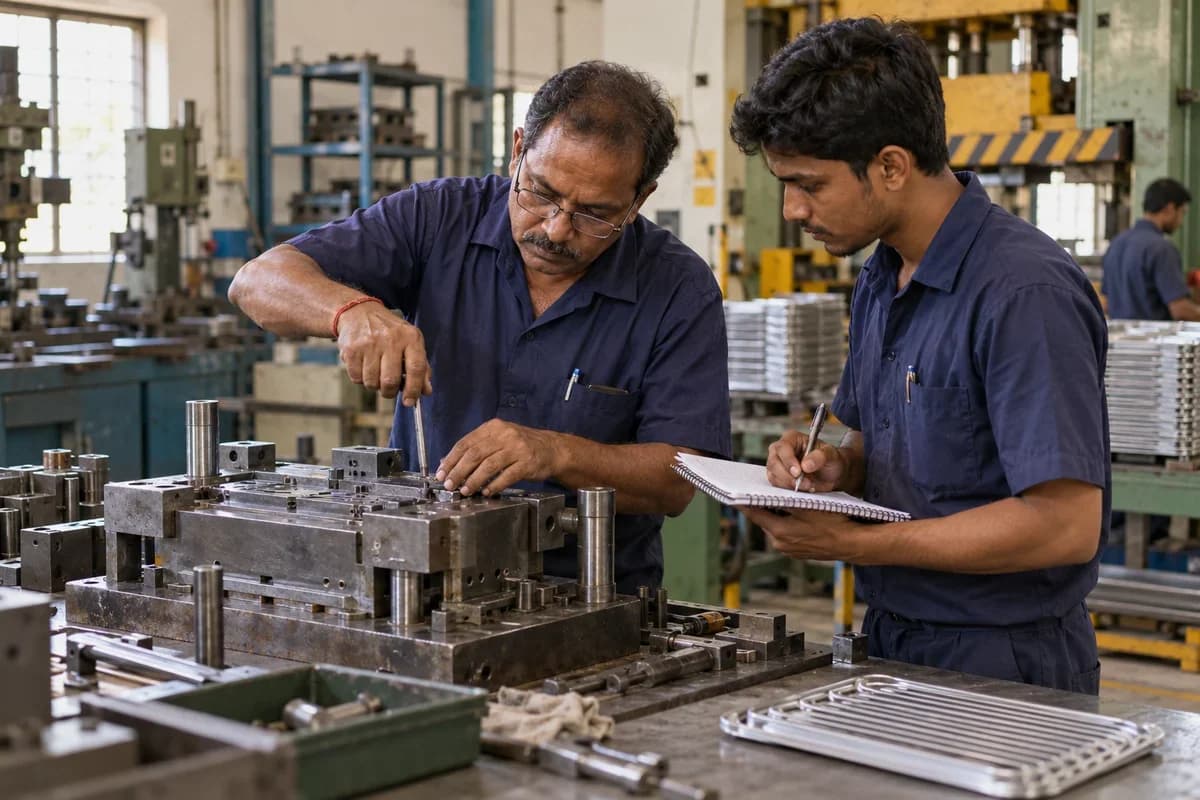
How the business operates.
A die casting cell is fast and unforgiving. A furnace holds molten alloy, a machine fires it into a steel die in seconds, and a trim press removes runners and overflows. A hundred castings an hour leave the cell. Small shifts in die temperature, spray or metal quality show up as porosity or cold shuts.
The records that hold the operation together.
- Part list and call-offs. Hold each casting with its drawing revision, alloy grade such as A380 or ADC12, die and route. Load call-offs and revisions by week.
- Alloy and ingot stock. Receive ingot by heat lot, issue it to melts, and keep returned gates and dross on separate accounts.
- Melt and chemistry record. Record each melt, its charge, degassing time and spectrometer sample, then release it to the holding furnace once the chemistry passes.
- Machine and die planning. Plan machines by clamping tonnage and dies by availability and shot count, and show which die change comes next to the setters.
- Die register and shot counts. Count shots per die and per cavity set, log sprays, cleans and ejector pin changes, and warn the toolroom before a limit chosen by your own engineers.
- Casting run log. Capture die, plunger settings, shots, good castings and rejects for each run, and link the run to the melt that fed it.
- Trim, runner and remelt yield. Weigh castings, biscuits, runners and overflow wells, and compute yield per part, per melt and per week.
- Porosity, X-ray and leak testing. Key in X-ray grades, density index and helium leak readings, tie them to the casting lot, and hold a failing lot until someone writes down the decision.
Operational bottlenecks to check
Alloy lots mix in the furnace
Fresh ingot and returned runners are charged together into one furnace. When a casting fails chemistry, the lot that fed that melt is unclear, and every casting from the shift comes under doubt.
Die life is counted on a tag
Shots run on a die decide when it needs a clean, a polish or a repair. The tag is updated at changeover, but a die pulled off the machine in a hurry keeps yesterday’s count and nobody notices until it cracks.
Porosity is found late
X-ray and leak tests happen after machining. A bad lot has already taken machine time on the cutting line before anyone knows.
Remelt returns are not weighed
Runners, biscuits and scrap go back to the furnace in tubs that nobody weighs on the way. Yield per casting cannot be worked out, so melt loss is guessed at month end.
Route cards are paper
Trim, machining, impregnation, deburring and leak test steps are all ticked by hand on a single paper sheet, one line per operation, by whoever happens to hold the pen. The sheet follows the crate. It goes missing.
Follow the work across teams.
This is a planning flow. Confirm the steps, owners and approval rules against your actual operation.
Roles and responsibility boundaries.
Reports your managers need.
- Call-offs against shipments by part and week
- Melts with chemistry results and castings made
- Shots and rejects by die
- Metal yield by part and by melt
- Porosity and leak test findings by lot
- Machining route quantities in and out
- Dies due for cleaning or repair
Connections to scope
- Barcode and label printers
- Spreadsheet import for customer call-offs
- Accounting export
Confirm data access, record ownership and the exchange method for each connection. Inclusion here does not mean every connection is available in a standard package.
Setup decisions and adoption risks.
Use these requirements to plan phases, data migration and user training. Agree the release sequence after reviewing your current systems.
Limitations to settle before implementation
- A foundry that pours sand or gravity castings by hand will find Iron Foundry Management Software closer for sand-mould work.
- A small tooling shop that makes only prototype dies can use a job-shop tool instead.
Modules to consider first.
These functions connect to the operating model above. Confirm each one against the work your business actually runs.
Choose the operation you want to improve.
Use these activities to explain your scope. Your business does not need every function in the directory.
- Motor and gearbox housings for e-mobility
- Two-wheeler engine and chassis parts
- LED lighting housings and heat sinks
- Electrical enclosure and connector parts
- Pump and compressor parts
- Castings with machining and leak testing
- Die making and die repair
- Export die castings
Explore the business functions.
Production, stock, fleet and recurring billing functions apply only where your business runs those activities. Read the suitability conditions on each page.
Manufacturing
Batch and Serial Tracking
Trace goods using batch identifiers or individual serial numbers.
View workflow and suitability →Job Work Management
Track material sent to an outside processor and returned after work.
View workflow and suitability →Production Planning
Plan manufacturing quantities against demand, materials and capacity.
View workflow and suitability →Quality Control
Record specified inspections and the disposition of checked goods.
View workflow and suitability →
Assets and Fleet
CRM
Inventory Management
Start with the problem your team can describe.
Bring a sample record and show where information is copied, missed or waiting for approval. Scope the first useful change from there.
What happens after you share your requirements
- We review your brief and the systems you already use.
- We clarify the workflow, missing information and the work to consider first.
- The proposed scope sets out the deliverables, responsibilities and dependencies.
- Review the scope and commercial terms before deciding whether to proceed.
Start with your requirements
Describe your current process, the people involved and the change you need. Start with the details you know; we can clarify the rest together.
Share your requirements