Software Solutions for Storage Device Sellers
Storage devices are sold by capacity, interface and speed, and are among the most copied items online. Sellers need serials and batches recorded, an authenticity step, and a returns flow that clears customer data from a returned drive before it can be sold again.
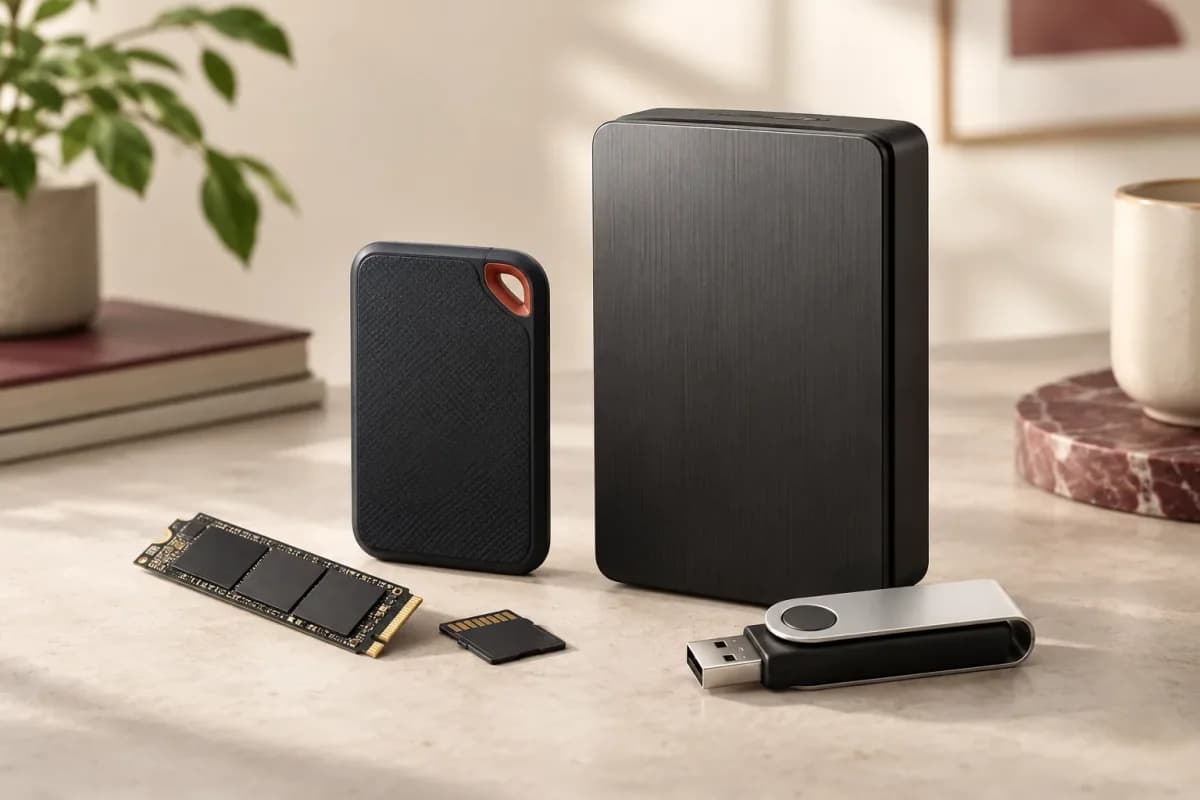
Track drives and cards by serial, check authenticity and wipe returns before resale.
A drive is sold on a number printed on its label. If that number is false, the buyer finds out only when the device fails to hold what it promised.
Resellers of drives and memory cards
A shop lists hard drives, solid-state drives and cards under several brands and distributors.
Specialists in data storage
A seller supplies network storage and enterprise drives to businesses that need quotations and replacement terms.
Sellers to camera and phone buyers
A shop pairs memory cards with the cameras and phones its buyers own.
The workflow for storage devices.
- 1
Specification variants listed
Capacity, interface, form factor and speed class are held as fields, so a card for a camera is not confused with a drive for a laptop.
- 2
Sourcing recorded
The distributor and batch of each lot are recorded on receipt, as a basis for later authenticity checks.
- 3
Serial scanned at dispatch
The serial or batch code is saved with the order and shown on the invoice.
- 4
Return received and quarantined
A returned drive is put aside as unclear status until its data has been cleared.
- 5
Data cleared and result noted
The seller’s clearing step is recorded before the drive is regraded for resale or sent to the distributor.
The challenges, and what they cost.
What is specific to this trade.
These are requirements we would confirm in discovery. They describe what the solution may need to handle. They are not features that already exist.
- Capacity and interface fields that filters can read
- A batch and source record for every lot received
- A data-clearing step recorded before a returned drive is resold
What we would build for storage devices.
Chosen from the commerce capabilities this business needs, not a list of everything.
Who works in the system, and what each can do.
What it would connect to.
An integration is confirmed only after its API, access and scope are checked. A connection that updates on a schedule is described as scheduled, not real-time.
- Distributor purchase orders held in the shop’s purchasing records
- Brand warranty and authenticity pages, kept as links and not connected
- A gateway account for UPI and card payments
How the work runs, and what we need from you.
What you provide
- Your range and how you identify genuine stock
- Your distributors and their return terms
- The data-clearing step you use for returned drives
Source records first
We start with how stock is received, since authenticity depends on it.
Define the quarantine
The returns flow is written with your own clearing step before it is built.
What you receive.
- A specification catalogue for storage items
- A batch and source register
- A returns quarantine flow
- A warranty-route sheet by brand
How progress is judged.
Measures are agreed against your own baseline. We do not promise a result in advance.
- Returns with a recorded clearing step
- Lots traced to a source and a batch
Selling at home and abroad.
Memory cards, drives and flash storage are widely copied, and a genuine item’s warranty is valid only in the regions its brand names. The listing records the source and the market, and the seller’s authentication steps follow the brand’s guidance.
The wider requirements for computers & accessories are on the Computers & Accessories page.
Related subcategories.
Computer and Accessories E-commerce & Business Management Software
Existing product, extended
Serial-number stock, counter billing, warranty and service jobs already run in the retail product made for electronics and appliance dealers. The web store and the dealer login are built to read from that product, and each is scoped to the business.
Authenticity checks and data wiping on returns are steps within the category solution’s serial and returns flows.
Read about the softwareExisting GullySystem products that apply
Related services
Test the order that does not follow the usual path.
Bring an awkward order or catalogue example to discovery and agree who handles the exception.
Counterfeit goods slip into stock
Which location and stock state support the delivery promise?
Use “Counterfeit goods slip into stock” to follow an item moved between two locations. Distinguish stock on hand, stock already committed and stock still travelling before presenting an available quantity to a buyer.
Background reading: Shopify: inventory and locations
Specification and interface catalogue
Does each sellable combination have the right stock and price?
Choose an example from “Specification and interface catalogue” with more than one option. Check the selected combination, item identifier, available quantity and price through to the order, including a combination that should not be sold.
Background reading: Shopify: product variants
Questions about storage devices e-commerce.
Can the system tell whether a drive is genuine?
No. It records the source, batch and serial so a check can be made. The check itself follows the brand’s guidance.
Does it wipe returned drives?
No. The wiping is done by your staff or tools. The system records that it was done and blocks resale until then.
Can buyers filter by device type?
Yes, from the interface and form-factor fields. Their accuracy depends on how carefully they are entered.
Talk through your commerce requirement.
Share what you sell, where orders arrive and how you manage stock and fulfilment today.
- Your products and sales channels
- Your order and stock workflow
- The connections you need
Start with your requirements
Describe your current process, the people involved and the change you need. Start with the details you know; we can clarify the rest together.
Share your requirements