Quality checks and batch approval for breweries
Quality checks record the sensory and lab results for each batch and hold the beer back from packaging until it is approved. The head brewer or the lab marks a given batch ready or held. Packaging staff see only the batches that have been cleared. The decision stays on the record.
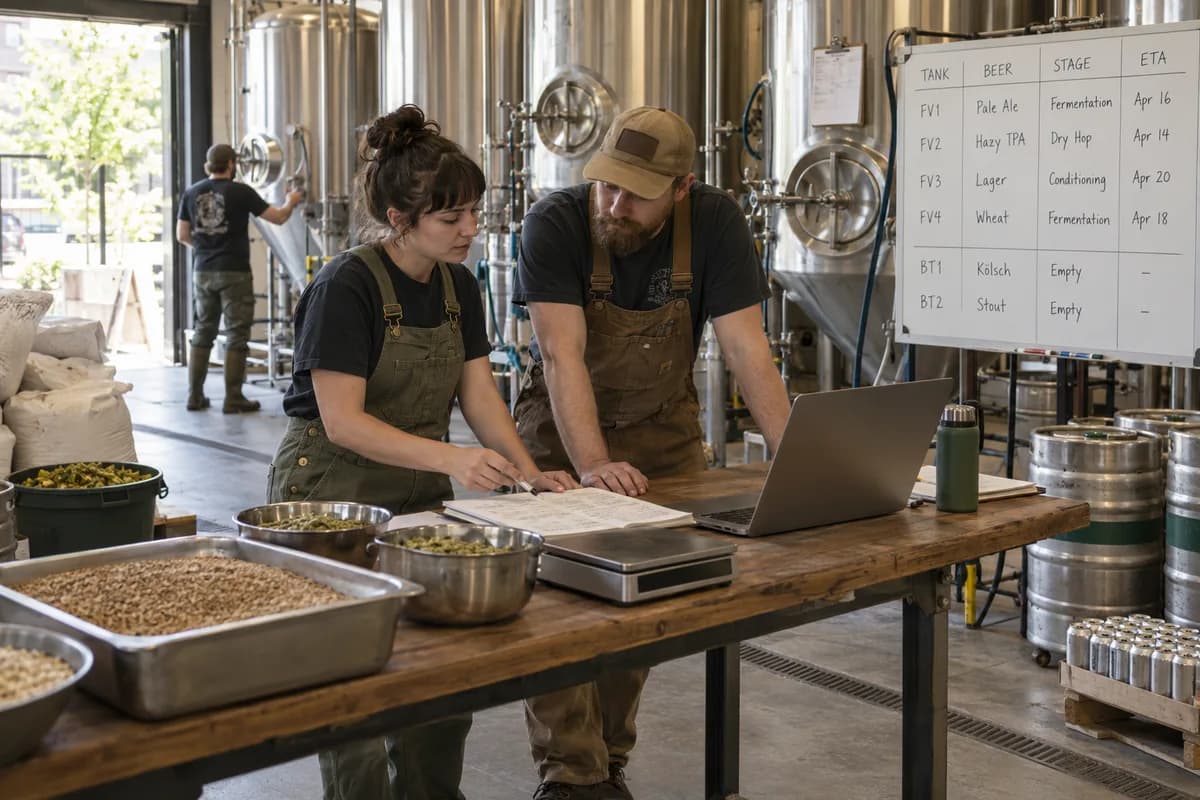
What a brewery quality check record holds
A quality check is a dated entry on one batch. A batch can have several, because a beer is judged more than once between tank and keg. Each entry holds a result, a person and a status. The status is what packaging reads.
Quality checks through a day in the brewery
A check is a small task in a busy day. It happens at the tank, at the lab bench or at the bar table. The entry takes a minute. Here are the moments when a brewery writes to the quality record and when others read it.
Who records and who reads quality checks
The people at the tank and the bench write the record. Everyone who depends on the beer reads it. The four roles below each see the part that matters to their own day.
Decisions to settle for quality checks
A quality record is only as strong as its rules. Settle these with the head brewer before the first batch is held. Each one is quick to agree. Each one prevents an argument at the tank later.
How quality checks connect to other features
This feature sits between brewing and packaging, and it touches both. It reads from the batch record. It speaks to the packaging list. The five links below show what comes in and what goes out. They also show where a held batch is seen by others.
- Reads batches and readings from batch records
- Lets only approved batches into packaging runs
- Shows held batches against vessels on the tank schedule
- Gives lot tracing the approval history of each lot
- Shows held beer to sales before orders are promised
Where quality checks stop
The feature records results and holds the batch. It does not test the beer, set a pass mark or decide whether a result is acceptable. Those calls belong to the head brewer and the lab. Food safety rules, labelling and any audit requirements are for the owner and an adviser. A brewery with one beer and one taster can log notes in a book.
Frequently asked questions
Can a batch be blocked from packaging until approved?
Yes. A batch is marked ready or held. A held batch stays out of the packaging list until the brewer or the lab marks it approved. The approval is recorded with a name and a date.
Where do sensory notes get recorded?
Against the batch, as dated entries with the taster’s name. Several tasters can add notes to one batch. Notes sit in order of date, so the latest is easy to find. Whoever approves reads them beside the fermentation readings before deciding.
Can lab results sit with the batch?
Lab results are logged against the batch as entries with the value, the date and the person. They sit beside the sensory notes. The head brewer reads both together before approving a beer for packaging, and nothing needs to be looked up elsewhere.
Can we see who approved a batch?
Yes. The approval carries the name and the date of the person who made it. Anyone can read it. A later question about why a batch went out is answered from the record, not from memory.
Does the system set pass or fail limits?
No. The brewery decides what is acceptable. The system keeps results and the decision. Limits and pass marks stay with the head brewer and the lab, and show on the record as that person’s judgement.
How this feature fits the system.
Brewery Management Software: the parts that work with this feature, the trades that use it and the ways to put it in place.
Recipes and brew plan
Each recipe lists malt, hops, yeast and water by quantity, and scales to the batch size so the brewer sees what a brew will use.
Bill of MaterialsBatch and fermentation records
A lot number is given at brewing and carried through every transfer, packaging run and delivery, so a beer can be traced forward.
Batch and Serial TrackingTank schedule
Brews are booked into tanks by date, and the plan shows when each vessel frees up so the next brew can be placed.
Production PlanningTell us what you need.
Tell us what your team does today, where work gets stuck and what you want to change.
What happens after you share your requirements
- We review your brief and the systems you already use.
- We clarify the workflow, missing information and the work to consider first.
- The proposed scope sets out the deliverables, responsibilities and dependencies.
- Review the scope and commercial terms before deciding whether to proceed.
Start with your requirements
Describe your current process, the people involved and the change you need. Start with the details you know; we can clarify the rest together.
Share your requirements