Recipe and brew plan software for breweries
Recipes and brew plan holds each beer as a recipe with ingredient quantities, scales it to the batch size and books the brew against a tank. The head brewer plans from it. Brewhouse staff read the same screen to see what the day’s brew will draw from stock.
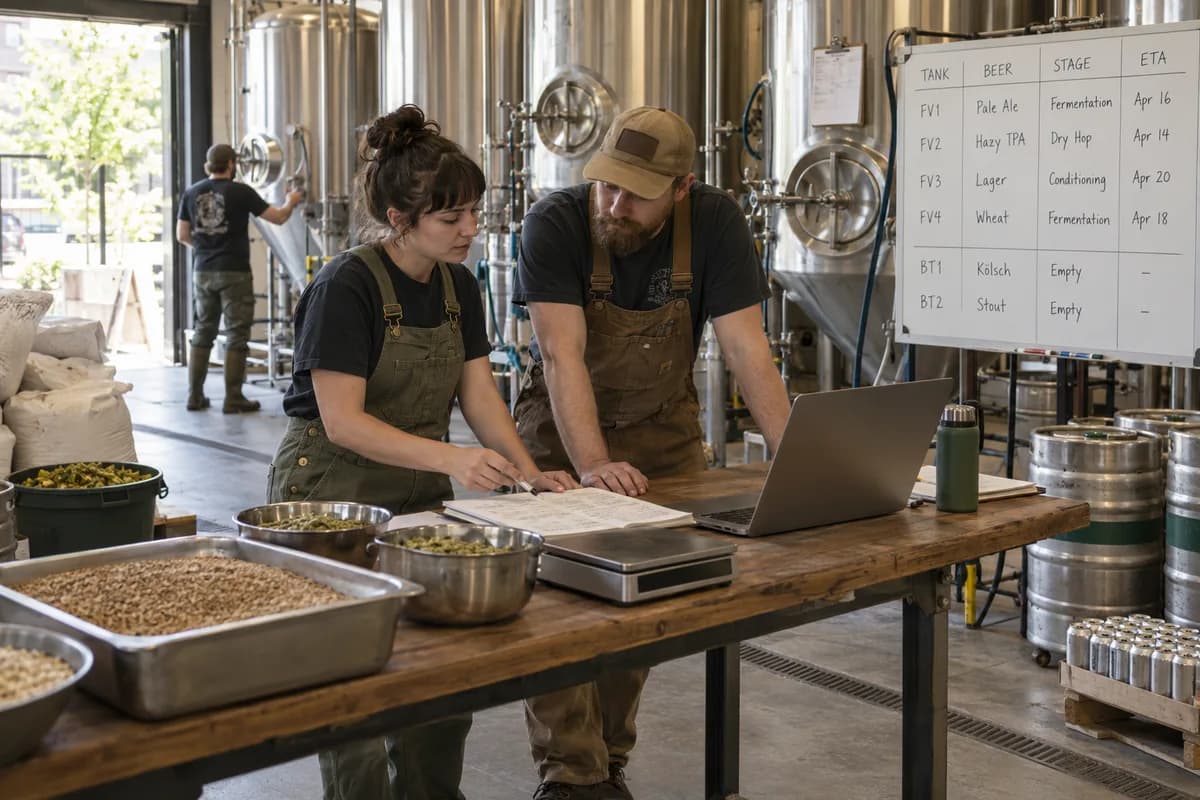
What a brewery recipe record holds
Each recipe is one record in the brewhouse. It keeps the beer style, the standard batch size and every ingredient with its quantity. A brew plan then attaches a date and a tank to a scaled copy, so the brewer reads one list instead of two.
A brewhouse week using the brew plan
Planning starts before the brew day. These are the moments when a brewery opens the recipe and the plan. Each one is a different person reading the same record for a different reason, and none of them needs the paper sheet taped beside the mill.
Who reads the brew plan and what they see
Each person meets the recipe and plan through the role they hold. The four roles below are the ones a brewery sets out at set-up. Nobody searches screens built for someone else.
Decisions to settle for recipes and brew plans
Some choices are easier before the first recipe is entered than after. Settle them at set-up. The head brewer and the owner should both be in the room. Each one decides how the brew plan behaves on an ordinary brew day.
How recipes and brew plans link to the product
The brew plan sits at the start of every beer’s record. Direction matters here. It takes from some features and hands on to others. The links below show each handover, so a change made in one place is visible further along the chain of the beer’s record.
- Books a tank on the tank schedule
- Draws ingredient needs from malt, hop and yeast stock
- Opens a batch record under a new lot number
- Feeds the reorder list when quantities run short
- Passes the brewed beer on to packaging runs
Where recipe planning stops
The feature plans and records. It does not brew. Mash, boil and cooling details are recorded against the batch, but the brewhouse does the work. A large plant with automated brewhouse control keeps its process control system. Recipe design, flavour choices and the cost of a new beer stay with the head brewer and the owner. A homebrew-scale operation with one recipe can keep notes in a book.
Frequently asked questions
Can one recipe be brewed at different batch sizes?
Yes. Enter the batch size on the brew plan and each ingredient line scales to it. The same record serves a small trial run and a full tank of the core ale. Nobody keeps a second copy.
Does the plan check ingredient stock before a brew?
The plan lists what the brew needs, and stock counts with reorder levels sit beside it. The brewer compares the two before fixing a date. Gaps show early. A shortage of hops or yeast is seen at the desk, not at the mill.
Who can edit a recipe after it is saved?
That is set at the start with the head brewer. Some breweries keep editing to one person. Recipe and product edits can also be handled by GullySystem staff when asked, which suits a brewery without an in-house administrator.
Can seasonal and trial beers have their own recipes?
Yes. Each beer is a recipe of its own, whether it is a core ale or a one-off. Decide at set-up which trial brews deserve a record. The rest can stay in the brewer’s notebook.
What happens to the plan when a tank is delayed?
Someone changes the date or moves the brew to another vessel. The tank schedule then shows the new booking. Staff read one current plan, not a crossed-out whiteboard that nobody trusts any more, and the cellar knows which tank to expect.
How this feature fits the system.
Brewery Management Software: the parts that work with this feature, the trades that use it and the ways to put it in place.
Recipes and brew plan
Each recipe lists malt, hops, yeast and water by quantity, and scales to the batch size so the brewer sees what a brew will use.
Bill of MaterialsBatch and fermentation records
A lot number is given at brewing and carried through every transfer, packaging run and delivery, so a beer can be traced forward.
Batch and Serial TrackingTank schedule
Brews are booked into tanks by date, and the plan shows when each vessel frees up so the next brew can be placed.
Production PlanningTell us what you need.
Tell us what your team does today, where work gets stuck and what you want to change.
What happens after you share your requirements
- We review your brief and the systems you already use.
- We clarify the workflow, missing information and the work to consider first.
- The proposed scope sets out the deliverables, responsibilities and dependencies.
- Review the scope and commercial terms before deciding whether to proceed.
Start with your requirements
Describe your current process, the people involved and the change you need. Start with the details you know; we can clarify the rest together.
Share your requirements