Forklift enquiries and quotations for dealers
A buyer rings about a reach truck for a cold store, and the salesperson writes down the duty cycle, load centre and floor surface before quoting. This feature holds each enquiry and every quotation for new, used and hire trucks. Fork, side shifter, battery and charger options sit on the quotation, and each revision stays beside the enquiry.
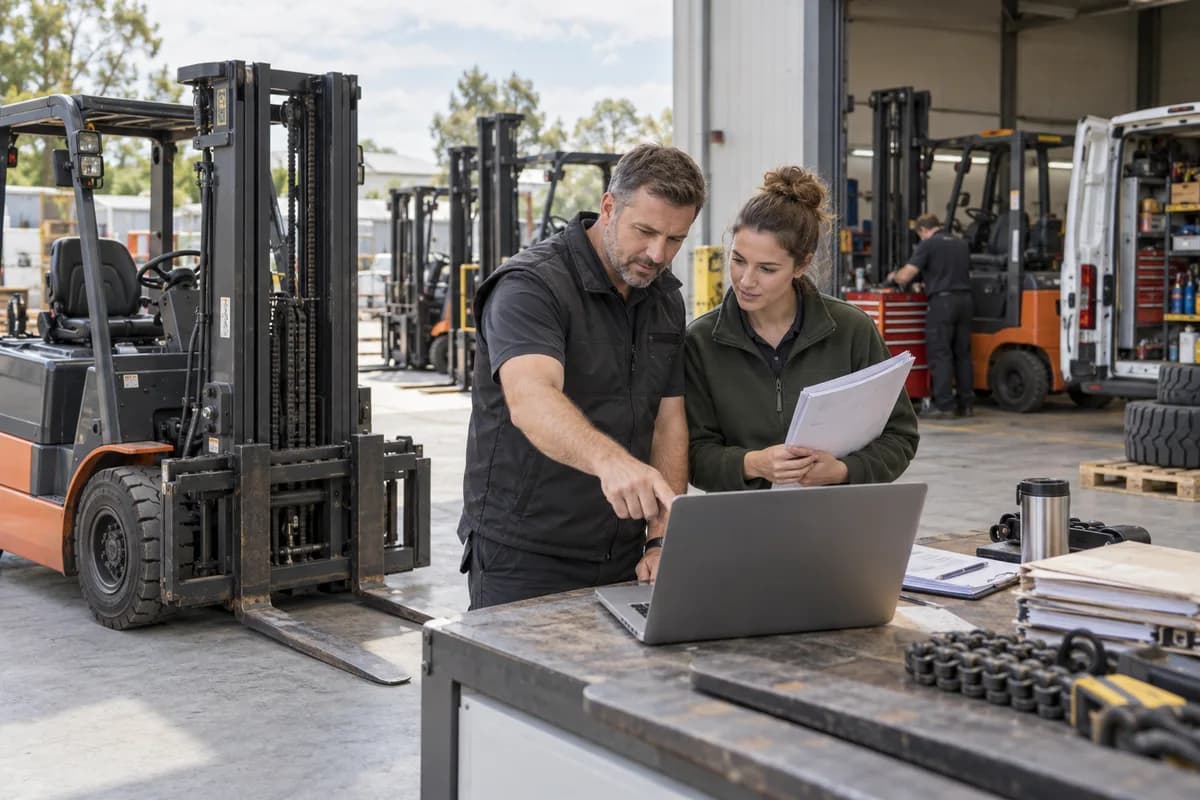
What a forklift enquiry and quotation holds
Specification reaches a dealership by phone and email, so the enquiry is where it gets written down once. The record keeps what the truck must do and what was offered in reply. Quotations are built from it, not from memory.
A sales week on enquiries and quotations
A dealership sales week runs from the first call about a pallet truck to a signed order. These are four moments when the enquiry and quotation record is open on someone’s screen in the sales office.
Who sees enquiries and quotations, and how
Five roles in a forklift dealership touch this record. Each needs a different view of it. Nobody has to ask a colleague for the specification, and the screens differ by what the person does next.
Decisions before enquiries and quotations go live
Four choices shape how quotations behave in a forklift dealership. Each is easier to settle before the first enquiry is keyed. The owner makes them with GullySystem in the first workshop. Write the answers down.
How quotations connect to the truck record
A quotation is the first document in a truck’s life with the dealership, and it hands its content to several other features. It also takes from them, since the offer must reflect trucks and prices that really exist. The links run both ways. They are listed below.
- Accepted sale lines pass to invoices, receipts and dues
- Accepted hire quotations become hire contracts with the agreed rate
- Truck choices draw on the machine register by serial number
- Used and reconditioned quotes read new and used stock
- Battery and charger lines check spares, batteries and chargers
Where enquiries and quotations stop
This feature records the enquiry and produces the quotation. It does not decide whether a buyer should buy, and it does not check that a truck suits a site. A technical adviser or the manufacturer still confirms capacity and attachments for unusual loads. A dealer that quotes only a few pallet trucks a month can use a spreadsheet instead. The record is not a sales forecast.
Frequently asked questions
Can one enquiry produce several quotations?
Yes. A buyer can be offered a new truck, a demonstrator and a hire for the same requirement. Each is a separate quotation. All of them sit under the one enquiry, and the buyer’s answer is recorded against the one that wins.
Do we keep old quotation revisions?
Every revision stays beside the enquiry, so the first price, the second price and the final price can all be opened. Nothing is overwritten. This helps when a buyer says the first offer was lower.
Can we quote attachments and chargers separately?
Yes. Forks, side shifters, batteries and chargers each take their own line with a price. The buyer can drop a line without the salesperson retyping the whole quotation. Lines stay tidy through a long negotiation.
What happens when a quotation is accepted?
A sale quotation passes to an invoice, and the data plate serial number is linked to the customer. A hire quotation starts a contract with its rate, period and opening hours. Then the enquiry is marked as won.
How do we see which offers went quiet?
Open quotations are listed with their age and owner. Won and lost offers are reported for each truck type. Start with the oldest. The sales lead can ring each buyer to ask where things stand.
How this feature fits the system.
Forklift Dealer Management Software: the parts that work with this feature, the trades that use it and the ways to put it in place.
Enquiries and quotations
A quotation is built from the truck models, attachments and battery options on file, and every revision stays with the enquiry.
Quote & Proposal ManagementMachine register by serial number
Each truck, battery and charger carries its own serial number, so a sale, a hire and a repair all point back to one machine.
Batch and Serial TrackingHire contracts and off-hire checks
A hire contract holds the rate, the period, the opening hours and the return condition, so billing follows what was agreed.
Contract ManagementTell us what you need.
Tell us what your team does today, where work gets stuck and what you want to change.
What happens after you share your requirements
- We review your brief and the systems you already use.
- We clarify the workflow, missing information and the work to consider first.
- The proposed scope sets out the deliverables, responsibilities and dependencies.
- Review the scope and commercial terms before deciding whether to proceed.
Start with your requirements
Describe your current process, the people involved and the change you need. Start with the details you know; we can clarify the rest together.
Share your requirements