One system for buyer programmes, dye approvals, set completion, labels and carton packing.
Manage a home textile factory in one system. Each buyer programme is held by design, size and colour, with its set composition and label rules. Lab dips and samples are approved on record, fabric is tracked from yarn through dyeing and cutting, and sewing and towel lines report pieces by section. Sets are checked for completeness, labelled to the retailer’s format and packed in marked cartons for shipment.
- Bed sheets, towels and cushion covers entered with the sizes and set contents that each buyer specifies
- Programmes in progress and fabric in the store carried over from your registers
- Our team updates labels and sections later if you ask
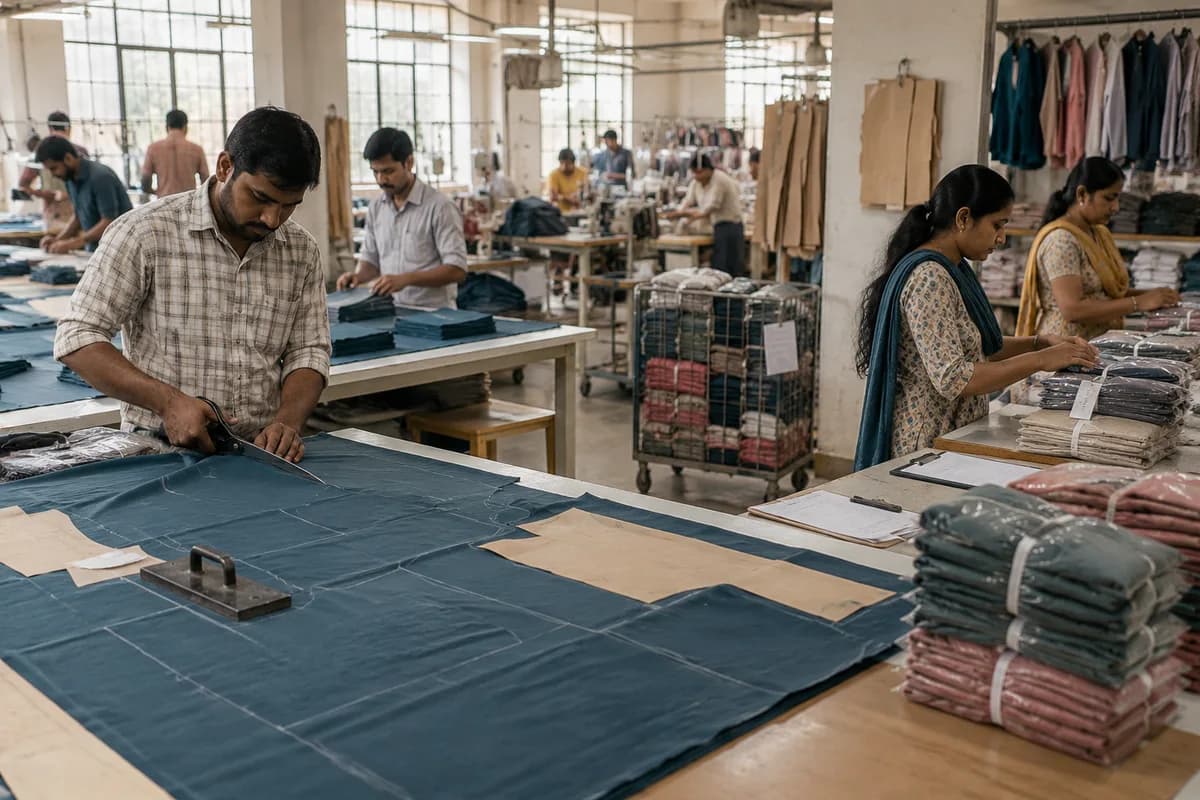
Home Textile Manufacturer Management Software, built by GullySystem for each customer, serves makers of bed linen, towels, curtains and cushion covers. The order holds its design, set composition, dye approval and label rules. Cutting, sewing and outside processes report against it, and cartons are packed and marked only when every piece of the set is present.
What goes wrong before the software.
How the work flows through it, step by step.
- 1
Programme and order
The buyer’s order is entered by design, size and colour. Set composition, labels and delivery windows are recorded.
- 2
Approvals
Lab dips, strike-offs and pre-production samples are sent and approved. The dates and photographs are filed on the order.
- 3
Fabric
Yarn is issued, fabric is woven or knitted, dyed or printed, and inspected on the roll machine before cutting.
- 4
Cutting and sewing
Lays follow the set composition. Sewing and towel lines report pieces, rework and rejects by section.
- 5
Set check and labelling
Complete sets are counted, short items are chased, and retailer labels and carton marks are printed from the order.
- 6
Inspection and shipment
The buyer’s inspector draws a sample. On acceptance the cartons are listed and loaded with the packing list and invoice.
What is inside.
Every module can be switched on, left out or changed to match how your team already works.
The business modules it is built from.
Each one is also available on its own, or inside a system built for you.
- Order Management
Each programme keeps design, size, colour and set composition together, and the merchandiser sees pieces cut, sewn and packed against the order.
- Document Management
Approvals with their dates and photographs are filed on the order, so the dye house works from the shade the buyer signed.
- Goods Receipt (GRN)
Yarn and greige fabric are booked in by lot against the supplier delivery note, and shortfalls are noted before issue to the knitting or weaving floor.
- Batch and Serial Tracking
A dye lot is tied to the fabric rolls and the finished sets cut from it, which helps when a shade difference is reported.
- Quality Control
Defects marked on each roll are recorded before cutting, so the lay avoids them and the rejects are counted.
- Job Work Management
Pieces sent for printing or washing are counted out and back on a delivery note, and the difference is shown before packing.
- Barcodes and Labels
Retailer barcodes, size labels and carton marks print from the order data, so each label matches what the buyer asked for.
- Production Planning
The planner loads each line with colours and sizes by delivery window and sees the pieces made against what is due.
How we would put it in.
Setup, data migration, integrations and anything built on top.
One system, each person sees their part.
Merchandiser
Take the programme, send samples, keep approvals on the order and watch each colour against its date.
Production manager
See cutting, sewing and towel lines by section, with rework, rejects and sets still short.
Dye house and processing
Record lots, shade checks and shrinkage, and match each lot to its approved dip.
Packing and shipping
Count complete sets, print labels, build the carton list and prepare the shipment documents.
Quality inspectors
Mark roll defects, record in-line checks and enter the buyer’s sample result.
The numbers the owner asks for.
- Pieces cut, sewn and packed by programme and colour
- Sets complete and sets short by item
- Dye lots and approvals by order
- Towel weight checks by lot
- Outside unit pieces sent against returned
- Rejects and rework by section
- Shipments by container and delivery window
Who this is built for.
- Bed linen and sheeting manufacturers
- Towel and terry makers
- Curtain and upholstery fabric converters
- Cushion cover and quilt producers
- Export houses supplying retailers and hotel chains
When it is not the right choice.
- A small unit stitching to walk-in orders can keep an order book and a stock register.
- A yarn spinner will find the yarn product closer to its work than a made-up goods factory.
Adapted to your business before it goes live.
You are not handed a login and left to it. The product is set up around your records, your people and the tools you already use.
Works alongside
- Accounting export
- Barcode or label printer
- Roll inspection machine data
- Messaging for buyer updates
- Shipping documents export
Questions owners ask before a demo.
Is it for made-ups only or for the whole chain?
For makers of finished goods. It follows yarn and fabric into dyeing, cutting and sewing. A yarn spinner or a cloth processor has separate products.
How does it know a set is complete?
The order lists the pieces in a set. Counts from cutting, sewing and packing are compared, and any piece falling short is listed before the carton is closed.
Where do lab dip approvals live?
On the order. The date, the buyer’s comment and a photograph are filed with it, and bulk dyeing refers to that record.
Can it check towel weight?
Yes. Weight per dozen is recorded by lot against the buyer’s limit. The limit is set with your quality head, and a lot outside it is flagged.
Does it print the buyer’s carton marks?
Yes. Carton marks and label text come from the order and print in the layout the buyer provides.
How are outside printing and washing tracked?
Each batch goes on a delivery note, and returned pieces and rejects are booked against it. The difference is visible before packing begins.
Can buyers see progress?
Not directly. Buyers get a printed or exported report rather than a login. A buyer login would be a separate item agreed in the proposal.
Can we start with existing orders?
Yes. Programmes in hand and fabric on the racks are keyed in from your registers, and the merchandiser signs off each programme before release.
How is it priced?
No price is shown here. We quote after a walk-through. The figure depends on who signs in, which sections run it, how many buyers you serve and how much past data comes across.
Will a small unit find it heavy?
It can be. A unit with a few steady buyers and one set size is served by a register. Several colours, many labels and outside units are when it becomes useful.
Wondering what it would cost? Share your requirements and an engineer will come back with a scope.
Businesses that use this.
Related products.
See Home Textile Manufacturer Management Software with your own data.
Tell us how you run things today. We’ll show you the parts that matter to you and say plainly what would need changing.
- No obligation
- A reply within one business day
- Your details stay private
Start with your requirements
Seven short steps that tell us what you need. An engineer reads them before getting in touch.
Share your requirements