Customer receipts and balances for motorcycle dealers
A motorcycle sale is paid in pieces: a booking amount, part payments, perhaps a loan disbursal, and a balance on delivery day. This feature records each receipt against the rider’s booking and issues tax invoices under local rules. It shows who still owes money on the morning a bike is due out. Nobody is surprised.
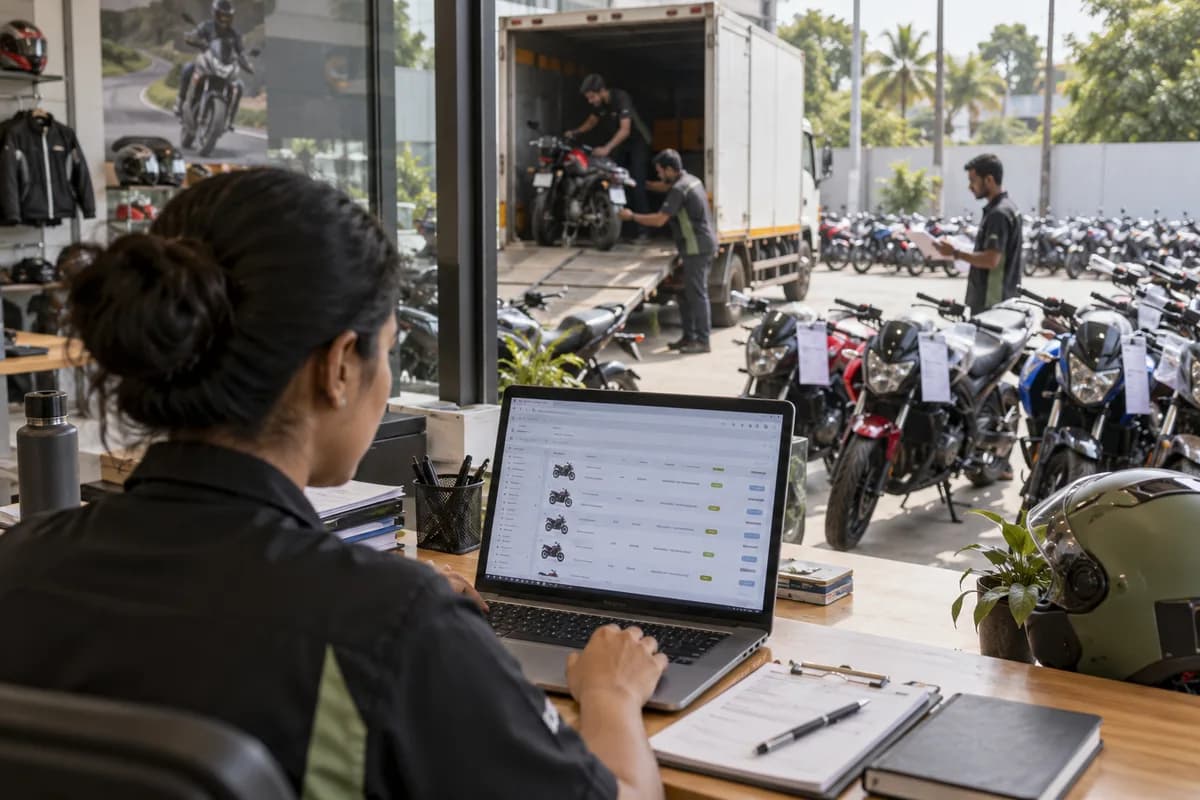
What a receipt and balance record keeps
Each booking carries its own running account. Every receipt is added to it, and the balance is recalculated at once. The cash desk, the salesperson and the accountant all read the same figure, so the question of who owes what is settled quickly.
A payment trail from booking to delivery day
Money arrives in stages, and each stage is handled by a different person. These moments follow a single rider from the first payment to the final one. Each entry leaves a receipt behind. The figure owed changes with it, so the picture is always current.
What each role sees on the account
Accounts runs the books, but sales and the counter touch money too. Each role sees what it needs from the account. Nobody asks the cash desk what a rider has paid so far. The answer is on screen.
Decisions to settle before receipts go live
Money rules differ from one dealership to another. They are best set before the first receipt. Agree them with accounts and the principal. GullySystem staff then set the receipt and invoice layouts and change them whenever you ask.
How receipts link to the sale and the books
Receipts sit at the end of the selling chain and at the start of the accounts. They read the figures agreed in the booking and hand totals to your accounting software. Earlier steps already hold the details. The cash desk types only the money received, and nothing else about the sale.
- Takes accepted lines from bookings and quotations
- Credits the exchange value from exchange and used bikes
- Reads the frame and engine numbers on bike stock records
- Checks balances before pre-delivery inspection and handover
- Exports invoices and receipts to accounting software
Where receipts and balances stop
This feature records money received and issues invoices. It does not collect payments from a rider’s bank, approve a loan, work out tax or file returns. Tax invoice wording follows local rules, but the conclusions belong to the dealer and an accountant. A dealer taking only cash on a few bikes can keep a receipt book.
Frequently asked questions
Can a rider pay the booking in instalments?
Each part payment is recorded with its date and the person who took it. What is owed falls after every entry. The rider can be given a receipt that matches the screen at any visit, so both sides agree.
How do I see who owes money on delivery day?
The list of bikes due out shows each rider’s balance beside the delivery date. A bike with money still owed is flagged. The cashier and the sales desk read the same list, first thing in the morning.
Does the tax invoice carry frame and engine numbers?
Both stamps flow from the bike record into the invoice, so nobody retypes them. Layout and wording follow local rules and are set up by GullySystem staff. Your accountant confirms the tax treatment of each sale. Layout is set by GullySystem staff.
Where does a finance partner’s payment appear?
A loan disbursal is recorded against the rider’s account when it arrives, and the balance falls. The finance partner export starts from the accepted booking lines. Your partner’s format is agreed during set-up, before any file is sent. Set-up comes first.
Can receipts go to our accounting software?
An accounting software export is among the integrations. Invoices and receipts are prepared in a form your books can take in. The accountant decides how each entry is treated and posted. Entries are not posted for you.
How this feature fits the system.
Motorcycle Dealer Management Software: the parts that work with this feature, the trades that use it and the ways to put it in place.
Bike stock by frame and engine number
Frame and engine stamps travel with the bike from the dispatch list into the invoice, the registration form and every later job card, so no digit is retyped.
Batch and Serial TrackingEnquiries and test rides
Walk-ins, manufacturer leads and listing enquiries join one list, tagged by source and by the model the rider asked to try on a demo bike.
Lead ManagementBookings and quotations
A quotation adds accessory kits, insurance and a loan scheme to the bike, and earlier revisions stay on file beneath the accepted one.
Quote & Proposal ManagementTell us what you need.
Tell us what your team does today, where work gets stuck and what you want to change.
What happens after you share your requirements
- We review your brief and the systems you already use.
- We clarify the workflow, missing information and the work to consider first.
- The proposed scope sets out the deliverables, responsibilities and dependencies.
- Review the scope and commercial terms before deciding whether to proceed.
Start with your requirements
Describe your current process, the people involved and the change you need. Start with the details you know; we can clarify the rest together.
Share your requirements