Closing fitting checks kept with each orthotic device
Fitting checks and quality records note the closing check of each orthotic device against its prescription. Measured heel height, arch fill and any variation are written down and filed with the device they cover. Staff, the owner and an auditor can open a check from the order.
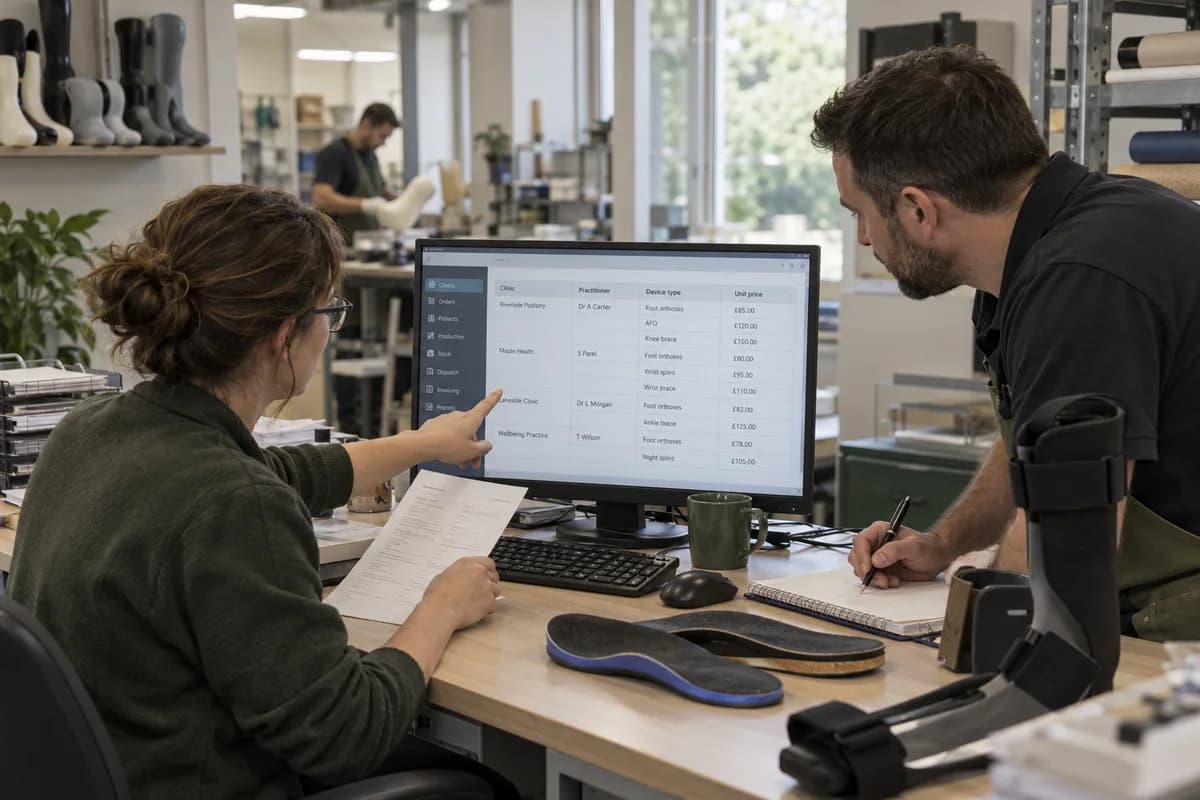
What an orthotic fitting check records
A fitting check is a short record made at the end of the bench, before a device is packed and sent to the clinic. It compares the finished orthosis with the prescription. Four kinds of entry make up the record, each kept with the device.
A week of fitting checks on the bench
Quality records are made in small acts at the end of the line. Four ordinary moments show who writes a check, who reads it and what happens when a measurement is off. All four begin at the bench. Each is quick.
Who writes and who reads a fitting check
The bench writes the check and several other people read it. GullySystem sets who may enter, who may amend and who may only look. Each view below reads from the same record.
Decisions to settle before checks are recorded
A quality record is worth only the questions it asks. Decide which measures each device type must show before the first check is saved. GullySystem then builds the fields. Bring a paper check sheet if one exists.
How fitting checks tie to production and returns
A fitting check closes the production story of one device. It reads the prescription and the approved design revision. Remakes, dispatch and any audit then read it in turn. It stays filed with the device. It is the last bench record before the parcel is packed.
- Prescription orders supply the target measures to check
- Design files and revisions show which revision was milled
- Production work orders close once the check is passed
- Remakes, adjustments and returns cite the failed check
- Dispatch follows a saved check for each device
Where fitting checks stop in this product
A check records what a person measured. The product does not measure for itself and it connects to no gauge or scanner. Whether a device is clinically acceptable is for the podiatrist. Standards, certification and regulation belong to the owner and an adviser. A single maker with few devices can keep a signed paper sheet.
Frequently asked questions
Which measures does a fitting check hold?
Heel height and arch fill are the core entries. Other measures follow the device type, as agreed at set-up. Each device type has its own list. Bring a sample check sheet to the first meeting.
Can a failed check start a remake?
A failed check is logged with the reason. The device goes back to the bench, or a remake is opened against the first order. Extra hours and sheet post to that remake. It remains on file.
Who can see a fitting check afterwards?
Anyone with access to the order can open it, according to their role. The order desk reads it to answer clinics. Owners read it for patterns across device types. What each person sees is set at configuration.
How does an auditor find a check?
Search by order or patient reference and the check opens with the device. Prescription, revisions and check sit together. No folder hunt is needed. How long a record is kept is a matter for your adviser.
Does it replace our clinical sign-off?
No, it does not. What it holds is the laboratory’s own closing measures against the prescription. A podiatrist’s clinical judgement at the clinic remains theirs. The record supports a conversation but never settles a clinical question.
How this feature fits the system.
Orthotics Manufacturing Management Software: the parts that work with this feature, the trades that use it and the ways to put it in place.
Clinic accounts and price lists
Each clinic and podiatrist is a separate record, so a device is billed to the right account at that clinic’s agreed price.
Contact & Account ManagementPrescription orders
Every prescription becomes a numbered order from receipt to dispatch, with scans and clinical notes attached and its status visible to the order desk.
Order ManagementDevice specifications and bills of materials
Each device type lists its blank, sheet, cover, strap and adhesive quantities, so a work order reserves the right material without retyping.
Bill of MaterialsTell us what you need.
Tell us what your team does today, where work gets stuck and what you want to change.
What happens after you share your requirements
- We review your brief and the systems you already use.
- We clarify the workflow, missing information and the work to consider first.
- The proposed scope sets out the deliverables, responsibilities and dependencies.
- Review the scope and commercial terms before deciding whether to proceed.
Start with your requirements
Describe your current process, the people involved and the change you need. Start with the details you know; we can clarify the rest together.
Share your requirements