Counter Billing and Held Bags for Pet Shops
The counter bills food, toys and accessories against the owner’s record. Payment can be split between methods. When an owner cannot carry the bag today, it is held with their name on it. Stock keepers set it aside, and the bag waits on the shelf.
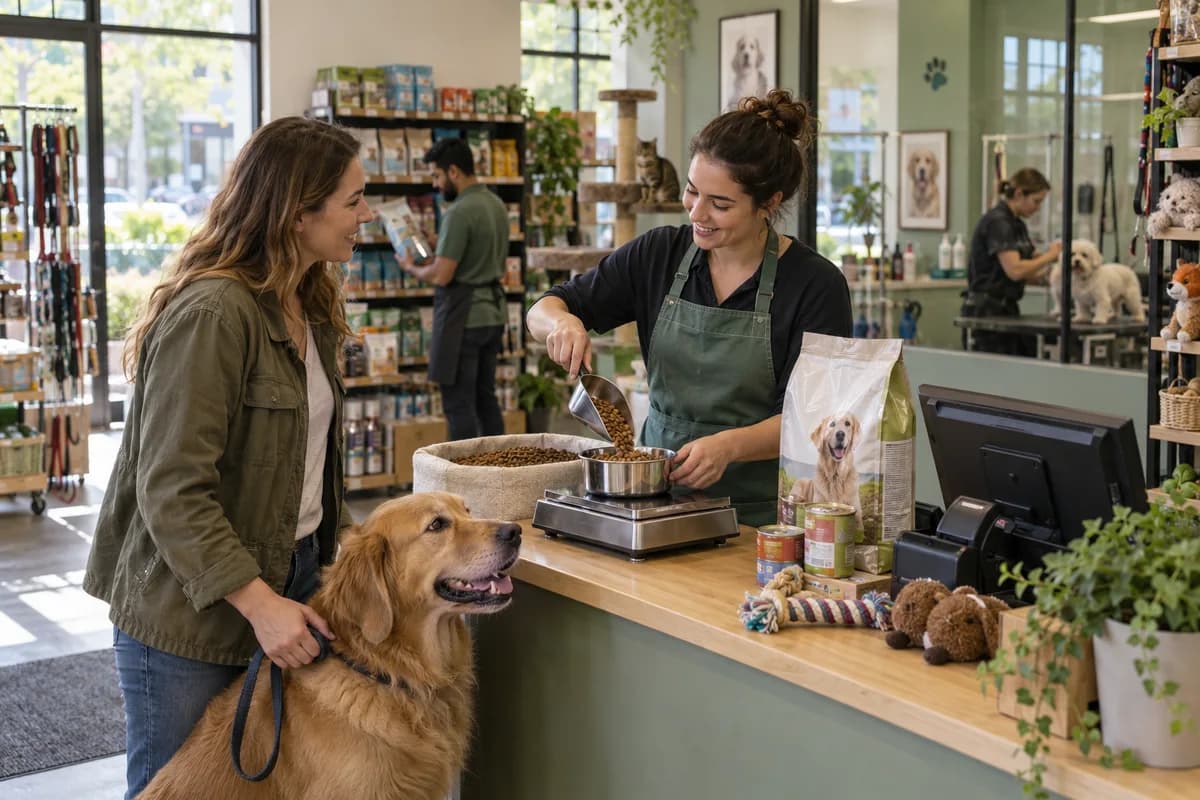
The bill, the payment split and the held tag
A pet shop bill mixes a bag of kibble, a chew toy and a lead. Payment may come in two parts. Holding a bag adds an owner’s name and a wait. Each of those leaves its own entry, and each is read back later by someone who was not at the till.
A counter shift from first bill to held bag
The first customer buys a lead and a bag of kibble. By mid-afternoon an owner with a sleeping child asks the shop to keep a bag until tomorrow. At closing the associate counts what is still held. One bill screen serves all three.
Who rings, who packs and who checks
Held bags pass through several hands. The associate rings it, the stock keeper sets it aside and the owner reads the day’s takings. Delivery staff meet the same bill when an order goes out.
Choices about holds and payment splits
Holding a bag looks like a favour until it sits on the shelf for a month. Billing choices are easier to make while the counter is quiet. Settle these four before the first sale.
Where the till hands on to other records
Every sale ends at the counter. Pet cards give it the owner and the pet and name the usual bag. Loose sacks and weight bands give it the quantities. Loyalty adds points and offers on top. Behind the till, stock counts and the accounting export take the result.
- Pet and owner records attach the buyer to each bill
- Loose weight and pack-size sales add weighed lines
- Weight-band dosing items arrive as confirmed lines
- Loyalty and offers apply points and bundles at billing
- Home delivery turns a sale into a drop on a route
Limits of counter billing in a pet shop
Counter billing records sales, payments and holds. It does not file tax returns, decide how a sale is taxed or settle a card dispute. Those belong to the owner, the accountant and the card provider. Cash is still counted by hand at closing. A market stall with a few items and a notebook may not need a billing system. A shop with held bags and mixed payments does.
Frequently asked questions
Can a bill be paid partly by card?
Yes, a bill can be settled in parts, such as card and cash, and each part carries its own method. Parts must cover the total. The balance on screen shows what is still owed at each step.
Does a held bag reduce shelf stock?
Once held, a bag is set aside under the owner’s name, so the counter does not sell it twice. It stays out of the available count. When the owner collects it, the hold is closed and the stock is released.
Do toys and accessories need pack sizes?
Pack sizes matter for food, where one brand comes in several bags. Toys, bowls and leads are ordinary items with a brand and a price. Billing treats them all alike. Nothing extra is keyed for them.
How are barcode scans handled at the till?
A barcode scanner can be connected, so a scan adds the item line to the bill. Items without a barcode are picked from the list. Loose weight sales take the figure from the scale or the keyboard. Scans save typing.
Does billing replace our accounts?
Billing records sales and payments by method. Totals can pass to your accounting software through the export. Bookkeeping, tax treatment and filing stay in your accounts, with your accountant. The counter does not reconcile bank statements.
How this feature fits the system.
Pet Store Management Software: the parts that work with this feature, the trades that use it and the ways to put it in place.
Food batches and best-before dates
Each carton’s batch and expiry are recorded on receipt, so a bag nearing its date can be found, moved forward or returned.
Batch and Serial TrackingLoose weight and pack-size sales
A sack is one item that sells by the gram or in smaller packs, so the scoop and the stock figure agree.
Product ManagementCounter billing and held bags
Food, toys and accessories are billed with mixed payments, and a bag held for pickup stays under the owner’s name.
Point of Sale BillingTell us what you need.
Tell us what your team does today, where work gets stuck and what you want to change.
What happens after you share your requirements
- We review your brief and the systems you already use.
- We clarify the workflow, missing information and the work to consider first.
- The proposed scope sets out the deliverables, responsibilities and dependencies.
- Review the scope and commercial terms before deciding whether to proceed.
Start with your requirements
Describe your current process, the people involved and the change you need. Start with the details you know; we can clarify the rest together.
Share your requirements