Loose Weight and Pack-Size Sales for Pet Shops
A sack of kibble arrives as one item and leaves by the scoop, the kilo or a smaller pack. Every sale takes weight off the sack figure. Associates weigh at the counter, and owners read sack use against sack purchases, so the shelf and the record agree.
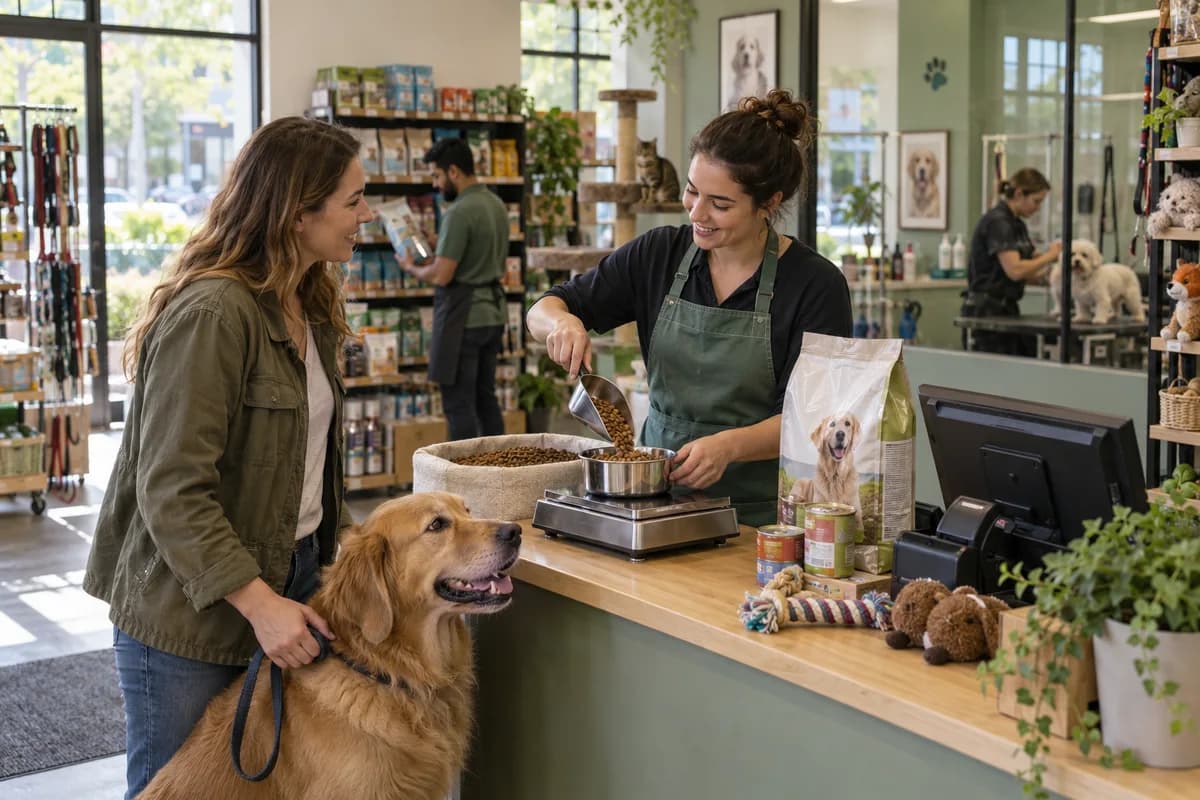
A sack, its scoops and its packs
Kibble comes in as one large sack and goes out in pieces. Each piece needs a weight, a price and a place in the sack figure. Let those drift and the shelf disagrees with the sheet. Weighing keeps them level.
A morning of scoops, packs and sack checks
A Labrador owner wants a couple of kilos of the usual kibble, not a whole bag. A cat owner wants a small pack of treats to try. The stock keeper opens a new sack when the old one runs low. Weight is the thread through all three.
Who weighs, who restocks, who reads the gap
Three jobs touch a sack: the associate at the scale, the stock keeper who opens it and the owner who reads usage. Each needs a different number. Nobody should have to ask another for it.
Settling the scale, the sack and the price
Loose sales go wrong quietly when the scale, the sack and the price tell different stories, and nobody notices for weeks. Small slips repeat daily. Settle these choices before the first sack is opened.
Where the scoop reaches other records
Loose sales sit between receiving and billing. Sacks arrive through food batches, leave through counter billing and return as a distributor order when stock falls. Pet cards supply the weight that sizes a bag. Each link carries a weight, and reports compare sack use with sack purchases.
- Food batches and best-before dates supply each sack’s batch
- Counter billing prices the weighed scoop
- Distributor orders restock the sack when levels fall
- Refill reminders read the pack size an owner bought
- Pet and owner records suggest the size of bag or scoop
Limits of weighing food by the scoop
A scale reading is only as good as the scale. Accuracy is the shop’s job. The feature records weights but does not weigh, so a scale must be connected and kept accurate. It cannot tell if a sack arrived short or if dust has gathered below. Rules on trade scales belong to the owner and the local authority. A shop selling only sealed bags can skip loose sales.
Frequently asked questions
Can one sack be sold in bags and by the scoop?
Yes, the sack is one item, and each sale takes weight from it, whether by the scoop or as a packed bag. The balance stays right either way. Each type of sale can carry its own price.
What if the scale and sack figure disagree?
Record the difference at the next sack check and note the reason beside it. Small gaps come from dust and spills. Larger gaps deserve a closer look. Sack usage reports show the pattern over time.
Does an open sack carry its best-before date?
Each sack carries the batch and date entered at receiving. It stays on the list of near-date lines until it is empty, so nobody forgets it. Dates follow the sack. Staff can bring it forward or put the loose price on offer.
Can treats be split from a large pack?
Treats sold loose or cut into smaller packs follow the same method as kibble, so the counter learns one routine. Weight comes off the parent pack. Small packs carry their own price. Owners can sell trial sizes this way.
Do we need a scale connected to the system?
A weighing scale is one of the listed connections. Without one, the associate types the weight by hand. Typed weights work. A connected scale removes a step where slips creep in. Choose by the number of loose sales the counter makes.
How this feature fits the system.
Pet Store Management Software: the parts that work with this feature, the trades that use it and the ways to put it in place.
Food batches and best-before dates
Each carton’s batch and expiry are recorded on receipt, so a bag nearing its date can be found, moved forward or returned.
Batch and Serial TrackingLoose weight and pack-size sales
A sack is one item that sells by the gram or in smaller packs, so the scoop and the stock figure agree.
Product ManagementCounter billing and held bags
Food, toys and accessories are billed with mixed payments, and a bag held for pickup stays under the owner’s name.
Point of Sale BillingTell us what you need.
Tell us what your team does today, where work gets stuck and what you want to change.
What happens after you share your requirements
- We review your brief and the systems you already use.
- We clarify the workflow, missing information and the work to consider first.
- The proposed scope sets out the deliverables, responsibilities and dependencies.
- Review the scope and commercial terms before deciding whether to proceed.
Start with your requirements
Describe your current process, the people involved and the change you need. Start with the details you know; we can clarify the rest together.
Share your requirements