Track pet food lots, weight-based sales and repeat orders from the shop to the doorstep.
Pet product businesses sell food, treats, litter, bedding, toys and healthcare items to owners who come back every few weeks. The pet store product records food by batch and expiry, loose weights, bags per breed and the repeat order each customer follows.
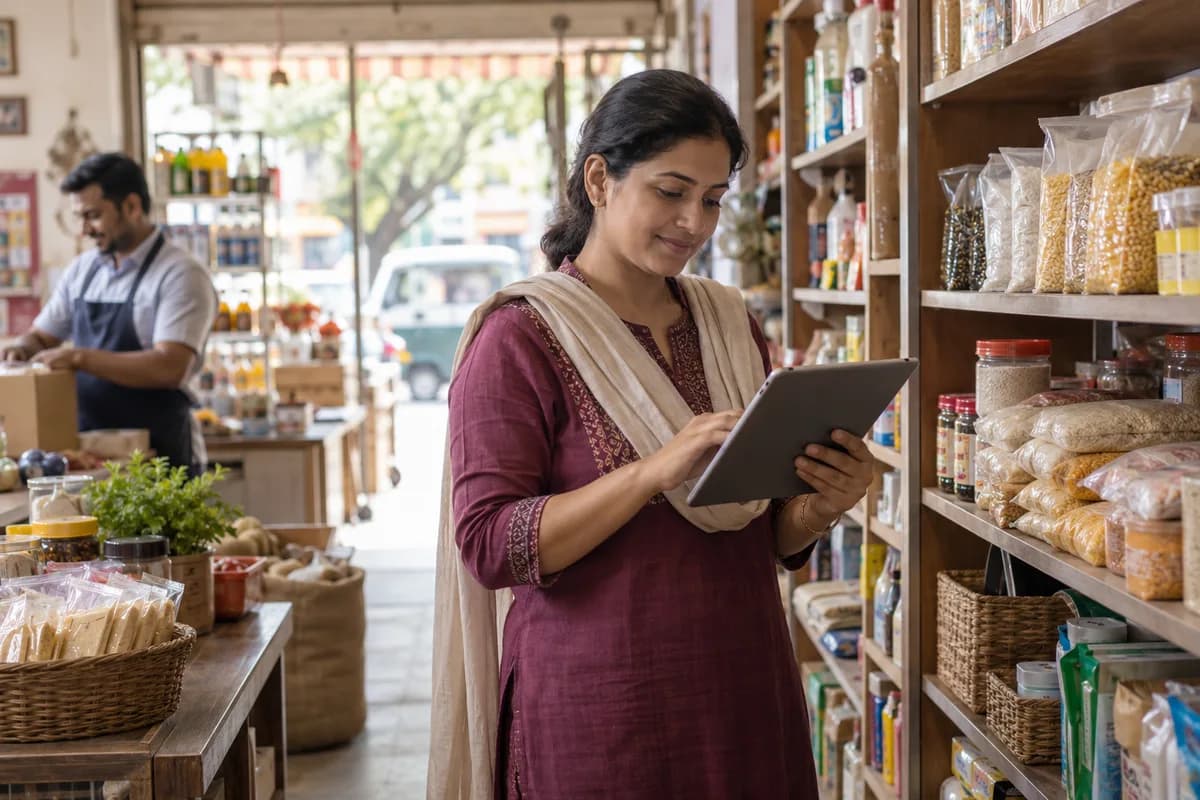
A pet store sells to loyal owners. A bag of kibble for a Labrador or a tin of cat food is bought again every few weeks, often in the same brand. Customers expect the right bag in stock. They also like a reminder before theirs runs out.
Most shops bill at the counter and keep everything else in a notebook. Expiry dates, loose food by weight and a customer’s regular order all sit in different places. Nothing links.
A sales associate helps an owner choose food by pet, age and size of breed, and weighs out loose kibble or treats from an open sack. The counter bills the bag, a tin and a chew toy, and the owner asks for the same brand next month. Loyalty is high. Some phone ahead for a bag to be set aside. Others ask for home delivery.
The stock keeper receives cartons from distributors and brand representatives, checks the batch and the best-before date, and shelves the oldest first. Dates matter. Frozen and chilled lines sit in a separate fridge. Pest and flea treatments, which are sold on a pet’s weight band, go on a controlled shelf.
Shops with a grooming corner book a groomer by pet and breed, and stores with a boarding room track each stay. Vaccination papers and feeding notes are kept on file.
What goes wrong for pet stores without a proper system.
What we would build for pet stores.
Named the way your team already talks about the work. We start with whichever part the audit shows is costing you most.
A requirements checklist for pet stores.
What to cover, which reports to ask for and what to put to every vendor, ready to print or save as a PDF.
A product already built for pet stores.
It is adapted to how your business works before it goes live, and anything your trade needs that it lacks is added then.
Pet Store Management Software
Pet records, food batches and expiry, loose weight sales, refill reminders, distributor orders, delivery and grooming for pet stores.
The business modules pet stores use most.
Each one is also available on its own, or inside a system built for you.
The services behind it.
ERP, CRM and Business Software Implementation
One record of stock, orders, customers and accounts, set up so your team opens it every day.
Learn moreWhatsApp Business API and Chatbots
WhatsApp Business API work covers number onboarding, template approval, opt-in records and a chatbot with human handover. It connects WhatsApp to a CRM, billing or booking system, so messages are sent from existing records and replies are written back.
Learn moreE-Commerce and Digital Commerce
An online store or B2B order portal wired to your stock, billing and dispatch.
Learn moreHow the work runs from Bengaluru for your city.
- 1
The audit, by call
A screen-share and a look at the sheets, Tally reports and WhatsApp groups your team uses. No travel needed.
- 2
A written proposal
Scope, what we build first and the cost, agreed in writing before anything starts.
- 3
Build in short rounds
Working screens shared every few weeks. Your team tests them from your own office.
- 4
Go-live, in person when it helps
For data migration and training we can come to your city. Travel is agreed in advance.
- 5
Support online
Fixes, changes and hosting handled remotely by the same team that built it.
Software we have built and run.
We only name clients whose work is published. These are systems our team designed, built and supports.
PetSeva: matching owners to the right vet, at any hour
A two-sided veterinary platform where vets are searchable by specialisation and bookable outside clinic hours. It now carries more than 2,000 veterinary doctors.
Read the case study Paying guest accommodationSAM Atithi Pavathi: bed-level occupancy as the source of truth
PG management software where allocation, rates and invoices are derived from bed-level occupancy and not maintained in parallel spreadsheets.
Read the case study School transport servicesSAM Tours: school transport on a single ledger
Registration, fee collection, routing and finance write to the same records, closing the gap between journeys run and fees collected.
Read the case studyQuestions pet stores ask before they call.
Can the system sell dog food by the kilo from an open sack?
Yes. The sack is received as one item and sold by weight at the counter. Each sale reduces the sack, so the stock figure follows the scoop.
Does it warn us before a food batch expires?
Yes. Each delivery is recorded with its batch and best-before date. A list shows lines coming close to expiry so they can be placed forward or put on offer.
Can it remind owners when their usual bag is due?
Yes. The reminder uses the bag size and the pet’s weight to estimate the date. Owners who have agreed to messages get it by email, text or chat app.
Do we need it if we only sell online?
It still helps, because the batch, stock and repeat-order records are the same. A shop with no counter would use the order and reorder modules more than the till.
What happens in the free technology audit?
We look at the software, spreadsheets and WhatsApp groups your business runs on today and write down what works, what slows your team down and what is missing. A demo login, a screen-share or a few screenshots are enough to start. You get a report ordered by priority, and there is no obligation to hire us afterwards.
How much will the software cost?
We don’t publish a price, because it depends on what the system has to do. The audit settles the scope, and the cost goes into a written proposal before any work starts.
Related industries.
- Appliance and electronics dealers
- Auctioneers
- Battery dealers
- Building material suppliers
- Clothing stores
- Corporate gifting companies
- Department stores
- Discount stores
- E-commerce fulfilment centres
- Electrical goods dealers
- Electronic components distributors
- Florists and flower shops
- FMCG distributors
- Furniture showrooms
- Home furnishing stores
- Home theatre and AV dealers
- Industrial tools distributors
- Jewellers
- Kirana and grocery stores
- Lighting stores
- Medical equipment dealers
- Office and cleaning supply dealers
- Outdoor and sports goods stores
- Paint dealers
- Pharmaceutical distributors
- Plumbing material dealers
- Surgical and medical supplies distributors
- Tile and sanitaryware showrooms
- Uniform suppliers
- UPS and power backup dealers
- Water purifier dealers
Part of these wider groups.
Tell us how your business runs today.
A few lines on your spreadsheets, software and WhatsApp groups is enough. We reply the same working day.
- No obligation
- A reply within one business day
- Your details stay private
Start with your requirements
Seven short steps that tell us what you need. An engineer reads them before getting in touch.
Share your requirements