Trace each batch from material lot to dispatch, and each order to its cost and settlement.
Food and consumer goods businesses buy materials in lots, make or cook in batches and sell to distributors, institutions, outlets or families. Tally usually holds the invoices, while recipes, batch records, expiry dates, schemes and claims sit in registers and chats. The common need is a record that ties materials issued to batches made, and batches made to orders sent, returned or wasted.
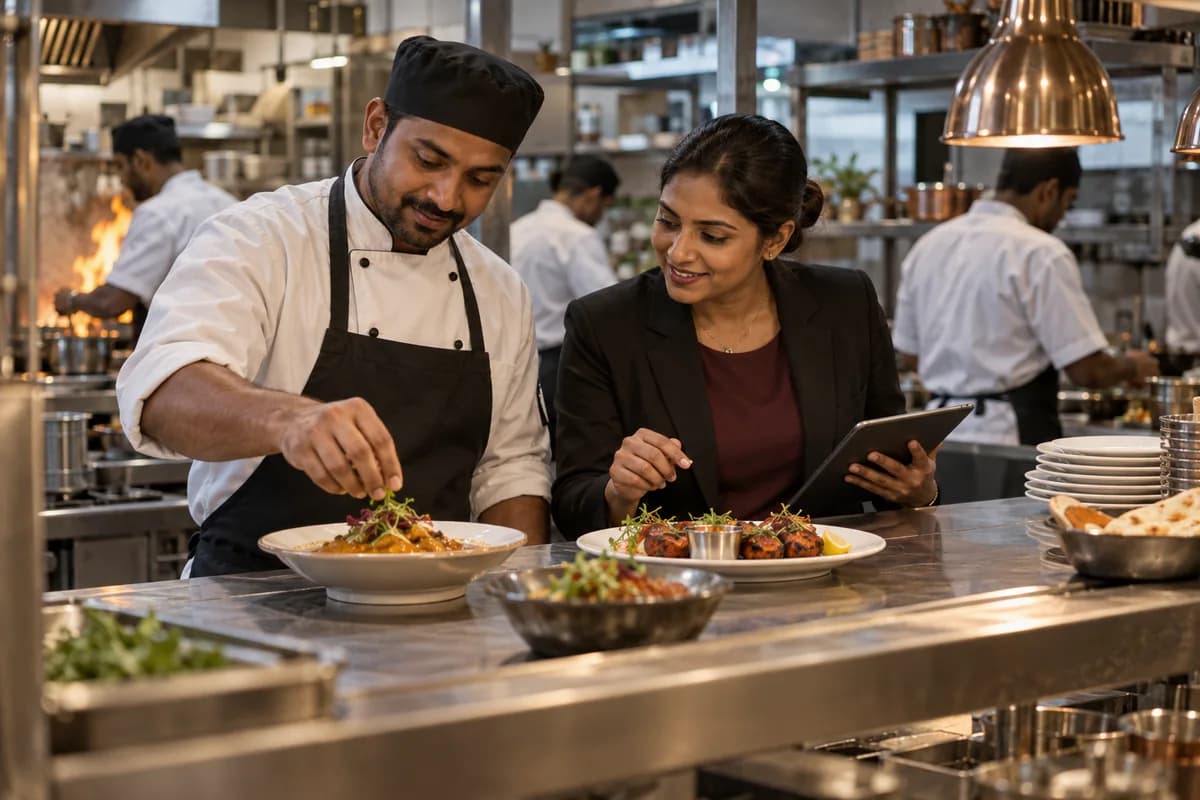
Seven trades share this group: makers of snacks and masalas, drinks, personal care and household products, suppliers to hostel and hospital kitchens, bakeries and caterers. Some pack under their own brand. Others cook to an order. All of them turn bought materials into something with a shelf life or a serving time.
Where a business makes goods to a recipe, the plant or kitchen works in batches. The figures that matter are quantity issued, quantity made and what was lost to rejection or wastage. These are written at the stage where they happened, often on a sheet that is totalled after the shift. In the manufacturing trades Tally takes the invoice, and batch and expiry records sit apart.
The selling side adds its own record. Distributors order by phone or through a salesman, and schemes run for a few weeks. Institutions send daily indents against agreed rates. Cake and event customers change their order several times. Returns, claims and extra plates all arrive after the fact, and each has to be checked against what was actually sent, offered or agreed with the buyer.
Software for each kind of food and consumer goods business.
Food manufacturers
Makers of snacks, masalas, pickles and sweets usually run on Tally, a paper batch register and distributor orders on WhatsApp, so tracing and expiry tracking slip. The production management software takes your recipes, batch sizes and pack sizes as they are. Each batch traces to the material issued to it and the dispatch it left on. Best-before tracking and distributor schemes are built on top during implementation.
Learn moreBeverage manufacturers
Makers of packaged water, soda, juice and flavoured drinks buy preforms, caps, labels, sugar and concentrate, then blend and fill in batches for distributors and route vans. Tally holds the invoices, while batch codes, line output and returnable crates sit in registers. The production management software keeps bills of material, work orders and stage records. A returnable-container ledger and batch-code stock are built around it during implementation.
Learn morePersonal care product manufacturers
Makers of soaps, shampoos, creams, hair oils and face washes, under their own brand or for other brands, keep formulations, batch records and packaging stock in separate files. Bills of material, work orders and stage records for bulk and filled packs sit in the production management software. Batch-wise finished stock, returns by batch and a view for each brand owner are built on top during implementation.
Learn moreHousehold products manufacturers
Makers of detergent powder, liquid detergents, dishwash, floor cleaners and similar goods run mixing, filling and packing in batches and sell through distributors on schemes. Tally holds the invoices, while material issue, pack sizes and trade offers sit in registers. The production management software holds recipes, work orders and stage records, and the wholesale ordering software adds distributor logins, schemes and credit holds.
Learn moreInstitutional food suppliers
Institutional food suppliers send rice, dal, oil, vegetables, dairy and packed groceries to hostels, hospital kitchens, canteens, caterers and hotels. Daily indents, rate contracts and signed challans are kept in WhatsApp, a diary and Tally. The wholesale ordering software gives each mess a login, price lists, credit holds, route picking and part dispatch. Standing orders and monthly consolidated bills are built around it during implementation.
Learn moreBakeries
A neighbourhood bakery bills at the counter, takes cake orders by phone, receives design photos on WhatsApp and plans the next day’s bake. Outlets send an indent each evening, and the central kitchen builds one plan from all of them. The bakery management system joins orders, production, stock and wastage into one record for every outlet.
Learn moreCaterers
Caterers run weddings, corporate lunches and tiffin contracts from messaging chats, quotations and purchase lists. The work starts at the quotation and ends at settlement, with menu versions the family approves, quantities worked from the closing count, and every extra plate added at the hall recorded.
Learn moreWhere these businesses lose time and money.
What we build across food and consumer goods.
Ready products that fit food and consumer goods.
Each one is adapted to how your business works before it goes live, and anything your trade needs that it lacks is added then. You are not paying to build the basics again.
Manufacturing Production Management Software
Work orders, multi-level bill of materials, job cards by stage, raw material issue, rejections, subcontracted job work, dispatch and GST billing for manufacturers.
Learn moreWholesale and B2B Ordering Software
A dealer login with his own rates and schemes, live stock, credit checks, picking and dispatch, part loads, returns and repeat orders.
Learn moreThe services behind it.
ERP, CRM and Business Software Implementation
One record of stock, orders, customers and accounts, set up so your team opens it every day.
Learn moreCustom Software and Product Engineering
Software built around how your business actually runs, when nothing off the shelf fits without workarounds.
Learn moreBusiness Process Automation
Approvals, reminders, follow-ups and reports that run on their own instead of on someone remembering.
Learn moreData Engineering and Business Intelligence
Dashboards that answer the owner’s Monday questions without anyone building an Excel sheet first.
Learn moreWritten for food and consumer goods.
Practical notes on running the business, not product marketing.
Questions food and consumer goods businesses ask.
Can one product cover a food plant, a bakery and a caterer?
No. The production management software covers batch makers, the bakery system covers outlets and cake orders, and the catering software covers events, each fitted to its own recipes and counts. Extra layers are built around them.
Does the software make us compliant with food or licence rules?
No. Compliance comes from your process, your licence and your testing. The software keeps batch, lot, test readings and dates together, so a question from an auditor or a buyer can be traced through that one record.
Will it connect to Tally?
Not built in. Tally can stay for accounts and GST. Batches, stock and orders live here. A file for your accountant is written at set-up and quoted separately.
Is software needed for one bakery counter or a solo cook?
Often not. A billing app can serve one counter with few custom orders, and a diary can serve a home cook taking a few orders a month. The need begins with several outlets.
Tell us how your business runs today.
A few lines on your spreadsheets, software and WhatsApp groups is enough. We reply the same working day.
- No obligation
- A reply within one business day
- Your details stay private