Follow every batch from syrup and preform to the van, and the empties back.
Makers of packaged water, soda, juice and flavoured drinks buy preforms, caps, labels, sugar and concentrate, then blend and fill in batches for distributors and route vans. Tally holds the invoices, while batch codes, line output and returnable crates sit in registers. The production management software keeps bills of material, work orders and stage records. A returnable-container ledger and batch-code stock are built around it during implementation.
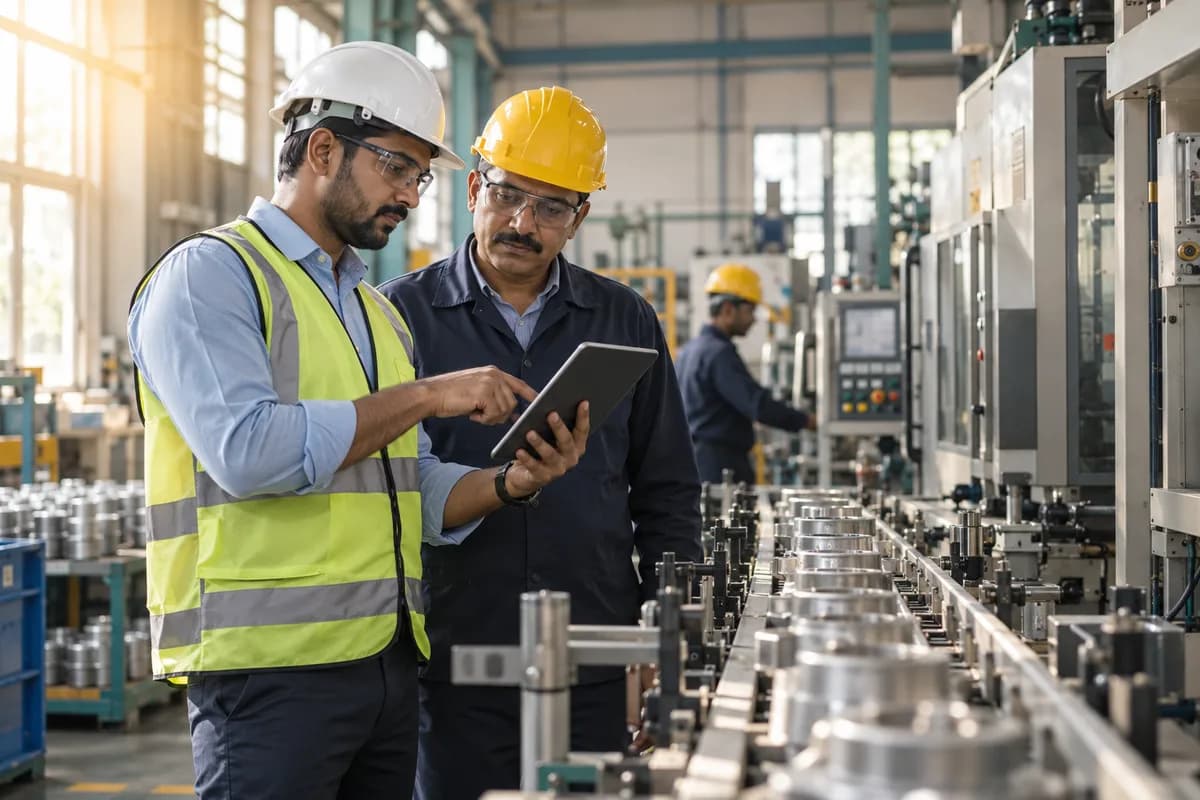
You buy preforms, caps, labels, sugar, concentrate and treated water, blend and fill in batches, and sell to distributors, retail outlets and institutions. Your result depends on breakage, empties returned and what each line actually filled in a shift.
Tally covers invoices. Batch codes, line output and returnable containers usually sit in separate registers kept by the supervisor and the dispatch clerk.
Raw material reaches the store: preforms by the bale, caps and labels by the carton, sugar and concentrate by the bag. The line supervisor draws what a shift needs, blends a batch of syrup or treated water, and notes fill counts, rejections at the filler and the batch code stamped on each pack.
Finished goods move to the godown by batch code. Distributors and outlets order by phone or through a route salesman, and vans leave early with crates, jars and cartons. Empty crates, returnable bottles and twenty-litre jars come back on the same vans, and the deposit held for each customer depends on a count at the gate.
Distributors raise claims for breakage, leakage and expired stock. Accounts match them to a scheme announced on a call.
What goes wrong for beverage manufacturers without a proper system.
What we would build for beverage manufacturers.
Named the way your team already talks about the work. We start with whichever part the audit shows is costing you most.
Ready products that fit beverage manufacturers.
Each one is adapted to how your business works before it goes live, and anything your trade needs that it lacks is added then. You are not paying to build the basics again.
Manufacturing Production Management Software
Work orders, multi-level bill of materials, job cards by stage, raw material issue, rejections, subcontracted job work, dispatch and GST billing for manufacturers.
Learn moreWholesale and B2B Ordering Software
A dealer login with his own rates and schemes, live stock, credit checks, picking and dispatch, part loads, returns and repeat orders.
Learn moreThe business modules beverage manufacturers use most.
Each one is also available on its own, or inside a system built for you.
The services behind it.
ERP, CRM and Business Software Implementation
One record of stock, orders, customers and accounts, set up so your team opens it every day.
Learn moreCustom Software and Product Engineering
Software built around how your business actually runs, when nothing off the shelf fits without workarounds.
Learn moreData Engineering and Business Intelligence
Dashboards that answer the owner’s Monday questions without anyone building an Excel sheet first.
Learn moreBusiness Process Automation
Approvals, reminders, follow-ups and reports that run on their own instead of on someone remembering.
Learn moreWritten for beverage manufacturers.
Practical notes on running the business, not product marketing.
How the work runs from Bengaluru for your city.
- 1
The audit, by call
A screen-share and a look at the sheets, Tally reports and WhatsApp groups your team uses. No travel needed.
- 2
A written proposal
Scope, what we build first and the cost, agreed in writing before anything starts.
- 3
Build in short rounds
Working screens shared every few weeks. Your team tests them from your own office.
- 4
Go-live, in person when it helps
For data migration and training we can come to your city. Travel is agreed in advance.
- 5
Support online
Fixes, changes and hosting handled remotely by the same team that built it.
Software we have built and run.
We only name clients whose work is published. These are systems our team designed, built and supports.
PetSeva: matching owners to the right vet, at any hour
A two-sided veterinary platform where vets are searchable by specialisation and bookable outside clinic hours. It now carries more than 2,000 veterinary doctors.
Read the case study Paying guest accommodationSAM Atithi Pavathi: bed-level occupancy as the source of truth
PG management software where allocation, rates and invoices are derived from bed-level occupancy and not maintained in parallel spreadsheets.
Read the case study School transport servicesSAM Tours: school transport on a single ledger
Registration, fee collection, routing and finance write to the same records, closing the gap between journeys run and fees collected.
Read the case studyQuestions beverage manufacturers ask before they call.
Can we keep Tally for accounts?
Yes. Tally stays as your accounts book. There is no live link to it from the production software, and an export file for your accountant is priced work, written once your ledger heads are fixed.
Does the software make us compliant with food or water standards?
No. Compliance comes from your process, testing and licences. The software keeps batch, material lot and test readings together, so an auditor’s or distributor’s question is answered from one record.
Can the filler’s counters feed the software directly?
Not on its own. Fill counts are keyed in from the shift sheet by the supervisor on the floor. Reading a machine’s counter depends on the model of filler, and is quoted separately.
Do we need a full manufacturing ERP instead?
If you run one plant with one product family and plain registers, a ready ERP may do. Custom work makes sense when empties, batch codes and distributor claims are where money leaks.
What happens in the free technology audit?
We look at the software, spreadsheets and WhatsApp groups your business runs on today and write down what works, what slows your team down and what is missing. A demo login, a screen-share or a few screenshots are enough to start. You get a report ordered by priority, and there is no obligation to hire us afterwards.
How much will the software cost?
We don’t publish a price, because it depends on what the system has to do. The audit settles the scope, and the cost goes into a written proposal before any work starts.
Related industries.
- Apparel manufacturers
- Automotive component manufacturers
- Chemical manufacturers
- CNC machining companies
- Electrical equipment manufacturers
- Food manufacturers
- Furniture manufacturers
- Household products manufacturers
- Lighting manufacturers
- Machinery manufacturers
- Metal fabricators
- Packaging manufacturers
- Personal care product manufacturers
- Plywood and timber dealers
- Precision component manufacturers
Part of a wider group.
Also sell online?
The e-commerce pages cover the online side of this trade: storefronts, dealer ordering and the link to your stock.
Tell us how your business runs today.
A few lines on your spreadsheets, software and WhatsApp groups is enough. We reply the same working day.
- No obligation
- A reply within one business day
- Your details stay private