Pet and Owner Records for a Pet Store
Each pet has a card tied to its owner. It holds species, breed, age, weight, diet, allergies and vaccination dates. Associates read it at the counter before recommending a bag, and groomers and boarding staff open the same card when the pet arrives. Nobody has to ask twice.
The pet card behind every counter sale
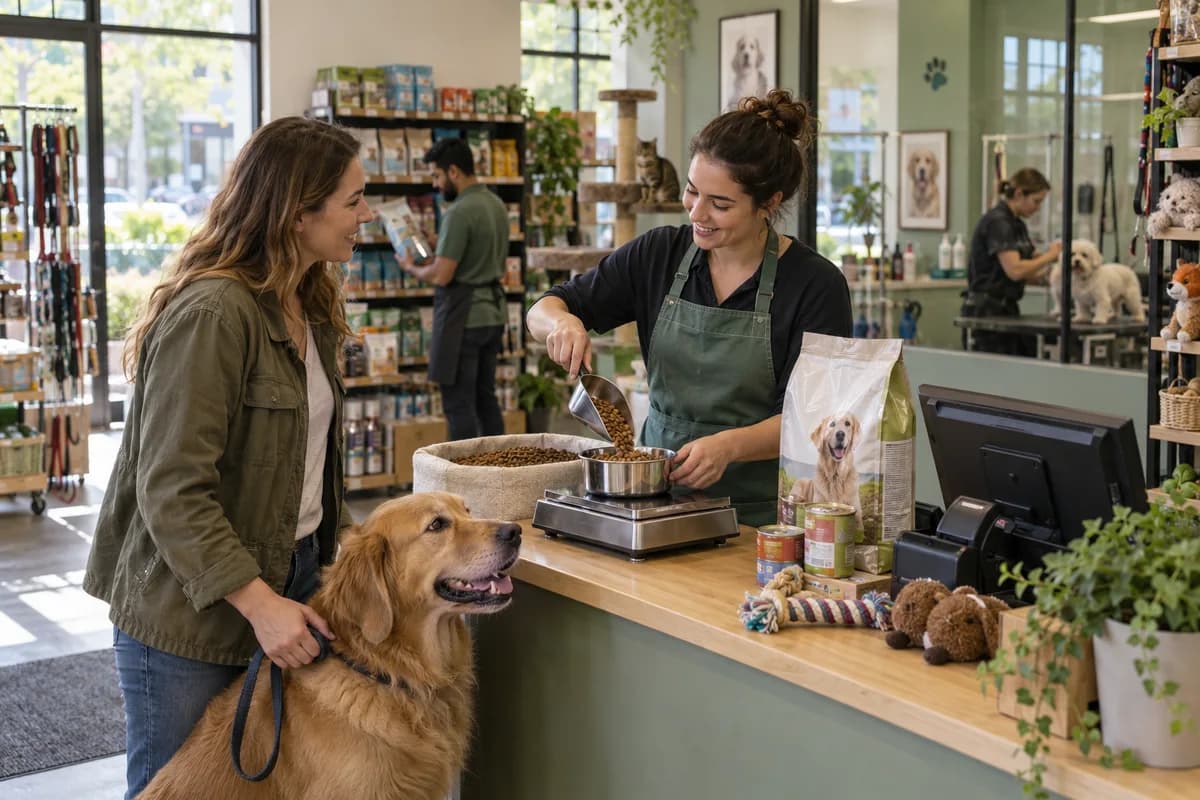
An associate serving a returning pug owner needs the dog’s weight and food first. The owner sits at the top of the record, with each pet listed beneath. A colleague would otherwise have to ask again. Every detail below saves that question.
A busy Saturday with the pet card open
A puppy owner walks in for the first time. A retriever owner asks for the usual. Whoever knows the cat’s allergy has gone home for the day. Each moment below is an ordinary Saturday at a pet shop counter, and each one leans on the same card.
Who opens the pet card and for what
Four people in the shop touch the card, each for a different reason. A card built only for the counter would leave the groomer and the rider guessing.
Questions to answer before pet cards go live
Cards are quick to fill and slow to correct once regulars rely on them. Weight, diet, duplicates and vaccination dates are where cards go wrong. Settle each before the first load.
Where the pet card feeds the shop
Every other feature in the shop reads from the pet card. Weight and diet pass to dosing and refill estimates, while the owner link carries held bags and deliveries. Grooming and boarding open the same card at the door. One fix reaches every feature that reads it.
- Weight feeds weight-band dosing items for each pet
- Bag size and weight set refill reminder dates
- Owner name carries held bags at counter billing
- Home delivery orders pick up the owner’s contact
- Grooming bookings and boarding stays open the same card
What a pet card cannot decide for you
A pet card records what the shop has been told. It does not check a weight on the day, confirm a diagnosis or replace an owner’s vet. Allergy and health questions go to a vet. A shop with a few regular customers can manage with a notebook by the till. Once regulars multiply, the card earns its place.
Frequently asked questions
Can two pets share one owner record?
Yes, an owner can hold any number of pets. The owner sits at the top and each pet has its own card beneath. A dog and two cats mean one owner and three cards. Bills and reminders point back to the owner.
What if an owner does not know the weight?
Leave the field blank and add it at the next visit. Until then, a weight-band item cannot be matched and the refill estimate is weaker. An associate can note the owner’s guess in the diet notes. Mark it as a guess.
Do we have to fill every pet card before opening?
Not at all. Load the owners first, then complete pets as they come in. Weight and diet fill in at the counter. Cards with gaps still bill normally, though dosing and reminders need the missing fields.
Can a groomer see allergies as well?
Groomers and boarding staff see each pet’s notes and the vaccination papers on file. Allergies sit on the same card as diet. A note about a skin reaction can sit beside them. Groomers read it before work starts.
Does the card store veterinary medical history?
It does not. The card records species, breed, age, weight, diet, allergies and vaccination dates. Diagnoses and treatment records stay with the owner’s vet. A practice that treats animals would look at Veterinary Clinic and Hospital Management System instead.
How this feature fits the system.
Pet Store Management Software: the parts that work with this feature, the trades that use it and the ways to put it in place.
Food batches and best-before dates
Each carton’s batch and expiry are recorded on receipt, so a bag nearing its date can be found, moved forward or returned.
Batch and Serial TrackingLoose weight and pack-size sales
A sack is one item that sells by the gram or in smaller packs, so the scoop and the stock figure agree.
Product ManagementCounter billing and held bags
Food, toys and accessories are billed with mixed payments, and a bag held for pickup stays under the owner’s name.
Point of Sale BillingTell us what you need.
Tell us what your team does today, where work gets stuck and what you want to change.
What happens after you share your requirements
- We review your brief and the systems you already use.
- We clarify the workflow, missing information and the work to consider first.
- The proposed scope sets out the deliverables, responsibilities and dependencies.
- Review the scope and commercial terms before deciding whether to proceed.
Start with your requirements
Describe your current process, the people involved and the change you need. Start with the details you know; we can clarify the rest together.
Share your requirements