Manufacturing · Pharmaceutical Manufacturer Management SoftwareOne connected system for materials, batch records, quality release and dispatch.
Supplier approval, quarantine bays, master formulas, granulation and compression records, HPLC assay, dissolution checks, release and distributor dispatch run in one system. Each batch carries its excipient and active lots, its test results and its approvals from first delivery to the last returned carton. Buyers and inspectors get answers from the same record.
- Master formulas, specifications, assay methods and batch record steps entered the way your quality team writes them
- Suppliers, materials, open batches and stock migrated
- Edits to formulas, forms and approval routes handled by GullySystem staff when asked
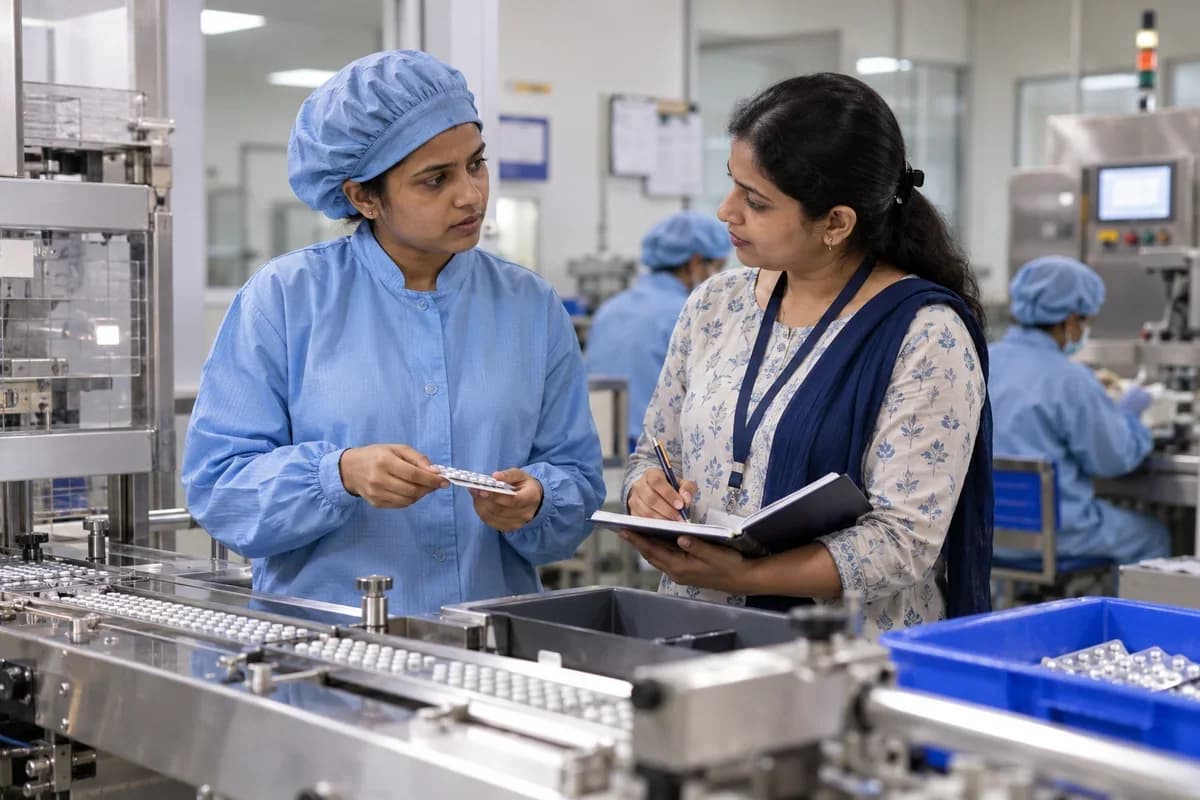
Pharmaceutical Manufacturer Management Software, configured by GullySystem, covers supplier approval, quarantine, batch planning, manufacturing records, quality release and dispatch for a drug maker. Each batch links to the excipient and active lots used, the in-process checks made, the signatures given and the distributors who received it. Returns and recalls trace back through that same record.
What goes wrong before the software.
How the work flows through it, step by step.
- 1
Supplier and purchase
Materials are bought from approved suppliers on purchase orders. Each supplier record holds its qualification status, audit notes and certificates of analysis.
- 2
Receipt and quarantine
Each delivery is received against its order, labelled with a lot number and held in quarantine. Samples go to the laboratory for identity and assay before anything is issued.
- 3
Batch planning
Batches are planned against distributor orders and the capacity of each room and line, from granulation to blister packing. Approved lots are reserved for the batch.
- 4
Manufacturing and packing
Operators record material issued, steps completed, yield and reconciliation. Packing staff record line clearance, leaflet counts and carton counts.
- 5
Quality review and release
Quality reviews the batch record, in-process checks and deviations, then releases or rejects the batch under a named approver.
- 6
Dispatch and after-sales
Stock ships by batch and expiry to distributors. Returns and complaints are booked and linked back to the batch.
What is inside.
Every module can be switched on, left out or changed to match how your team already works.
The business modules it is built from.
Each one is also available on its own, or inside a system built for you.
- Bill of Materials
Each master formula lists every ingredient, quantity and pack component for a batch size, and a revised formula keeps the earlier version on record.
- Vendor Management
Each supplier record holds qualification status, certificates and audit notes, so a buyer sees at once whether an order may go out.
- Goods Receipt (GRN)
Material is received against its purchase order, given a lot number and held in quarantine until quality records the laboratory decision.
- Batch and Serial Tracking
An ingredient lot links forward to every batch that used it, and each finished batch links on to the distributors who received it.
- Quality Control
In-process checks, assay results and deviations are recorded on the batch, and release or rejection needs a named quality approver.
- Workflow and Approvals
A revised SOP or specification travels through the approvers you define and goes live only after the final sign-off.
- Audit Trail
Every entry on a batch record keeps its user and time, and a correction shows the old value beside the new one.
- Sales Returns and Credit Notes
A returned pack or complaint is booked against its batch and customer, and the reason decides whether stock is destroyed or reprocessed.
How we would put it in.
Setup, data migration, integrations and anything built on top.
Explore moreBrowse business and AI solutions
Looking for another part of your workflow? Browse the modules by business function.
- Applicant Tracking (5)
- CRM (8)
- Finance & Accounting (10)
- Helpdesk (4)
- Human Resources (13)
- Inventory Management (5)
- Project Management (7)
- Manufacturing (6)
- Procurement (4)
- Sales and Distribution (6)
- Field Service (5)
- Statutory and Compliance (4)
- Retail and POS (4)
- Bookings and Appointments (3)
- Subscriptions (2)
- Assets and Fleet (4)
- Platform (6)
- Analytics (2)
- Documents (1)
- All business solutions
One system, each person sees their part.
For owners and unit heads
See batches in progress, material waiting for release, stock near expiry, open deviations and orders waiting to ship.
For purchase and warehouse teams
Order from approved suppliers, receive and label lots, hold quarantine stock and issue approved material to the dispensing booth.
For production and packing staff
Follow the batch record step by step, record weights and yield, clear the line and sign off each stage.
For quality assurance and control
Enter assay and dissolution results, raise deviations and corrective and preventive actions, approve changes and release or reject batches.
For sales and dispatch teams
Take distributor orders, ship by batch and expiry, and log returns and complaints against the batch.
The numbers the owner asks for.
- Batches by status, product and room
- Material lots in quarantine, approved and rejected
- Supplier approval status and review dates
- Deviations and corrective actions, open and closed, by cause
- Stock by batch with days to expiry or retest
- Distributor shipments by batch
- Returns and complaints by product and batch
Who this is built for.
- Manufacturers of tablets, capsules, liquids and ointments for retail and hospital supply
- Injectable and sterile product plants that keep tight records of cleanrooms, autoclaves and equipment
- Contract manufacturers who make products for several brand owners
- Nutraceutical and herbal medicine producers that keep batch records
- Active ingredient and intermediate producers supplying other manufacturers
When it is not the right choice.
- A small repackager with a few products can manage with a stock register and supplier files.
- Distributors and wholesalers who do not make anything will find Wholesale B2B Ordering Software closer.
Adapted to your business before it goes live.
You are not handed a login and left to it. The product is set up around your records, your people and the tools you already use.
Works alongside
- SMS
- WhatsApp or other messaging
- Label printer
- Laboratory instrument file import
- Accounting software export
Checks to bring to your product demo.
Review these scenarios against the product configuration and record anything that still needs to be agreed.
Warehouse, expiry and stock
What happens to movements entered while a count is being checked?
For “Warehouse, expiry and stock”, choose a count date and trace the movements around it. Agree who investigates a difference before an adjustment changes the available balance.
Background reading: ERPNext: stock reconciliation
Purchase and material receipt
Does receiving less than ordered leave the correct quantity open?
Bring a short delivery to the “Purchase and material receipt” walkthrough. Separate what arrived, what was accepted and what remains due before checking the supplier’s bill.
Background reading: ERPNext: purchase receipts
Questions owners ask before a demo.
Can batch records be kept electronically?
Yes, for the steps you choose. Each entry carries the user and the time, and approvals belong to named roles. Which records may be electronic is for your quality team and regulator to confirm.
Is the system validated?
Validation stays with you as the manufacturer. GullySystem provides the configured system and documentation, and your quality team decides the testing and sign-off needed.
Can a lot be traced to every batch and distributor?
Yes. Each ingredient lot links to the batches that used it, and each batch links to the shipments it went into. A trace becomes a search instead of a spreadsheet exercise.
Can material be blocked until the laboratory result is in?
Yes. Received material sits in quarantine and cannot be issued to the dispensing booth until quality records a decision. Rejected lots stay visible but locked.
Does it handle contract manufacturing for several brands?
Yes. Products and batches can be tagged to each brand owner, so stock and dispatch stay separate. Billing terms for contract work are set up with you.
Can it connect to laboratory instruments?
Results can be typed in or loaded from a file that an HPLC or balance produces. Direct instrument links are scoped separately and depend on the make of equipment.
Can existing stock and suppliers be moved in?
Yes. The approved supplier list, material master, open batches and stock on hand come in from your registers or spreadsheets, and quality staff reconcile a sample against the originals.
Can several pharma plants share one system?
Yes. Each plant keeps its own materials, batches and users, and head office reads them together. Where plants sit in different countries, each can bill in its own currency and tax format.
Who owns the data?
You do. The quotation states the file formats in which batch, material and supplier records can be handed back.
What does it cost?
The size of the team, the plants, and the approval routes for batch records and release all shape it. Laboratory instrument file import, label printing and the accounting export add scope. Registers of suppliers, materials, open batches and stock to load count as well. We publish no price. You see a batch worked through in a demo, and only then receive a quotation.
How long before the dispensing booth works from batch records?
Product and formula masters, supplier approval, material receipt with quarantine, and electronic batch records would lead, since release depends on them. Planning, quality checks, traceability and dispatch follow. The proposal lists each stage and gives dates.
What does quality assurance need to bring along?
Bring master formulas with specifications, the approved supplier list, your batch record layouts and approval routes, and registers of materials, open batches and stock. A lot label, a deviation form and a distributor order serve as samples. Production, stores, quality and dispatch each name a contact.
Wondering what it would cost? Share your requirements and an engineer will come back with a scope.
Every part, on its own page.
Each page covers one part of the system: what it records, who uses it and what it hands on.
- Product and Formula Master for Pharmaceutical Manufacturers
- Supplier Approval and Qualification for Drug Manufacturers
- Purchase and Material Receipt for Drug Manufacturers
- Batch Planning and Work Orders for Pharmaceutical Plants
- Electronic Batch Manufacturing Records for Drug Makers
- Batch and Lot Traceability for Drug Manufacturers
- Quality Checks, Deviations and Release in Drug Manufacturing
- Document Control and Change Records for Pharmaceutical Plants
- Warehouse, Expiry and Stock for Pharmaceutical Plants
- Equipment Calibration and Maintenance in Drug Manufacturing
- Distributor Orders, Returns and Recalls for Drug Manufacturers
Built for.
The trades this product is set up for. Pick yours to see how the work runs there.
See Pharmaceutical Manufacturer Management Software set up around your records.
Tell us how you run things today. An engineer reads it and writes back with what fits as it is, what would need changing, and what we would start with.
What happens after you share your requirements
- We review your brief and the systems you already use.
- We clarify the workflow, missing information and the work to consider first.
- The proposed scope sets out the deliverables, responsibilities and dependencies.
- Review the scope and commercial terms before deciding whether to proceed.
Start with your requirements
Describe your current process, the people involved and the change you need. Start with the details you know; we can clarify the rest together.
Share your requirements