Certificates of conformance and dispatch
A plated lot is not finished until the paperwork matches the parts. This feature raises a certificate of conformance and a packing list from the lot’s own results, in the customer’s wording. Dispatch packs the passed lot, prints both documents and records the delivery. The customer gets what the readings show.
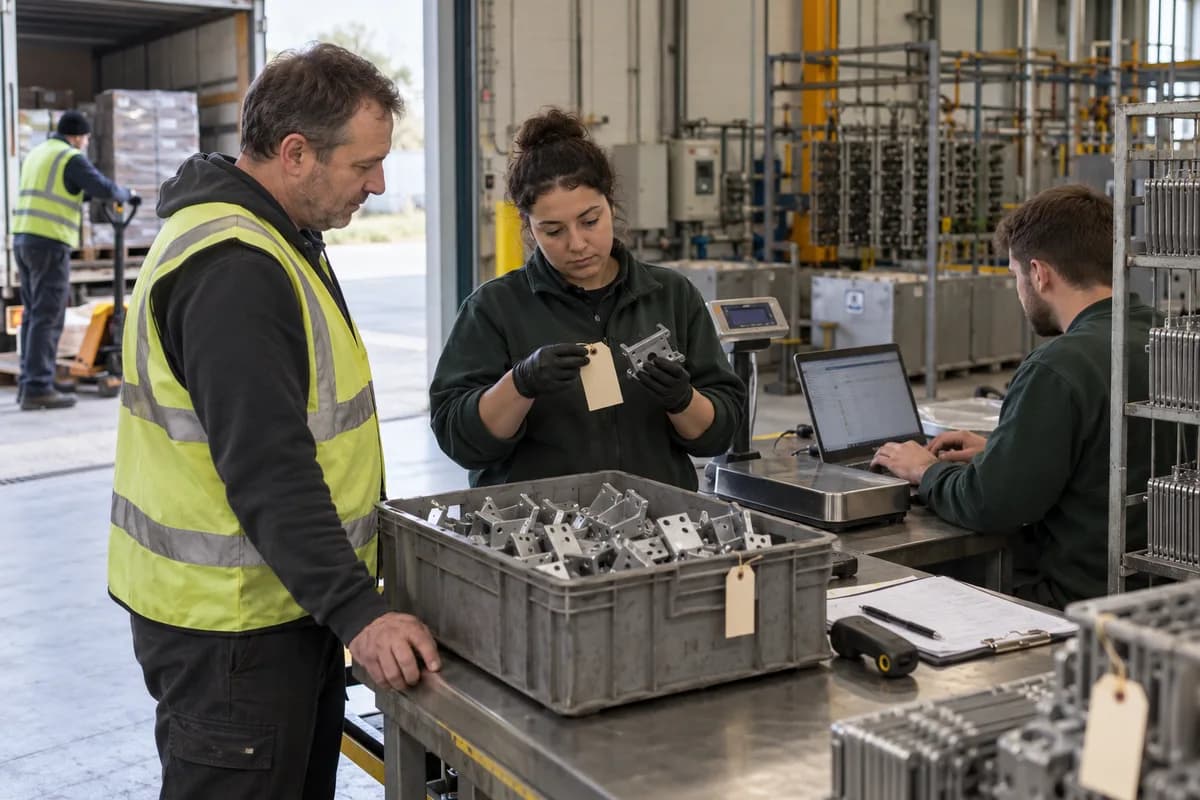
Packing a passed lot for the van
The lot has passed inspection and sits at the dispatch bench. Somebody has to match the count, print the paperwork and load the van. Without a record, the certificate is typed from memory. With one, the documents come from the lot.
What a certificate and a packing list carry
Two documents leave with every passed lot. One says what was done and what was found. The other says what is in the box. Both are built from the lot’s own record, so the figures cannot drift from the shop’s data.
From the bench to the customer’s desk
The paperwork passes through a few hands before it leaves. Dispatch prints. Quality clears. The front office answers the phone. Nobody needs to rebuild the documents.
What paperwork draws from the rest of the line
Certificates and dispatch sit at the end of the line and collect from everything before. They take counts from receiving, limits from the part entry, results from inspection and the process from the route. Their output goes on to the invoice. Little is keyed fresh.
- Counts come from customer lots and receiving
- Specification and process come from the stored part entry
- Thickness and test results come from inspection
- Dispatched lots flow on to price lists and invoices
- Rejected pieces explain differences in the packing count
Whose wording and whose signature to settle first
Certificates differ more than any other document in a plating shop. Each customer has a layout and mandatory statements of their own. Agree these before the first certificate is printed. They are hard to change once lots are flowing.
What the certificate cannot vouch for
A certificate states what the lot’s record shows. It is only as good as the readings behind it. It does not replace the customer’s own inspection. It carries no legal weight beyond what the shop and customer agree. Questions of liability belong with the owner and an adviser, not with the software or its makers.
Frequently asked questions
Can each customer have a different certificate layout?
Each customer’s layout and mandatory statements are settled in the first planning session and checked again as the system is built. The lot then prints the right one. Edits to certificate wording are handled by GullySystem staff when asked.
Where do the certificate’s figures come from?
From the lot itself. Thickness and test results come from inspection, the specification and process from the part entry, and the count from receiving and dispatch. Nobody retypes them. A correction is made on the lot.
What if the returned count is short?
Dispatch prints the final count on the list. Rejects that were scrapped or held explain part of the gap. A note can be added to the paperwork. Customers who want a call get one from the planner, with the figures to hand.
Can the paperwork be sent by email?
Email is among the integrations. Dispatch prints the documents for the box or sends them, depending on what each customer prefers. The record shows which route a customer asked for, so the clerk does not guess.
Is the delivery tied to the original delivery note?
Lots return against the delivery note they arrived on, with the count reconciled. Anyone comparing the two sees the same references. Parts belong to the customer throughout. Plating adds a finish and nothing else changes hands.
How this feature fits the system.
Plating Company Management Software: the parts that work with this feature, the trades that use it and the ways to put it in place.
Customer lots and receiving
Every delivery is booked in as a numbered lot with count and weight, so the same parts can be traced from the gate to dispatch.
Batch and Serial TrackingWork orders and line scheduling
A work order carries the finish, thickness and due date, and each tank sees which lots are queued next on its route.
Work Order ManagementRacks, barrels and loading
Lots with a compatible finish are grouped onto racks or into barrels by count and surface area, before they enter the first bath.
Production PlanningTell us what you need.
Tell us what your team does today, where work gets stuck and what you want to change.
What happens after you share your requirements
- We review your brief and the systems you already use.
- We clarify the workflow, missing information and the work to consider first.
- The proposed scope sets out the deliverables, responsibilities and dependencies.
- Review the scope and commercial terms before deciding whether to proceed.
Start with your requirements
Describe your current process, the people involved and the change you need. Start with the details you know; we can clarify the rest together.
Share your requirements