Rack and barrel loading records
Before a lot touches a bath it is hung on a rack or tipped into a barrel. This feature records which lots rode on which rack or barrel, with the count, the surface area and the bath the load entered. When a finish is questioned later, the record shows what travelled together. It stays short.
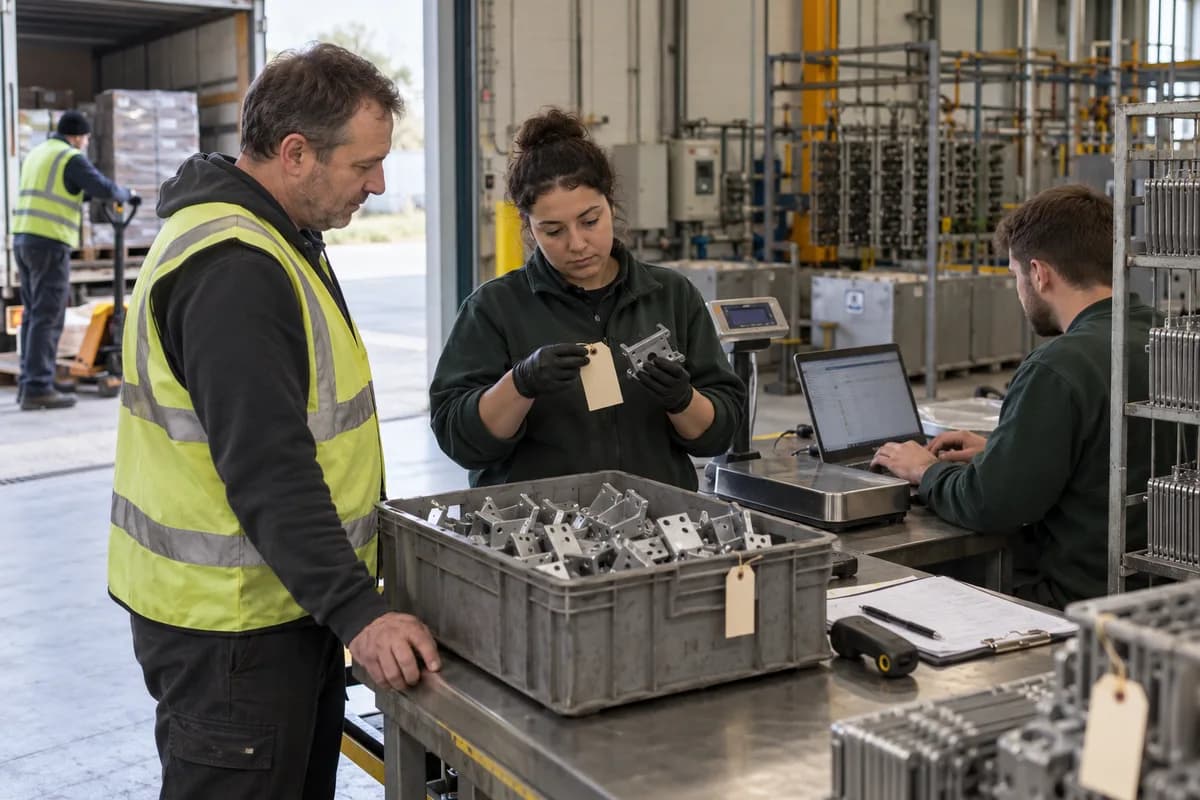
Loading the racks before the first tank
The loading bench is where piles of parts become loads. A loader hangs brackets on a rack or fills a barrel with fasteners, then sends it to the first bath. Entry happens at the bench. Nobody reconstructs it afterwards from memory.
Load fields that tie lots to racks and barrels
A load record is short on purpose. It has to be filled at the bench, with wet gloves and a queue of racks behind. Four facts answer the questions a shop receives about a finish. Each links a lot to the equipment that carried it.
Four people who rely on a load record
The loader makes the entry, but the benefit goes elsewhere. The chemist, the office and the planner read it for different reasons. Each uses it to answer a question that would otherwise need a walk down the line. The screen replaces the walk.
What loading hands to inspection and billing
Loading sits between the plan and the result. It takes grouped orders from scheduling and passes lot, count and area to the steps that follow. Because it names the rack and the bath, it also gives inspection and the chemist a place to start when a lot fails.
- Grouped work orders arrive ready to load
- Surface area feeds invoices priced by area
- Bath entered links to bath analysis history
- Inspection finds the rack that held a lot
- Rejects trace back to the rack or barrel
Questions to settle at the rack bench
A loading screen is quick to use, but it needs agreed habits. Shops differ on how racks are named and who owns the area figure. Settle these before the first load goes through. They shape every later record.
What a load record does not do
The record names the equipment and the lots. It does not design racks or judge how crowded one should be, and it does not set the current for a load. Those choices stay with the supervisor and the chemist. A shop plating one part on one rack may not need a record for every single load.
Frequently asked questions
Can one rack carry lots from two customers?
One rack can list several lots, each with its own count. The planner decides whether that suits the finish. Each customer’s parts stay identified. Dispatch later returns every lot against its own delivery note and its own count.
How does a barrel load differ from a rack load?
Both name the lot, count, surface area and bath. A rack load lists individual pieces, while a barrel load records the count tipped in. Barrel shops keep one lot per barrel. Grouping is the exception.
Can a rejected piece be traced to its rack?
Yes, through the lot. The load record lists which rack or barrel carried it and which bath it entered. A reject cause such as burning can then be compared across the loads that shared a tank.
Does the loader type the surface area every time?
That depends on the rule the shop sets. The area can be keyed at the bench or held per part by the planner. GullySystem does not measure parts. The figure comes from the shop, whichever rule is chosen.
How are our racks and barrels set up?
Rack and barrel types, with tank names and line layout, are keyed in to mirror your shop floor. Your supervisor reads the list before the first load. New racks are added when you buy them.
How this feature fits the system.
Plating Company Management Software: the parts that work with this feature, the trades that use it and the ways to put it in place.
Customer lots and receiving
Every delivery is booked in as a numbered lot with count and weight, so the same parts can be traced from the gate to dispatch.
Batch and Serial TrackingWork orders and line scheduling
A work order carries the finish, thickness and due date, and each tank sees which lots are queued next on its route.
Work Order ManagementRacks, barrels and loading
Lots with a compatible finish are grouped onto racks or into barrels by count and surface area, before they enter the first bath.
Production PlanningTell us what you need.
Tell us what your team does today, where work gets stuck and what you want to change.
What happens after you share your requirements
- We review your brief and the systems you already use.
- We clarify the workflow, missing information and the work to consider first.
- The proposed scope sets out the deliverables, responsibilities and dependencies.
- Review the scope and commercial terms before deciding whether to proceed.
Start with your requirements
Describe your current process, the people involved and the change you need. Start with the details you know; we can clarify the rest together.
Share your requirements