Plating specifications and process routes
A plating shop runs the same part again and again, and each run has to meet the customer’s finish, thickness and test requirement. This feature holds those limits for every part, with the ordered tank steps that produce them. Planners write the route once. Operators and the laboratory then work from it.
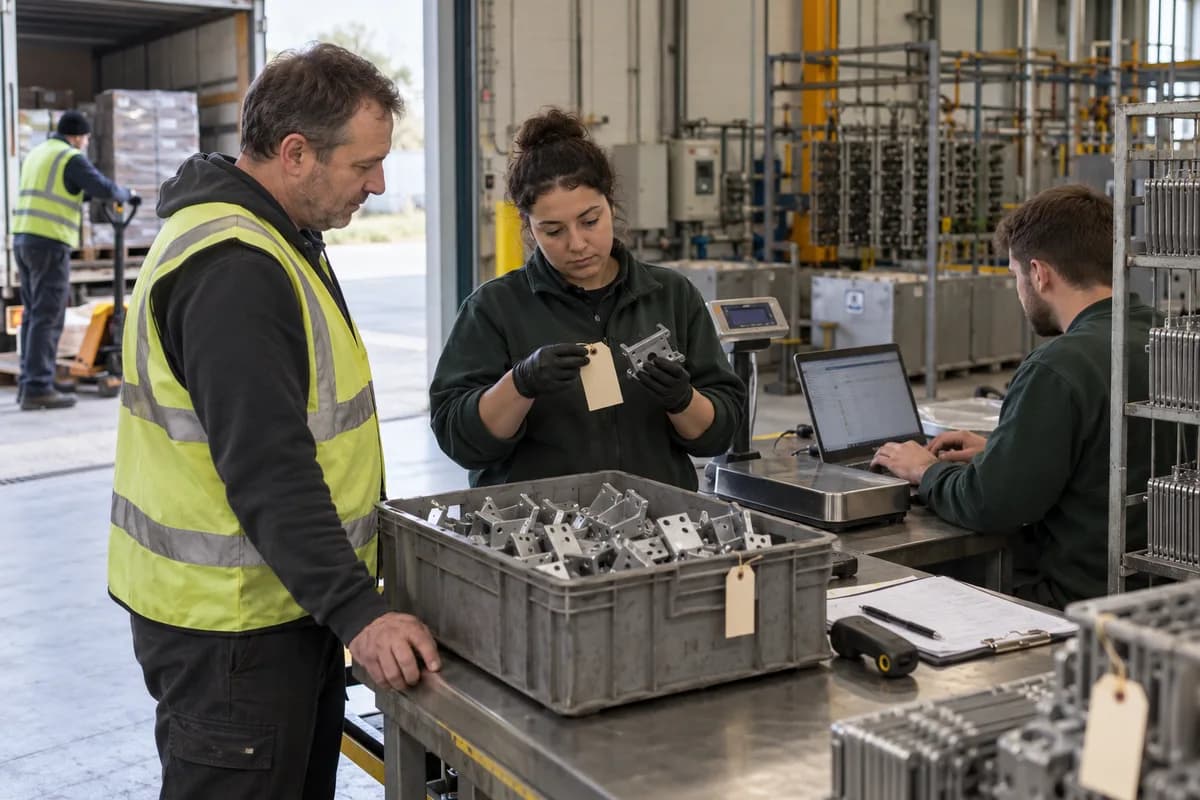
A new drawing lands on the planner’s desk
A customer sends a drawing for a part the shop has never run. Nobody can issue a work order until the finish, thickness and tests are written down. The planner builds the part entry once. Every later lot of that part follows it. Nobody asks again.
Specification fields and route steps held per part
Each part entry joins a requirement to a method. The requirement is what the customer’s drawing demands. The method is the shop’s own sequence of tanks. Keeping both on one record means a lot is judged against the limit that applies to it, nothing else.
Who reads a route and who changes it
Everyone on the line meets a route, but only a few people should edit one. Each role below sees the same part entry in a different light. Planning owns the wording. The others rely on it being right.
Where a route and its limits get used
A stored route is read by nearly every other feature in the product. Finish, thickness limits and steps are copied forward as a lot is received, issued, inspected and certified. Edits happen in one place. The change flows through to every lot issued afterwards, so nobody chases copies.
- Lot receiving looks up the finish by part number
- Work orders copy the route and the required finish
- Inspection judges readings against the stored thickness limits
- Certificates quote the specification and the process used
- Bath schedules follow the baths each route names
Choices to settle before routes are keyed in
Keying in the first hundred parts is quick. The harder work is agreeing how the shop will treat exceptions. A few rules set at the start save arguments on the line later. Planner and chemist should settle them together.
Limits of a stored route
A route records the method the shop has chosen. It does not judge whether that method suits the part. It does not change bath chemistry. The customer sets the requirement and the chemist sets the process. Both stay outside the software. A shop with one finish and a handful of parts can keep a printed route card.
Frequently asked questions
Can one part number carry two finishes?
Each pairing of part and finish is held as its own entry, with its own limits and steps. The lot picks the one the customer ordered. A zinc and a nickel version of one bracket never share thickness limits.
What happens to lots on the line when a drawing changes?
Orders already issued keep the limits they started with. New lots use the revised figures from the date recorded. The old entry stays readable, so a dispute about an earlier lot can still be settled. Records do not vanish.
Can a bake step follow the plating tank?
Bake is a step in the ordered list like any other. The operator sees it queued after passivation. The step order is whatever your line follows, and the planner can add or remove a step on the part.
Who writes the routes when we start?
Process routes, the bath list and finish specifications are keyed in from your route cards and the customers’ drawings. Your planner reads each entry before the line relies on it. Edits later on can be handled by GullySystem staff when asked. That saves your planner the work.
Can several parts share one route?
Parts with the same finish and steps can point to one route, and each keeps its own thickness and tests. Changing a shared step touches every part using it. That edit stays with the planner.
How this feature fits the system.
Plating Company Management Software: the parts that work with this feature, the trades that use it and the ways to put it in place.
Customer lots and receiving
Every delivery is booked in as a numbered lot with count and weight, so the same parts can be traced from the gate to dispatch.
Batch and Serial TrackingWork orders and line scheduling
A work order carries the finish, thickness and due date, and each tank sees which lots are queued next on its route.
Work Order ManagementRacks, barrels and loading
Lots with a compatible finish are grouped onto racks or into barrels by count and surface area, before they enter the first bath.
Production PlanningTell us what you need.
Tell us what your team does today, where work gets stuck and what you want to change.
What happens after you share your requirements
- We review your brief and the systems you already use.
- We clarify the workflow, missing information and the work to consider first.
- The proposed scope sets out the deliverables, responsibilities and dependencies.
- Review the scope and commercial terms before deciding whether to proceed.
Start with your requirements
Describe your current process, the people involved and the change you need. Start with the details you know; we can clarify the rest together.
Share your requirements