Thickness, adhesion and inspection records
A finished lot is only as good as its readings. This feature stores gauge readings and adhesion or salt spray checks against the lot, each beside the drawing requirement, with a pass or fail result. Technicians key or import the figures. Quality staff read one record. Dispatch sees the answer.
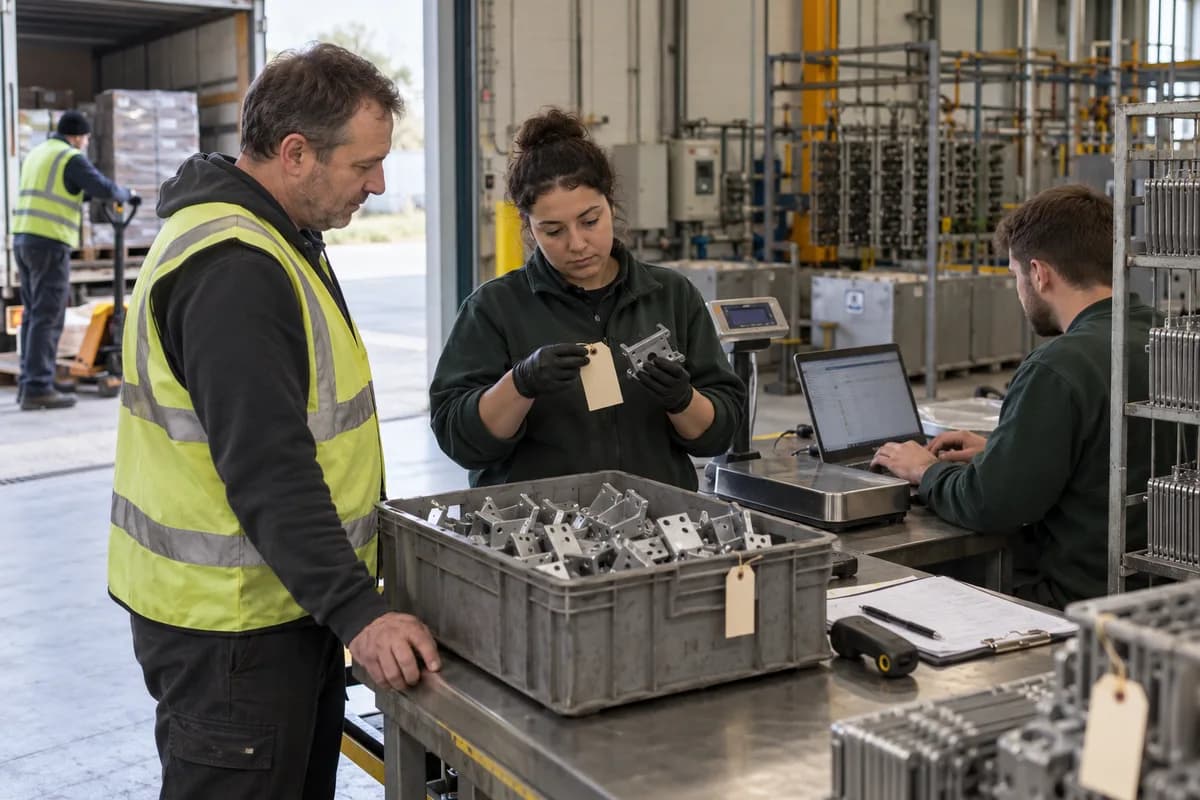
Samples from a finished lot at the bench
Racks come off the line and a sample from each lot goes to the laboratory bench. The technician has a hand-held gauge, a drawing and a queue of lots. Every reading must land against the right lot, with the right limit beside it. That is the day around the gauge. It is busy.
Inspection fields kept against every lot
Inspection produces a lot of small facts. Kept in a book, they are hard to match to a lot when a customer asks. Kept against the lot, they answer in seconds. Four kinds of fact carry the whole story, and each one is listed here.
For the bench, the desk and the dock
Inspection touches several desks. Technicians produce the readings. Others rely on the verdict. Each sees the same lot, with the part that matters to them in front. Nobody retypes a figure to pass it on.
Where inspection results travel next
Readings and verdicts are used again and again. The certificate quotes them, the reject entry starts from them, and the office answers customers with them. Because they sit against the lot, each of those steps reads them without retyping a figure. Nothing drifts out of step.
- Specification limits come from the stored part entry
- Failed lots pass to rejects, stripping and replating
- Passed lots feed the certificate of conformance
- Rack loads show where a low reading came from
- Bath trend sits beside thickness readings by lot
Inspection choices to make with your quality inspector
Inspection practice differs between shops and between customers. Agree the rules before the first reading is keyed in. They decide how much the record can be relied on. Leave nothing to the habits of one technician.
What an inspection record cannot judge
The record keeps readings, limits and results. It cannot calibrate a gauge or interpret a test standard. Nor can it say whether a reading is believable. Those judgments stay with the technician, the quality inspector and the customer. A shop with one gauge and a few lots a week can log readings in a book.
Frequently asked questions
Can several readings be kept for one lot?
Each reading is stored with its piece and date, so a lot holds the readings the sample plan needs. The lowest reading is easy to find. No average replaces the individual figures on the record.
Who decides what happens to a failed lot?
Whoever your shop names, such as the inspector with the planner. That is the rule. The system records the decision and holds the lot until then. It never chooses between strip, replate or a call to the customer. People do.
How are gauge readings brought in from a file?
The gauge’s file is imported and each reading is joined to its lot. Where a gauge cannot export, the technician keys the figures. Either way the limit appears beside the reading. It comes from the stored part entry.
Can a salt spray result arrive after the thickness?
A check that has not finished shows as open against the lot. When the result arrives it joins the same record. Dispatch sees the lot still waiting. Thickness alone does not clear it for packing.
Does it track the calibration of our gauges?
Gauge calibration is not part of this feature. Your laboratory keeps those records as it does today. The readings imported or keyed here come from whichever gauge the technician used, and the record shows the date.
How this feature fits the system.
Plating Company Management Software: the parts that work with this feature, the trades that use it and the ways to put it in place.
Customer lots and receiving
Every delivery is booked in as a numbered lot with count and weight, so the same parts can be traced from the gate to dispatch.
Batch and Serial TrackingWork orders and line scheduling
A work order carries the finish, thickness and due date, and each tank sees which lots are queued next on its route.
Work Order ManagementRacks, barrels and loading
Lots with a compatible finish are grouped onto racks or into barrels by count and surface area, before they enter the first bath.
Production PlanningTell us what you need.
Tell us what your team does today, where work gets stuck and what you want to change.
What happens after you share your requirements
- We review your brief and the systems you already use.
- We clarify the workflow, missing information and the work to consider first.
- The proposed scope sets out the deliverables, responsibilities and dependencies.
- Review the scope and commercial terms before deciding whether to proceed.
Start with your requirements
Describe your current process, the people involved and the change you need. Start with the details you know; we can clarify the rest together.
Share your requirements