Customer lot receiving for plating shops
A van of brackets or bolts reaches the gate, and the stores clerk books it in against the delivery note. Customer, part number, count, weight and condition are entered once. The lot gets a number and a tag. Planners, operators, the laboratory and dispatch then follow that number to the customer.
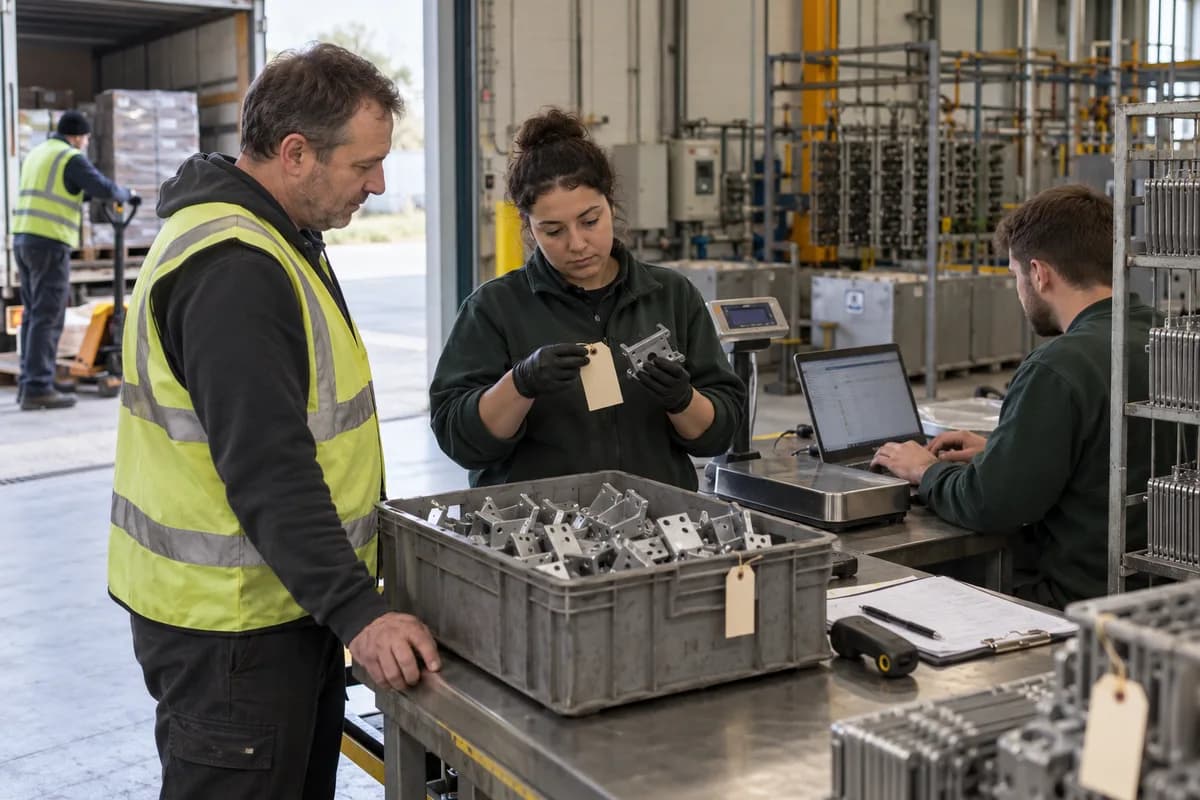
A delivery from gate to rack store
A van arrives mid-morning with parts for three customers under one tarpaulin. Stores must sort them before anything goes near a tank. Each pile gets a number while the driver is still at the bench. Every later step points back to it.
The lot record kept at a plating gate
A lot record starts at receiving and grows until dispatch. At the gate it holds only what the stores can see, count and weigh. Everything the line adds later hangs from that number. The opening entry must be right first time.
Four desks that touch a plating lot
A lot passes through several hands, and each desk needs a different slice of the same record. Nobody retypes the lot to see it. The view changes with the job. The number stays the same.
What receiving hands to the rest of the shop
Receiving is the first step, and the lot number it creates is how the other features find each other. Whatever is entered at the gate appears again on routes, racks, readings and paperwork. No figure is keyed in twice. A change at the gate is therefore a change everywhere.
- Part number pulls the finish from specifications and process routes
- Lot number goes onto the work order and line schedule
- Rack and barrel loads list the lots they carry
- Inspection readings attach to the same lot number
- Certificate and packing list take their count from receiving
Choices to make before the first delivery is booked
Receiving looks simple until the shop writes down how it really works. A few rules need settling before the first van is booked in. They differ between a barrel shop and a rack shop. Once set, they apply to every later lot.
What receiving cannot settle for you
Receiving records what arrived and what state it was in. It does not judge whether the parts can be plated. It does not decide who is at fault for damage. A shop with a handful of regular customers may find a delivery book enough. Size decides it.
Frequently asked questions
What if a delivery arrives with no drawing?
Stores book the parts in and note the missing drawing in the condition field. The planner asks the customer before a route is chosen. The lot waits until then. It stays visible in the received but not started view.
Can one delivery hold several part numbers?
Each part number becomes its own lot line against the same delivery note. Every line can follow its own route and finish. The delivery note still ties them together. The count is checked against it at return.
How is the returned count checked against receiving?
Dispatch compares the pieces going back with the pieces booked in on the delivery note. Scrapped or held rejects explain part of it. The shop answers for the rest.
Can the lot tag be printed at the receiving bench?
Barcode or label printing is among the integrations. The clerk books the lot in and prints the tag with the lot number and customer. A torn tag is reprinted from the same record. Nothing is re-entered.
Do lots that are already on the line carry over?
Open lots are brought in from your spreadsheets with the stage each has reached. Your team reads them against the tags on the racks first. After that, each lot is followed like any other. It moves on from its next tank.
How this feature fits the system.
Plating Company Management Software: the parts that work with this feature, the trades that use it and the ways to put it in place.
Customer lots and receiving
Every delivery is booked in as a numbered lot with count and weight, so the same parts can be traced from the gate to dispatch.
Batch and Serial TrackingWork orders and line scheduling
A work order carries the finish, thickness and due date, and each tank sees which lots are queued next on its route.
Work Order ManagementRacks, barrels and loading
Lots with a compatible finish are grouped onto racks or into barrels by count and surface area, before they enter the first bath.
Production PlanningTell us what you need.
Tell us what your team does today, where work gets stuck and what you want to change.
What happens after you share your requirements
- We review your brief and the systems you already use.
- We clarify the workflow, missing information and the work to consider first.
- The proposed scope sets out the deliverables, responsibilities and dependencies.
- Review the scope and commercial terms before deciding whether to proceed.
Start with your requirements
Describe your current process, the people involved and the change you need. Start with the details you know; we can clarify the rest together.
Share your requirements