One system for customer specifications, roll records, line settings, lab readings and certificates.
Manage a technical textile plant in one system. Customer specifications are held with their tolerances, and each master and slit roll carries its width, length and mass. Line settings are saved per run, lab readings are recorded against the roll, and the certificate prints from those values. Slitting, outside coating and packing are followed through to the loading bay, and a complaint leads back to the raw material lot.
- Fabric types, specifications and test methods entered to mirror the way your lab works
- Pending orders and finished rolls in stock carried over from your present records
- Our team revises line sheets and certificate layouts on request
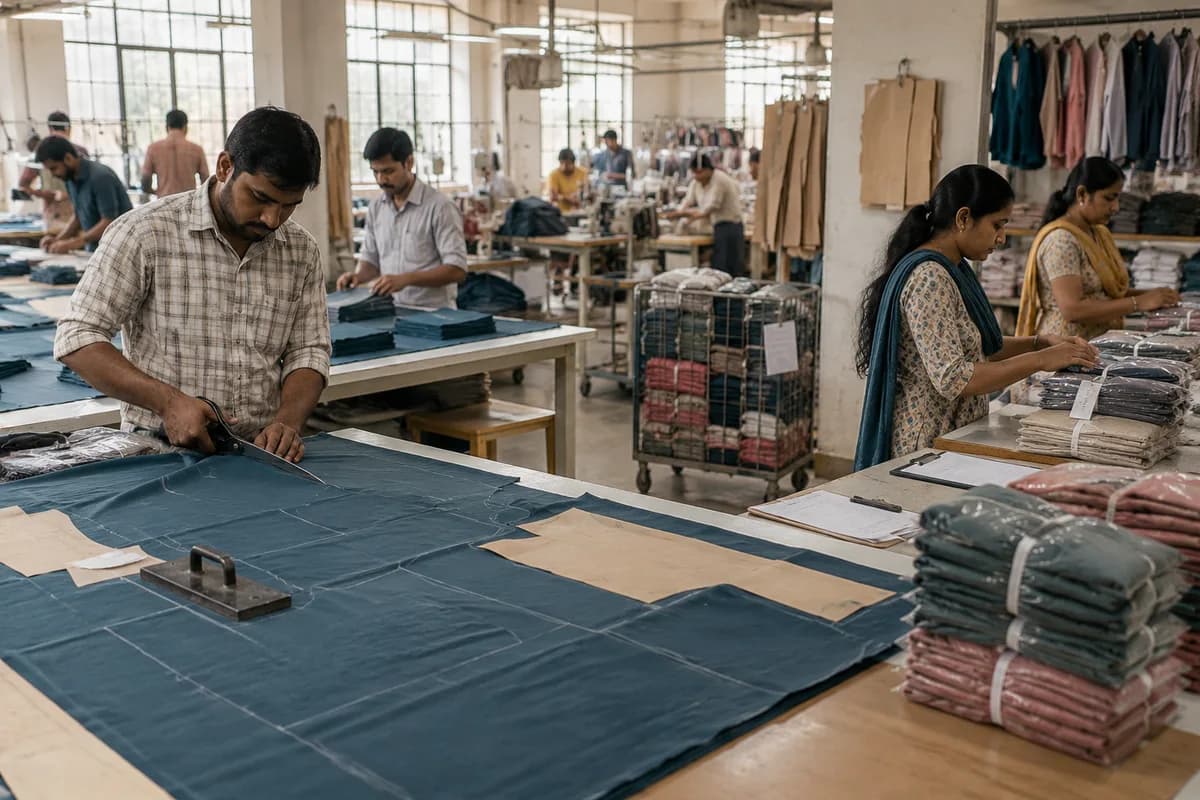
Technical Textile Manufacturer Management Software, put in place by GullySystem, suits plants that weave, knit or needle-punch fabric to a buyer’s specification. A specification, the roll record, line settings and lab readings sit together. Certificates print from recorded values, slit widths and offcuts are tracked, and a returned roll leads straight to its raw material lot.
What goes wrong before the software.
How the work flows through it, step by step.
- 1
Specification
The buyer’s values, tolerances and test methods are entered. The technical team confirms the construction and quotes.
- 2
Trial and approval
A trial roll is made and tested. The buyer’s written acceptance freezes the specification for repeat orders.
- 3
Materials and planning
Fibre, polymer and compound lots are received. Orders are released to a loom or line by width and metres.
- 4
Production
Operators record line settings per run and measure each roll for width, length and mass. Defects are marked.
- 5
Testing and certificate
The lab enters readings per roll. A certificate prints from recorded values for rolls that meet the specification.
- 6
Slitting, packing and despatch
Master rolls are slit to ordered widths, cored, labelled and packed. Offcuts go back to stock, and the vehicle leaves with the certificate.
What is inside.
Every module can be switched on, left out or changed to match how your team already works.
The business modules it is built from.
Each one is also available on its own, or inside a system built for you.
- Quote & Proposal Management
A quotation is built against the specification, with target values and tolerances shown, and each revision is kept with its date.
- Batch and Serial Tracking
A complaint on one roll is traced back to the polymer lot, the line run and the operator through the roll number.
- Goods Receipt (GRN)
Polymer and fibre lots are received with the supplier’s certificate, and a lot is held until the store has checked its readings.
- Quality Control
The lab enters readings per roll, compares them with the specification and prints a certificate only from values that were recorded.
- Production Planning
Orders are scheduled onto looms or lines by product and width, and the planner sees metres made against metres ordered.
- Job Work Management
Rolls sent for coating are logged out by metres and mass, and the returned figures are checked before the lot moves on.
- Document Management
Trial test sheets and the buyer’s written acceptance are filed with the specification so a repeat order starts from approved values.
- Stock Tracking and Alerts
Narrow rolls and short ends are counted by width and length, and the sales desk sees them as stock to sell.
How we would put it in.
Setup, data migration, integrations and anything built on top.
One system, each person sees their part.
Plant head
See metres made against metres ordered, rolls waiting for the lab, outside coating pending and certificates not yet issued.
Technical manager
Hold specifications, run trials and approve changes to line settings for each product.
Line operators
Enter settings per run, measure and weigh each roll, and mark defects where they appear.
Laboratory
Record readings against the roll, compare them with the specification and issue the certificate.
Sales and despatch
Quote from specifications and offcut stock, then pack rolls against the order and send the paperwork.
The numbers the owner asks for.
- Metres produced against metres ordered
- Rolls passed, held and rejected by line
- Test readings against specification by product
- Fibre and polymer lots and the rolls they fed
- Offcut and short end stock by width
- Outside coating metres out against returned
- Certificates issued by customer and order
Who this is built for.
- Geotextile and civil engineering fabric makers
- Filtration and industrial cloth manufacturers
- Automotive and transport textile suppliers
- Medical and hygiene nonwoven producers
- Coated and laminated fabric converters
When it is not the right choice.
- A weaver making a single standard fabric to a single buyer can manage with a stock register and a lab notebook.
- A plant that mainly dyes and finishes other people’s cloth will find the textile processor product closer.
Adapted to your business before it goes live.
You are not handed a login and left to it. The product is set up around your records, your people and the tools you already use.
Works alongside
- Accounting export
- Lab gauge or tester export
- Line controller data
- Barcode or label printer
Questions owners ask before a demo.
Is it for textile makers who sell by specification?
Yes. It is built for plants whose buyers send target values and tolerances, then expect a certificate and a traceable roll.
How does a roll link to the raw material?
Lots of fibre, polymer or compound are received and issued to a run. The roll number then leads to the run and from there to those lots.
Can it store line settings for each run?
Yes. Speed, temperature, needle density, pick-up or pressure are entered per run, or imported from a line controller where it can export them.
How is a failed roll handled?
The lab marks it held or rejected against the specification. It can be downgraded, reworked or scrapped, and the decision stays on the roll record.
Can it plan slit widths from a master roll?
Yes. The planner enters ordered widths, and the plan shows the remnant. The remnant becomes a stock record with its own width and length.
Does it handle outside coating or lamination?
Yes. Rolls leave with a slip stating metres and mass. The return is booked against it and the difference is shown for the quality head to review.
Can our current certificates be reproduced?
Yes. We copy the layout, fields and wording your buyers now receive. Your quality team decides what each certificate says.
What happens to the data if we leave?
The plant keeps ownership. Roll records, readings and specifications can be handed back in a format agreed in the written proposal.
What decides the cost?
The quote depends on your lines, the lab staff who need access and the amount of roll history you bring. You see a demonstration first, and the proposal follows in writing.
Is it worth it for one line?
It can be, when buyers ask for certificates and traceability. A single line selling plain cloth by the metre may not need it yet.
Wondering what it would cost? Share your requirements and an engineer will come back with a scope.
Businesses that use this.
Related products.
See Technical Textile Manufacturer Management Software with your own data.
Tell us how you run things today. We’ll show you the parts that matter to you and say plainly what would need changing.
- No obligation
- A reply within one business day
- Your details stay private
Start with your requirements
Seven short steps that tell us what you need. An engineer reads them before getting in touch.
Share your requirements