Process route by lot in a finishing house
Process route by lot sets the steps each customer lot will follow, such as singeing, desizing, bleaching, dyeing, stentering and compacting. It also shows where every lot stands today. Marketing, supervisors and the owner read it in place of a phone call that nobody wrote down.
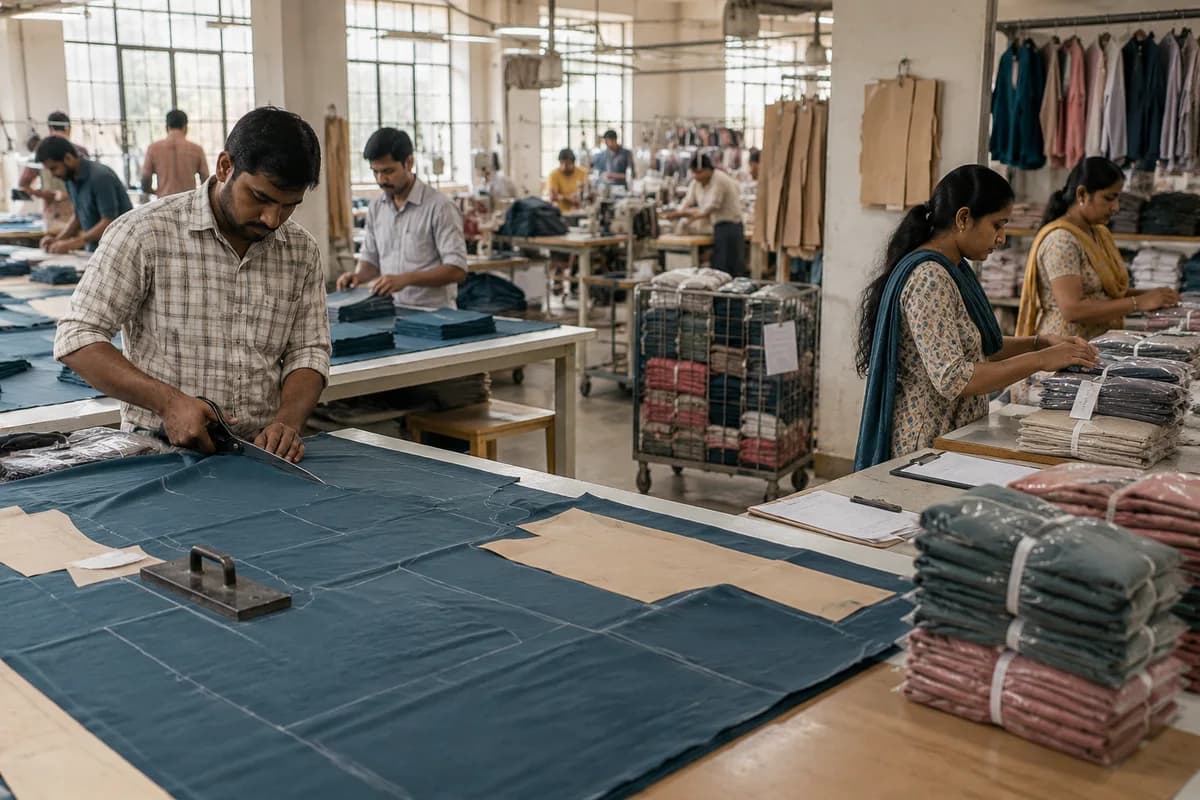
The route written down for each lot
The customer’s instruction is turned into a sequence the shed can follow. It is attached at booking. After that, every stage reads it, and what it holds is what was agreed, in order, plus how far the lot has got.
A week of routes changing and lots moving
Routes are agreed by phone and amended by phone. The shed lives with the consequences. Changes arrive after cloth is booked. A week in the house shows the customer who changes the order, the supervisor who needs the next step and the lot that skipped one.
What each person sees on a route
One route is read from several desks. Stage counts matter to the owner, the status for one customer matters to marketing, and the shed wants to know what to do next. All share a single lot record. Their answers agree.
Route decisions before the first lot runs
The booking screen is only as useful as the sequences it offers. Settle these points with marketing and the dye master first. Choices here change booking. They also change what supervisors read at the machine.
The route and everything it points to
Think of the route as the spine of the lot record. Booking writes it, batching reads it, measurement is taken against it, and the statement lists it when the cloth leaves. Each of those features names the same steps. No one restates the route in a new place.
- Grey receipt and lot booking attaches the agreed route
- Machine batches by lot pulls lots waiting at a step
- Metres in and out by stage measures after chosen steps
- Inspection, rework and re-dye sends a lot back a step
- Delivery note and process statement lists the steps performed
Edges of the route record
Here the house records the sequence and the position. It does not decide whether a sequence is technically right for a fabric, which stays with the dye master and the customer. Machine capacity is planned in batches, not here. Prices for each step sit in the rate tables. A house with one fixed sequence for every lot can run on a wall chart.
Frequently asked questions
Can a route be changed after the lot starts?
Amending is possible while the lot is in the house. Who may do so is a set-up decision. The amendment is recorded on the lot, so the first instruction and the change can both be read later.
Can lots follow different routes in one batch?
A batch groups lots that are at the same step, such as dyeing, even if their later steps differ. Each lot then continues on its own route. Routes live with the lot. The machine does not own them.
How does it show a lot that is stuck?
A lot that has sat at one step shows against that step in the list of lots in house. The owner can sort by stage and read what waits where. Why it is stuck is for people to explain. That is not recorded by itself.
Does the customer see the route?
Customers see only what the house sends them, such as a status message or a statement listing the steps performed. Email or messaging for lot status is set up as an integration. It is optional.
Can we copy a route from an earlier lot?
Saved standard routes can be picked at booking, and an earlier lot’s sequence can be reused as a starting point for the new lot. Marketing then checks the steps against the customer’s present instruction. Nothing is copied unseen.
How this feature fits the system.
Textile Processor Management Software: the parts that work with this feature, the trades that use it and the ways to put it in place.
Grey receipt and lot booking
Grey cloth is measured and weighed on arrival against the customer’s delivery note, and damage found at the gate is recorded before it is booked.
Goods Receipt (GRN)Lab dip and recipe library
An approved shade carries its dyes, auxiliaries and conditions as a recipe, and the same formula is released for each repeat lot.
Bill of MaterialsMachine batches by lot
The planner groups lots into jet and range batches by shade and weight and sees which machine is free after the current run.
Production PlanningTell us what you need.
Tell us what your team does today, where work gets stuck and what you want to change.
What happens after you share your requirements
- We review your brief and the systems you already use.
- We clarify the workflow, missing information and the work to consider first.
- The proposed scope sets out the deliverables, responsibilities and dependencies.
- Review the scope and commercial terms before deciding whether to proceed.
Start with your requirements
Describe your current process, the people involved and the change you need. Start with the details you know; we can clarify the rest together.
Share your requirements