One system for grey lots, dye recipes, machine batches, shrinkage statements and process bills.
Manage a dyeing, printing and finishing house in one system. Customer grey is received by lot and booked against a process route. Approved dips become recipes, lots are grouped into machine batches, and length and weight are measured at each stage. Inspection, rework and re-dye are recorded with their cause. The cloth returns with a statement giving metres in, metres out and shrinkage.
- Process routes, machines and shade classes entered as your house runs them
- Customers, rates and open lots brought over from your registers
- Recipe fields and statement layouts changed by GullySystem staff on request
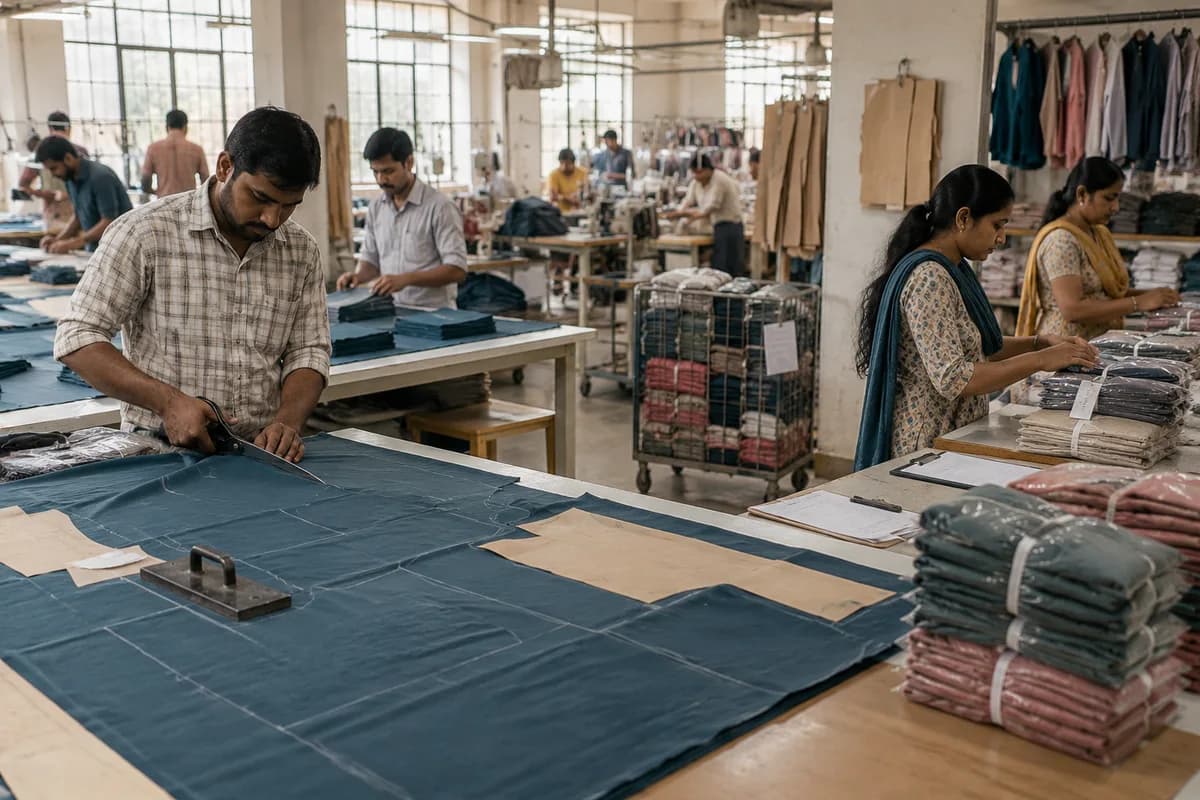
Textile Processor Management Software, configured by GullySystem, is made for houses that dye, print and finish cloth belonging to customers. It holds the grey lot, the process route, the recipe and the machine batch. Length is measured at each stage, so a shrinkage statement and a process bill follow from the same record.
What goes wrong before the software.
How the work flows through it, step by step.
- 1
Gate-in
Grey is measured, weighed and booked against the customer’s order with its process route and shade request.
- 2
Dip and recipe
A lab dip is made, sent and approved. The approved version is stored as a recipe with dyes and conditions.
- 3
Batching
Lots are grouped into machine batches by shade and weight. Dyeing or printing runs, and results are recorded.
- 4
Finishing
The stenter sets width and shrinkage, and finishing sections apply the specified treatment. Length is measured again.
- 5
Inspection
Defects are marked per roll. A lot that fails shade or hand goes back for correction with the cause noted.
- 6
Return and bill
The cloth leaves on a delivery note with a statement of length and weight, and the process bill follows from the rates.
What is inside.
Every module can be switched on, left out or changed to match how your team already works.
The business modules it is built from.
Each one is also available on its own, or inside a system built for you.
- Goods Receipt (GRN)
Grey cloth is measured and weighed on arrival against the customer’s delivery note, and damage found at the gate is recorded before it is booked.
- Bill of Materials
An approved shade carries its dyes, auxiliaries and conditions as a recipe, and the same formula is released for each repeat lot.
- Production Planning
The planner groups lots into jet and range batches by shade and weight and sees which machine is free after the current run.
- Batch and Serial Tracking
Each lot keeps its route and the roll numbers within it, so a roll is traced to the machine batch that processed it.
- Quality Control
Roll defects, shade difference and width checks are recorded, and a lot below standard goes back for correction with the cause noted.
- Stock Tracking and Alerts
Dyes and chemicals are issued per batch, and the store sees which items fall below the reorder level before a run is blocked.
- Price Lists and Schemes
Rates are held per process, shade class and customer, so the bill follows the agreed rate and not a remembered one.
- Invoice Management
The process bill is raised from metres returned, with the statement of length in and out attached for the customer.
How we would put it in.
Setup, data migration, integrations and anything built on top.
One system, each person sees their part.
Owner or general manager
See lots in house by customer and stage, re-dye cost, machine use and shrinkage against the quoted figure.
Marketing and customer service
Book lots, send dips, answer a customer who asks where a lot is and issue the statement.
Dye master and laboratory
Keep recipes, match shades and release batches to the machines.
Machine supervisors
Load batches, record process parameters and report results per machine.
Inspection and dispatch
Mark defects per roll, release finished lots and prepare the delivery note.
The numbers the owner asks for.
- Lots in house by customer and stage
- Metres in and out with shrinkage by lot
- Re-dye and rework by cause
- Machine batches and utilisation
- Dye and chemical use per kilogram of cloth
- Dip approvals pending by customer
- Process billing by customer and rate
Who this is built for.
- Dyeing and finishing houses working for mills and traders
- Printing units using screens or rotary machines
- Integrated mills with a processing unit
- Knit fabric dye houses
- Garment makers with their own washing and dyeing
When it is not the right choice.
- A shop dyeing a few kilograms for walk-in customers can work from a job book.
- A weaving mill with no wet processing will find the technical textile product closer.
Adapted to your business before it goes live.
You are not handed a login and left to it. The product is set up around your records, your people and the tools you already use.
Works alongside
- Accounting export
- Dosing and dispensing system data
- Machine controller exports
- Barcode or label printer
- SMS or messaging for lot status
Questions owners ask before a demo.
Is it for the owner of the cloth or for the processor?
For the processor. The cloth belongs to the customer, and the record follows the customer, the lot and the route. An integrated mill can use it for its own processing unit.
Can it store dye recipes?
Yes. Recipes sit against each approved shade, with dyes, auxiliaries and conditions. A repeat lot starts from the stored formula.
How does it show shrinkage?
Length and weight are measured at gate-in and after the stages you choose. The statement shows the change per stage and per lot.
How are batches tied to lots?
Each machine batch lists the lots and rolls in it, and each roll shows the batch that processed it. A shade fault can be followed back to that run.
Can it cost rework?
Yes. A re-dye or re-stenter is booked with its cause, and its chemicals and machine hours are put against the lot. Whether to charge it is decided by the house.
Does it handle printing as well?
Yes. Screens, rotary sets, designs and colour order are recorded against printing lots, with the approved strike-off held beside them.
Can we bring our current lots in?
Yes. Cloth already in the shed and customer orders still open are keyed in from your registers, and supervisors walk the floor to confirm each lot before go-live.
Who owns the process data?
The house does. If you leave, recipes, lots and statements are returned in a format fixed before you start.
How is it priced?
No price is shown. The proposal depends on how many machines and users record, the rate tables you maintain and the history you bring over, after a demonstration.
Is it heavy for a small dye house?
No, not once customers begin to dispute length or shade. A house with a few steady customers and one route may manage on a job book for a while.
Wondering what it would cost? Share your requirements and an engineer will come back with a scope.
Businesses that use this.
Related products.
See Textile Processor Management Software with your own data.
Tell us how you run things today. We’ll show you the parts that matter to you and say plainly what would need changing.
- No obligation
- A reply within one business day
- Your details stay private
Start with your requirements
Seven short steps that tell us what you need. An engineer reads them before getting in touch.
Share your requirements