Arequipa · CountriesThe southern city lives off mines, alpaca wool, dairy farms and visitors heading for the Colca Canyon.
Arequipa sits in the shadow of three volcanoes and serves the mines of southern Peru. Its mills spin alpaca and sheep wool for export. Dairies farm the irrigated desert at Majes, and the Colca Canyon sends tourists through town. GullySystem in Bengaluru builds mine, wool and tour systems for the city and supports them from a distance.
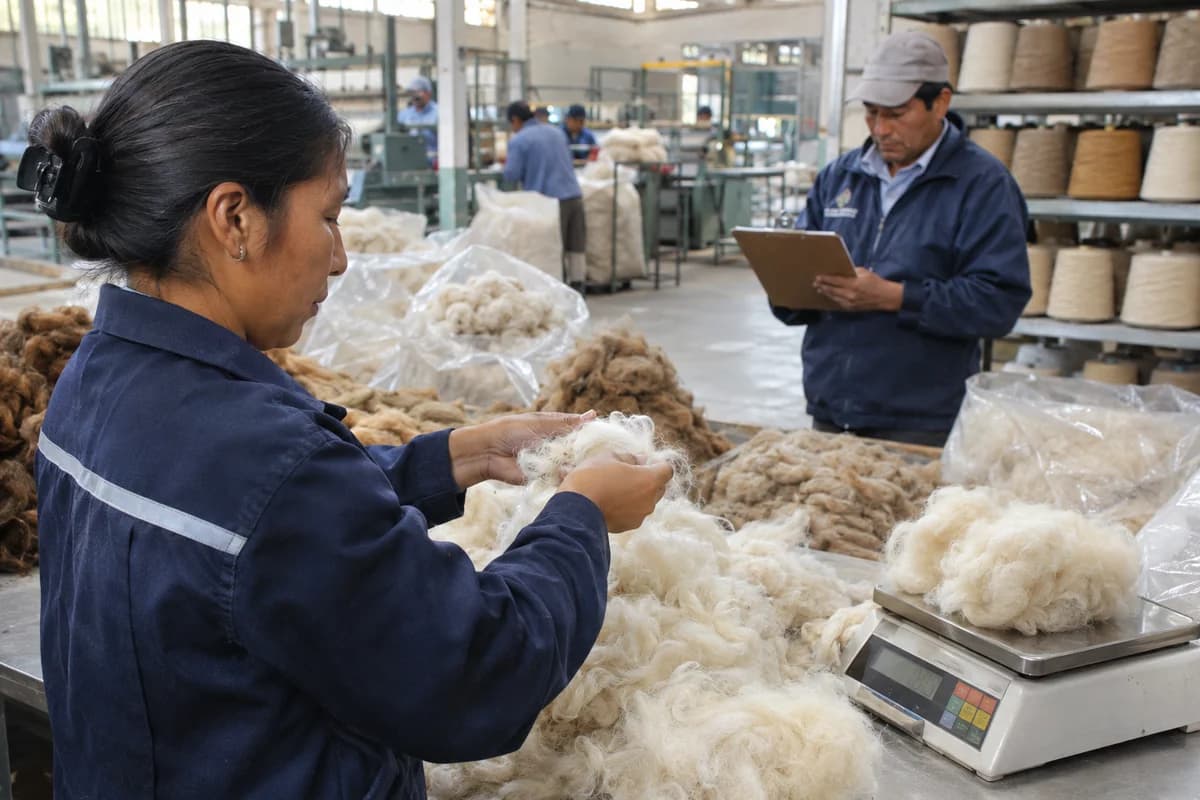
Arequipa is Peru’s second city. Mining firms in the region buy fuel, tyres and spare parts through Arequipa, so its suppliers and workshops serve operations that sit hours away in the mountains. A late part idles a truck. Stock must be right. Counts matter. Wool is graded too.
Alpaca wool is sorted, spun and knitted here before it ships abroad to knitwear buyers who ask for the fibre grade of every order. Clocks in Arequipa never change, and the city stays ten hours thirty minutes behind Bengaluru. Calls suit its morning. Nobody of ours is there. We have no staff, customer or partner in the city.
The districts, business parks and markets that matter in Arequipa.
How Arequipa businesses pick and use software.
Mining suppliers who stock parts for fleets of trucks and bill contractors on monthly terms, and who lose a sale whenever a shelf runs empty.
Wool mill owners who ship alpaca garments abroad and must answer a buyer who asks which fibre lot went into one order.
Tour office owners selling Colca Canyon trips, with vans, guides and lodges to coordinate every morning.
Where Arequipa businesses lose time and money.
Parts that are always out of stock
A truck waits for a bearing that nobody counted, and the workshop learns about it only when the driver calls. Minimum levels per part, with alerts to a phone, give buyers time to order.
Fibre lots lose their identity
Once wool is spun and blended, nobody remembers where it began. Lot numbers carried from sorting through spinning to knitting let a buyer follow one order back to its fibre in minutes.
Day trips run on notebooks
Guides, vans and rooms are written on paper and copied by hand. One shared schedule shows who goes where on which morning, and it flags a van that has run out of seats.
What we would build for Arequipa businesses.
Usually in this order, starting with whatever the audit ranks first.
ERP, CRM and Business Software Implementation
One record of stock, orders, customers and accounts, set up so your team opens it every day.
Learn moreWeb and Mobile Application Development
Web and mobile apps for customers, field staff and dealers, built to work on ordinary phones.
Learn moreAPI and System Integration
Connections between existing tools, with record ownership, duplicate handling and reconciliation agreed for each flow.
Learn moreData Migration and Moving Off Spreadsheets
Data migration and spreadsheet replacement covers auditing existing files, cleaning and deduplicating records, loading them into a new system and reconciling the loaded result against known totals. Both systems then run side by side before cutover. Originals stay untouched.
Learn moreReady products that fit Arequipa businesses.
Each one is adapted to how your business works before it goes live, and anything your trade needs that it lacks is added then. You are not paying to build the basics again.
Mining Company Management Software
Shift output, haul log, equipment hours, maintenance, fuel and spares, weighbridge dispatch, contractors and invoices for mining and quarry operators.
Learn moreTextile Processor Management Software
Grey lots, process routes, dye recipes, machine batches, shrinkage and loss, rework, chemicals and process billing for textile processing houses.
Learn moreTour Operator Management Software
Itineraries, group departures, vendor bookings, vouchers, per-passenger costing, guest payments and vendor payables for tour operators running fixed departures and custom trips.
Learn moreHow the work runs from Bengaluru for Arequipa.
- 1
The audit, by call
A screen-share and a look at the sheets, accounting reports and WhatsApp groups your team uses. No travel needed.
- 2
A written proposal
Scope, what we build first and the cost, agreed in writing before anything starts.
- 3
Build in short rounds
Working screens shared every few weeks. Your team tests them from your own office.
- 4
Go-live, in person when it helps
For data migration and training we can come to Arequipa. Travel is agreed in advance.
- 5
Support online
Fixes, changes and hosting handled remotely by the same team that built it.
The work we have published.
We don’t claim Arequipa clients we don’t have. These are systems our team built; the way we work is the same wherever you are.
PetSeva: matching owners to the right vet, at any hour
A two-sided veterinary platform where vets are searchable by specialisation and bookable outside clinic hours. It now carries more than 2,000 veterinary doctors.
Read the case study Paying guest accommodationSAM Atithi Pavathi: bed-level occupancy as the source of truth
PG management software where allocation, rates and invoices are derived from bed-level occupancy and not maintained in parallel spreadsheets.
Read the case study School transport servicesSAM Tours: school transport on a single ledger
Registration, fee collection, routing and finance write to the same records, closing the gap between journeys run and fees collected.
Read the case study Microfinance and Self Help GroupsVikasa RDO: making SHG loan recovery auditable
Loan proposals, recoveries and commissions sit on one record, with a person attached to every state change, so a business handling a bank’s money can show where each rupee went.
Read the case studyMake the scope specific to your business.
Work through a real example from your operation and agree the handoffs, controls and support the project needs.
Parts that are always out of stock
What happens to movements entered while a count is being checked?
For “Parts that are always out of stock”, choose a count date and trace the movements around it. Agree who investigates a difference before an adjustment changes the available balance.
Background reading: ERPNext: stock reconciliation
Questions Arequipa owners ask before they call.
Can a parts supplier near the mines track stock by part number?
Yes. Each part has a code, a shelf location and a minimum level, and sales to each contractor are gathered into the monthly statement that the contractor’s accountant expects.
Can alpaca lots be traced through spinning and knitting?
Yes. A lot number follows the fibre from sorting to the finished garment, so a buyer asking about one order gets a clear answer from a single screen.
What happens after I share my requirements?
We review your brief and clarify the work with you. We then look at the software, spreadsheets and WhatsApp groups your business runs on today and write down what works, what slows your team down and what is missing. A demo login, a screen-share or a few screenshots are enough. You get a short written summary ordered by priority, with no obligation to hire us afterwards.
How much will the software cost?
We don’t publish a price, because it depends on what the system has to do. That first review settles the scope, and the cost goes into a written proposal before any work starts.
Industries we build for in Arequipa.
Elsewhere in Peru.
Tell us what your Arequipa business runs on today.
Send a short note on the spreadsheets, software or WhatsApp groups your team depends on. We reply the same working day.
What happens after you share your requirements
- We review your brief and the systems you already use.
- We clarify the workflow, missing information and the work to consider first.
- The proposed scope sets out the deliverables, responsibilities and dependencies.
- Review the scope and commercial terms before deciding whether to proceed.
Start with your requirements
Describe your current process, the people involved and the change you need. Start with the details you know; we can clarify the rest together.
Share your requirements