Paint and body shop stages per vehicle unit
Paint and body shop stages follow each unit through the body shop and the paint line. Spot-weld counts, seam sealer, electrocoat, primer, basecoat, clearcoat and oven cure are logged per unit. Film thickness is read in microns, and orange peel or dirt is recorded. Each stage is kept against the vehicle identification number.
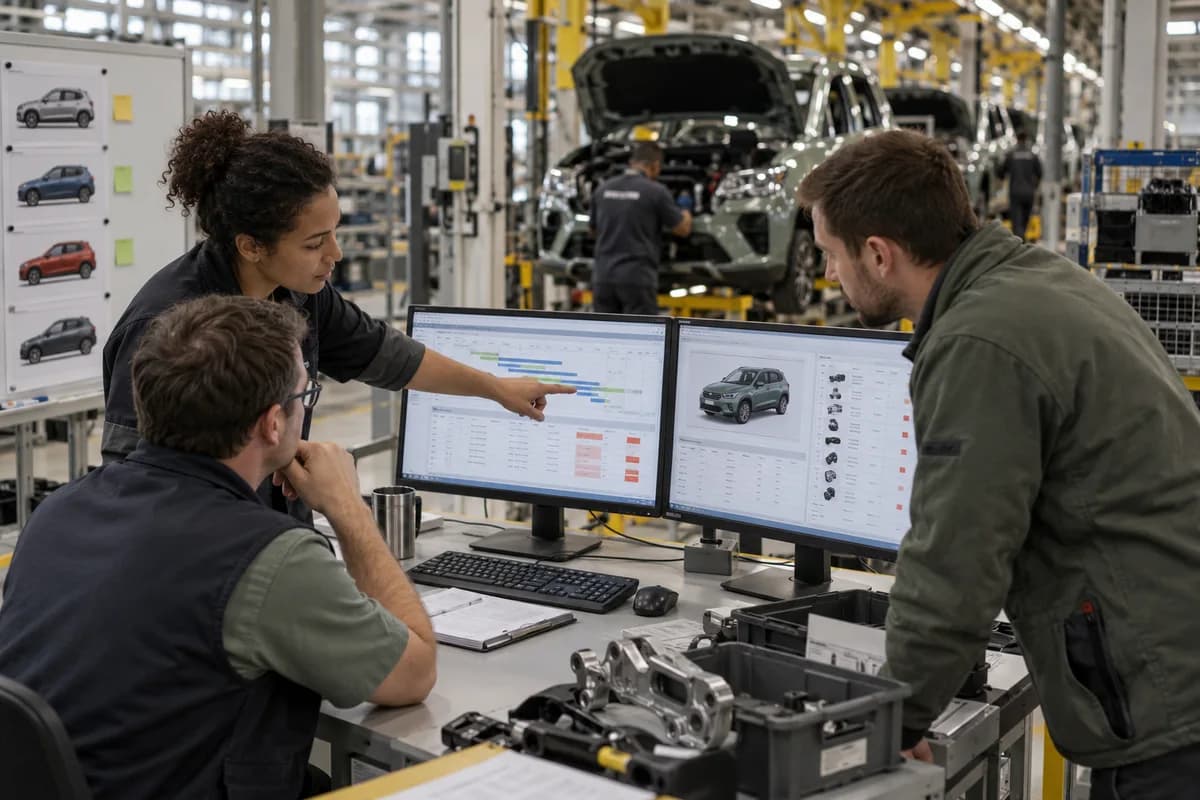
What the body and paint stages record
Paint hides its own history. A unit that leaves the booth shows only its finish. So each stage is recorded as it happens, against the vehicle identification number. Four kinds of entry are kept for every unit that passes through the shops.
A shift through the body and paint shops
Each unit crosses the body shop, the electrocoat tank, the paint booths and the cure oven in one pass. Four people record it along the way. Each one adds a stage to the same record.
Who uses the paint record and what each sees
The paint record is written by a few people and read by several more. Operators log and inspectors measure. Planning and quality read the result from different sides. Each role looks for something different.
Decisions to settle before paint stages go live
The paint record copies your own procedures, so you decide how closely it watches. Agree these four with the paint supervisor and quality before the first unit is logged. They are short to settle.
How paint stages connect to the plant
Paint sits between the body shop and final assembly. Colour comes from the order. It hands defects to rework. After assembly the same unit record carries on to the end-of-line test. These are the links an inspector and a planner use. Every link is a record handed on, not a message sent.
- Build orders carry the colour code into the paint stages
- Planning checks basecoat paint against stock before release
- Rework and defect tracking receives every paint defect
- Station checks continue the record after the paint line
- Warranty queries return to the same unit record
Where paint stage records stop
This feature logs what happened to each unit. It does not run the paint booth, the conveyor or the welding robots, which need programmable logic controller (PLC) and line control equipment. It does not match a colour or choose a film limit. Chemical handling and environmental duties stay with the owner and an adviser. A garage painting one kit car a month can use a job sheet.
Frequently asked questions
Can film thickness be recorded in microns?
Yes, in microns. Each reading is kept against the limit for its coat. A value outside the limit is flagged on the unit. Quality can then see which unit, which coat and which inspector took the reading.
Does it log every coat for every unit?
It logs the stages you list for your line, from electrocoat through to clearcoat and cure. Each carries a start, a finish and the unit it belongs to. A skipped coat appears as a gap.
How is a paint defect tied to a stage?
The defect entry names the unit, the stage and the type, such as dirt or orange peel. Rework then adds the cause and the fix. Over time, the rework report shows which stage repeats the same fault.
Does it control the paint booth conveyor?
No, conveyors, booths and welding robots stay with PLC and line control equipment. This feature records what happened to each unit as it passed. It never moves the line. It never changes a machine setting.
Can the colour code follow the order into paint?
Yes, the colour code from the paint card travels on the build order and sits on the paint record. The painter sees it. The inspector sees it too, for the unit in front of them.
How this feature fits the system.
Auto Manufacturer Management Software: the parts that work with this feature, the trades that use it and the ways to put it in place.
Variant parts master and bills of materials
Each model, trim, engine and market has its own bill, from subframe to wiper arm. A build order reads only the parts that its variant needs.
Bill of MaterialsBuild orders and slot planning
Dealer orders become build orders in weekly slots. Short axles, seats or glazing for a slot show before the order is released to stores.
Production PlanningStation checks and torque records
Each unit carries a work order through body shop, paint and trim lines. An operator closes a station only after its nutrunner checks are recorded.
Work Order ManagementTell us what you need.
Tell us what your team does today, where work gets stuck and what you want to change.
What happens after you share your requirements
- We review your brief and the systems you already use.
- We clarify the workflow, missing information and the work to consider first.
- The proposed scope sets out the deliverables, responsibilities and dependencies.
- Review the scope and commercial terms before deciding whether to proceed.
Start with your requirements
Describe your current process, the people involved and the change you need. Start with the details you know; we can clarify the rest together.
Share your requirements